

AUK Hosts Symposium on Cetacean Life
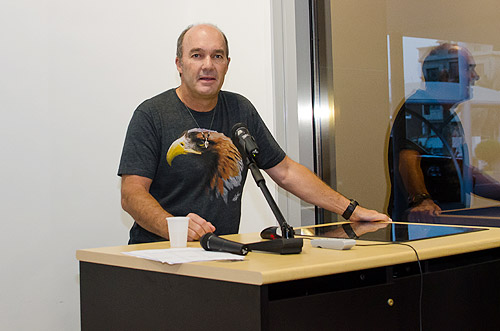
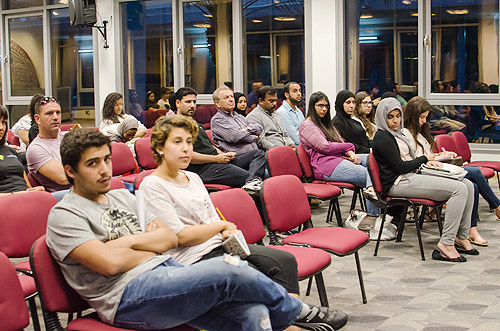
Three presentations on dolphin and whale life were given during a symposium on cetacean life at the American University of Kuwait (AUK) last week. The three part event was held in the multipurpose room on April 28th. It began with a lecture by marine mammalogist Yousef Bohadi entitled, "Whale Watching: Introduction, possibility, and science," continued with a lecture by Mike Pope, naturalist and chairman of Kuwait Ornithological Rarities Committee, entitled "Cetaceans of Kuwait," and finally finished with footage of the Ionian Dolphin Project in Greece to encourage students to volunteer for cetacean research.
The event was sponsored by the AUK library, and was an initiative of Ms. Ghaidaa Mohamad, Arabic Instructor at the Department of Arabic and Foreign Languages, in cooperation with the Al-Akhdar Club (Environmental Club), and the kind assistance of AUK student Mr. Khaled Al-Abdulaqader. Al-Akhdar Club has held similar environmental forums in the past, with last year's event also focusing on cetacean research and conservation.
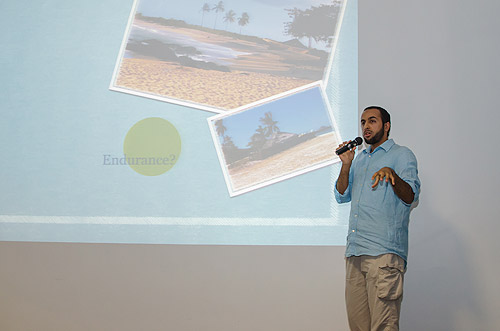
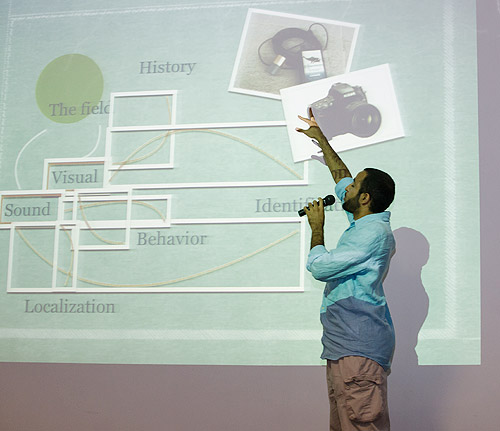
The first lecture entitled, "Whale Watching: Introduction, possibility, and science," given by Yousef Bohadi, introduced the field of marine mammalogy and provided an outline of the methods scientists use to track the animals and document them in their natural habitats. Bohadi directed his comments at those excited about cetaceans, saying that "volunteer programs offer the best chance for a close up look at these marine mammals" for students who want to get involved in conservation and observation efforts. Bohadi's own volunteer experience in Iceland and the Comoros Islands nurtured his passion for marine mammalogy, and enabled him to serve as an example and an inspiration to the AUK students present. He finished his lecture with a brief description of the dolphin species present in Kuwait, and demonstrated to the audience the uniqueness of each through various images and sound recordings of dolphins in Kuwaiti waters and beyond.
Mike Pope's lecture entitled "Cetaceans of Kuwait" was designed to "raise awareness of the fact that there are indeed Apex predators in the unique marine eco-system we call the Arabian Gulf." Pope described how he finds many people "unaware of the treasures they have here in Kuwait" and thus does presentations like this to "try and show what makes Kuwait unique in terms of its biodiversity." The lecture focused primarily on the presence of dolphins along the coast and further out in the gulf; the three main species present in Kuwait are the Indo-Pacific Humpback Dolphin (coastal species), the Indo-Pacific Bottlenose Dolphin (coastal species), and the Black Finless Porpoise (offshore species). Pope concluded his lecture by explaining how to distinguish between the three species, and reiterated the importance of reporting dolphin sightings, so that a larger database of opportunistic sightings can be built up, and the dolphins' habitat better preserved as a result.
The footage of the Ionian Dolphin Project in Greece was meant to encourage interested students to volunteer for cetacean research as Yousef Bohadi discussed in his lecture, and showed students an excellent example of a cetacean research project designed to track the "distribution of cetacean species present in the area and identify key habitat for their conservation." The movie provided an excellent audiovisual conclusion to two informative lectures, and inspired students to take part in the conservation efforts of their marine species here in Kuwait.
AUK was lucky to have KTV 2 cover the entire event. To view a video of the symposium, please click on the following link:
The Ionian Dolphin Project aims to ensure the long-term viability of dolphin species living in coastal waters of the eastern Ionian Sea. Research by Tethys Research Institute is providing support to dolphin conservation efforts, through actions including:
continued monitoring of dolphin groups through field research methods including boat surveys and individual photo-identification, to detect population trends and identify critical habitat; research on factors threatening the local ecosystems, particularly excessive fishing; public awareness, education and capacity building initiatives (e.g. involvement of a large number of students and volunteers, dolphin events organized locally, public presentations, lectures at local schools, production of multimedia); contacts and meetings with the local Authorities and fishermen organizations, aimed to raise awareness on the need of establishing measures to protect dolphins and implement existing regulations (e.g. to prevent illegal fishing); dissemination of information in the scientific literature and delivery of management proposals to international agreements and bodies concerned with the protection of marine biodiversity. More information can be found at: www.ioniandolphinproject.org
Released by the Office of Public Affairs on the 13th May 2013
Photography by the Office of Public Affairs (C) 2013
Related News