


AUK Students Tackle Cultural Dissonance
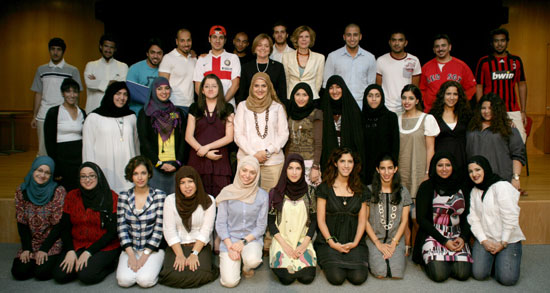
American University of Kuwait (AUK) students enrolled in two courses sponsored by a grant from the US Embassy in Kuwait, engaged in a final role-playing event on May 19, as part of a yearlong simulation of a moot terrorism trial, which was attended by the Ambassador of the United States, Deborah Jones, as well as faculty and AUK students. During the Tuesday evening event, the prosecution and defense delivered their final closing arguments, after which the jury deliberated on the defendant's fate.
The two experimental grant courses, sponsored by the American Embassy in Kuwait are titled, "Rhetorics of Cultural Dissonance" and "Rhetorics of Terror: Courtroom Simulation," of which the former was adapted and the latter developed and taught by Dr. Rawda Awwad, Assistant Dean of Accreditation and Curriculum at AUK, with the support of her Research and Teaching Assistant Nuha Al-Fadli, a student of English Language and Literature. The complex and controversial debate regarding instant worldwide communication systems which allow Muslims and non-Muslims to come to terms with the reality that underlines diverse Islamic cultures because the subject of these courses. This realization has compelled some radical Islamic movements to seek replacing "hybridity" with a puritanical interpretation of Islam.
In examining seminal works in the field of political science and international relations, students of "Rhetorics of Cultural Dissonance" were inspired to research current issues along comparative, intercultural and interdisciplinary lines. Students were motivated to adopt a critical approach in examining the current Muslim political crisis in the Middle East, United States and Europe. During the second half of the year, students of the "Rhetorics of Terror" were granted an opportunity to apply the concepts and theories that they learned in a creative and engaging manner. By assigning students profiles that challenge their ideological and political orientation, Dr. Awwad actively exposed participants to the manner in which language informs identity politics and influences cultural and intercultural conflicts.
Although this course compelled Dr. Awwad's class to analyze complex factors that fuel the contemporary manifestations of "clash of civilizations," it was the integration of technology in the classroom that truly enhanced the overall learning experience. For instance, the blog forum granted participants the opportunity to expand on the theories and issues that were tackled in class through engaging in intricate academic discussions. Nevertheless, it was the videoconferencing sessions between AUK students and Dartmouth College that gave the course its unique quality. Through participating in this activity, students learned how to interact on a global level by taking part in intellectual debates centered on sensitive sociopolitical concerns. In unveiling the historical, intellectual and emotional baggage that underlines contemporary political discourse, AUK students gained insight into the conflicting values that shape the political dynamics between the Middle East and the United States.
The two experimental grant courses, sponsored by the American Embassy in Kuwait are titled, "Rhetorics of Cultural Dissonance" and "Rhetorics of Terror: Courtroom Simulation," of which the former was adapted and the latter developed and taught by Dr. Rawda Awwad, Assistant Dean of Accreditation and Curriculum at AUK, with the support of her Research and Teaching Assistant Nuha Al-Fadli, a student of English Language and Literature. The complex and controversial debate regarding instant worldwide communication systems which allow Muslims and non-Muslims to come to terms with the reality that underlines diverse Islamic cultures because the subject of these courses. This realization has compelled some radical Islamic movements to seek replacing "hybridity" with a puritanical interpretation of Islam.
In examining seminal works in the field of political science and international relations, students of "Rhetorics of Cultural Dissonance" were inspired to research current issues along comparative, intercultural and interdisciplinary lines. Students were motivated to adopt a critical approach in examining the current Muslim political crisis in the Middle East, United States and Europe. During the second half of the year, students of the "Rhetorics of Terror" were granted an opportunity to apply the concepts and theories that they learned in a creative and engaging manner. By assigning students profiles that challenge their ideological and political orientation, Dr. Awwad actively exposed participants to the manner in which language informs identity politics and influences cultural and intercultural conflicts.
Although this course compelled Dr. Awwad's class to analyze complex factors that fuel the contemporary manifestations of "clash of civilizations," it was the integration of technology in the classroom that truly enhanced the overall learning experience. For instance, the blog forum granted participants the opportunity to expand on the theories and issues that were tackled in class through engaging in intricate academic discussions. Nevertheless, it was the videoconferencing sessions between AUK students and Dartmouth College that gave the course its unique quality. Through participating in this activity, students learned how to interact on a global level by taking part in intellectual debates centered on sensitive sociopolitical concerns. In unveiling the historical, intellectual and emotional baggage that underlines contemporary political discourse, AUK students gained insight into the conflicting values that shape the political dynamics between the Middle East and the United States.
AUK students with Ambassador of the United States, Deborah Jones & Dr. Rawda Awwad
Related News
AUK Students Embark on Semester Abroad at Sciences Po
27, Sep 2026
Dr. Nizar Hamzeh Publishes Research on Kuwait’s Constitutional Approach to International Law
16, Sep 2026
AUK Provides 200 School Bags to Support Families in Collaboration with LOYAC
13, Sep 2026
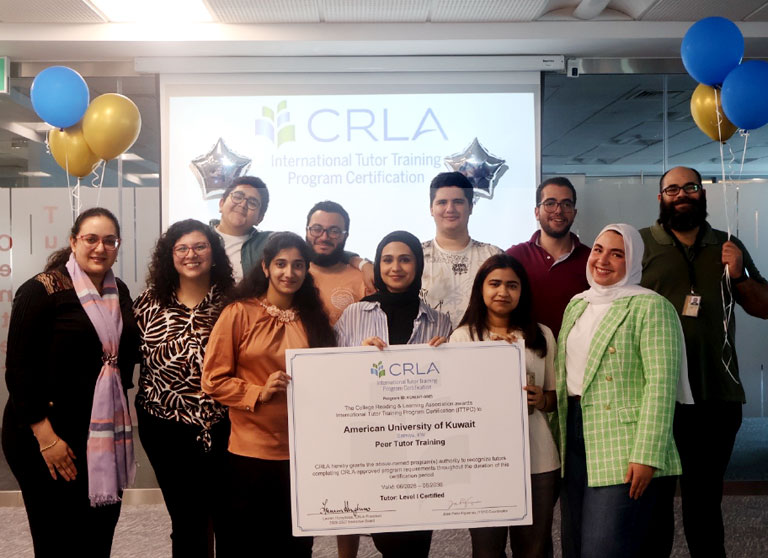
AUK Tutoring Center Renews International CRLA Certification
25, Aug 2026
American University of Kuwait Partners with Ruba to Facilitate Flexible Tuition Payment Solutions
24, Aug 2026
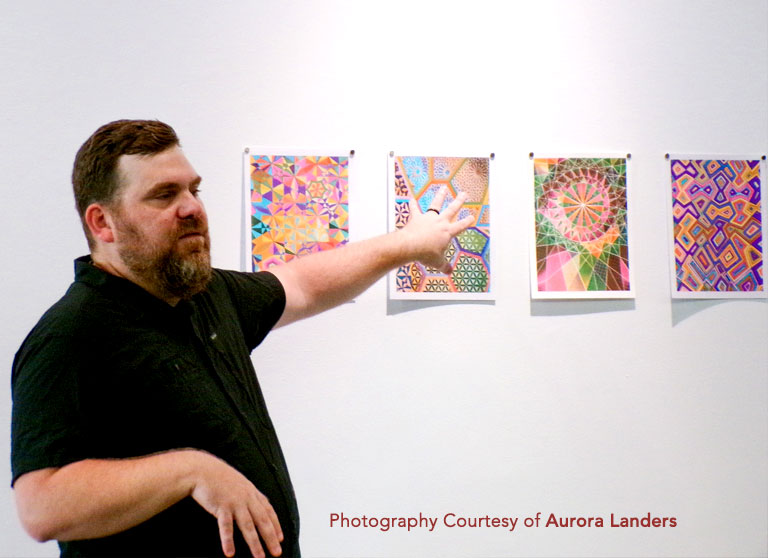
American University of Kuwait Professor Clark Stoeckley Showcases Work at Dartmouth
18, Aug 2026
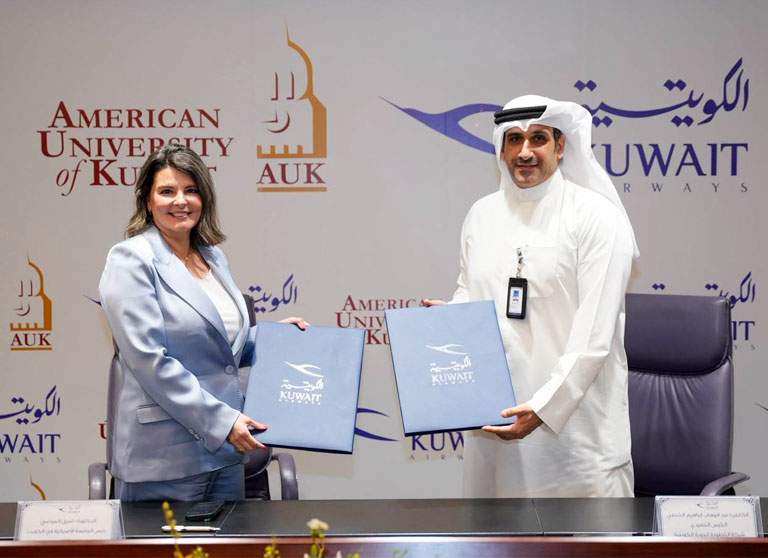
American University of Kuwait and Kuwait Airways Sign Memorandum of Understanding to Strengthen Academic and Professional Collaboration
09, Aug 2026
AUK Faculty Strengthen International Research Collaboration Through Dartmouth Partnership
26, Jul 2026
AUK Showcases Its Academic Programs at Universities Exhibition
24, Jul 2026
AUK Signs an MOU with the Kuwait Association of Accountants and Auditors to Strengthen Academic and Professional Collaboration
22, Jul 2026