

CGS and Arabana Proceed with Subbiya Talks

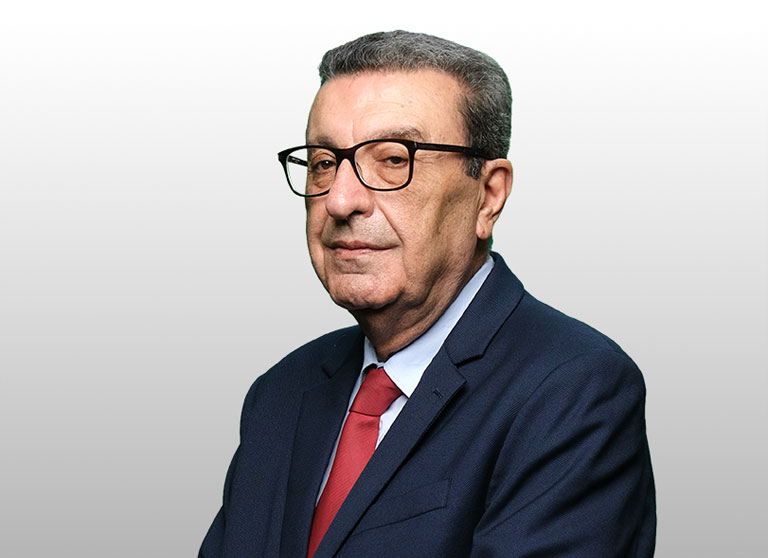
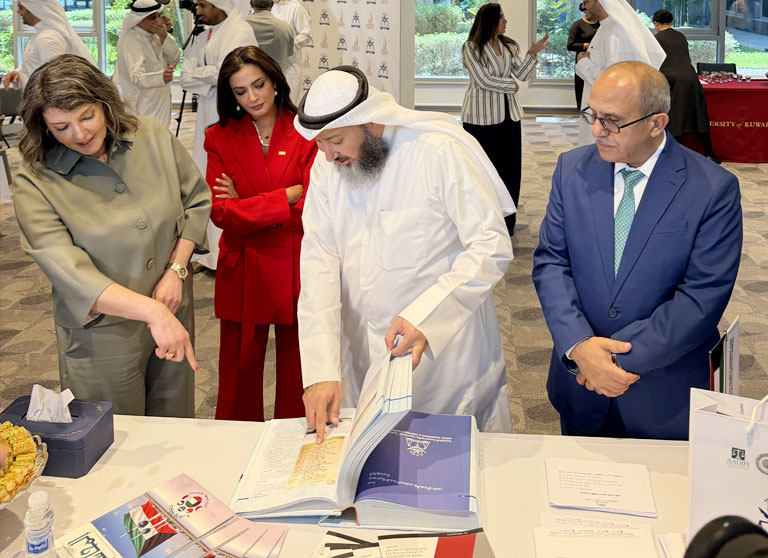
Kuwait, 10th November, 2012:The Center for Gulf Studies, in collaboration with the Arabana Project, hosted the third and final lecture series on the planned development of Subbiya. The lecture, which was held at the Kuwait National Library, was titled "Subbiya: Building Kuwait's Second City - Part III: Strategic Considerations" and was presented by Dr. Sami Alfaraj, President of the Kuwait Center for Strategic Studies.
During his talk, Dr. Alfaraj outlined the various strategic priorities Kuwait will need to address in order for the Subbiya project to be a success. These included, considerations on both the local and the regional level. Referencing his studies, 'Bridge 21: Crossing to a New Century' and 'The Strategic Vision For the State of Kuwait' (published between 1998 and 2000), Alfaraj articulated the direct link between the successful development of Subbiya, or the 'Silk City' as it is also known, and maintaining the strategic security of Kuwait as a whole.
Locally, the strategic priorities for Kuwait, according to Alfaraj, start with developing and improving the education sector. This includes modernizing the sector to promote specialization in strategically significant fields that will allow Kuwait to diversify its economy and become a producerof original ideas and technology. Another priority mentioned by Alfaraj is the promotion of a unified and inclusive society that brings together all of Kuwait's various groupings including women, Shiites, Hadthar (urbanites), Badu (Bedouins), tribes, etc... Reestablishing a common Kuwaiti identity that supersedes these factions will allow the country to move forward effectively on a common vision and purpose. Other priorities include addressing issues of accountability, entitlement, corruption, and bureaucratic reform.
On the regional level, Dr. Alfaraj pointed out that Kuwait was a small country surrounded by three regional powers: Saudi Arabia, Iraq, and Iran. The overarching interest of all parties, particularly Kuwait, is to maintain peace between all neighbors. In the case of Iran, maintaining stable relationships necessitates including Iran in regional projects such as pipelines, and opposing Iran's international isolation. In the case of Iraq, improving communication and trust in order to reach common goals is essential. One case in point is that of the Mubarak Al Kabeer Port that is being constructed in the north of Kuwait. Improved communication on the mutual gains of this project will go a long way in improving ties between the two nations.
Answering a question about the return on investment for the expensive construction of Subbiya, a city that will not be based on the production of oil, Dr. Alfaraj explained that the goal of Subbiya will be to spearhead Kuwait's economic diversification, serving as a financial, trade, touristic, and technological center for the country and region. Achieving this, he reiterated, will depend on Kuwait rediscovering a common, united vision for the future.
The Center for Gulf Studies (CGS) at the American University of Kuwait aims to promote greater cultural understanding of and increased intellectual interest in the Gulf, by facilitating free and open academic discourse on a range of issues that both shape and challenge this critical region of the world. The goal of CGS is to enable scholars as well as political and civil society actors both within and outside the region to contribute and add value to the burgeoning field of Gulf Studies, while at the same time informing and engaging the general public. To this end, the CGS encourages, supports, and cultivates interesting and original research on the Gulf, while regularly organizing a variety of public academic events such as lectures, roundtable discussions, and conferences.
Released by the Office of Public Affairs on the 13th November 2012
Related News