

"Disillusion of Peace and Democracy in Iraq" by Dr. Elsadig Abunafeesa
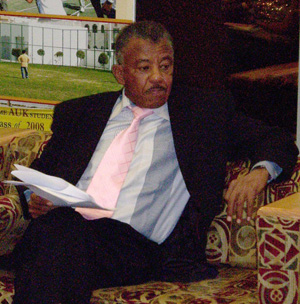
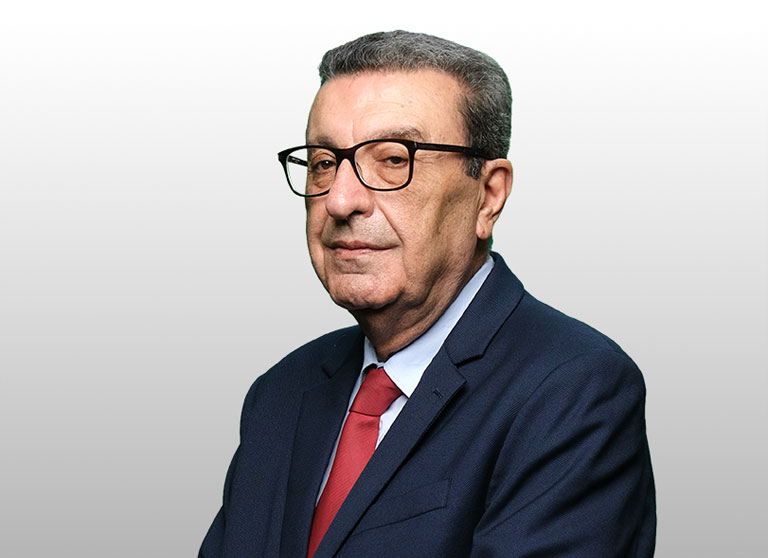
The Gulf Studies Center at the American University of Kuwait recently sponsored a lecture by Dr. Elsadig Abunafeesa, Senior Political Advisor to the United Nations Assistance Mission in Iraq (UNAMI) and long-time advisor to the UN on conflict prevention and resolution in Cambodia, South Africa, Afghanistan, Iraq and Ghana.
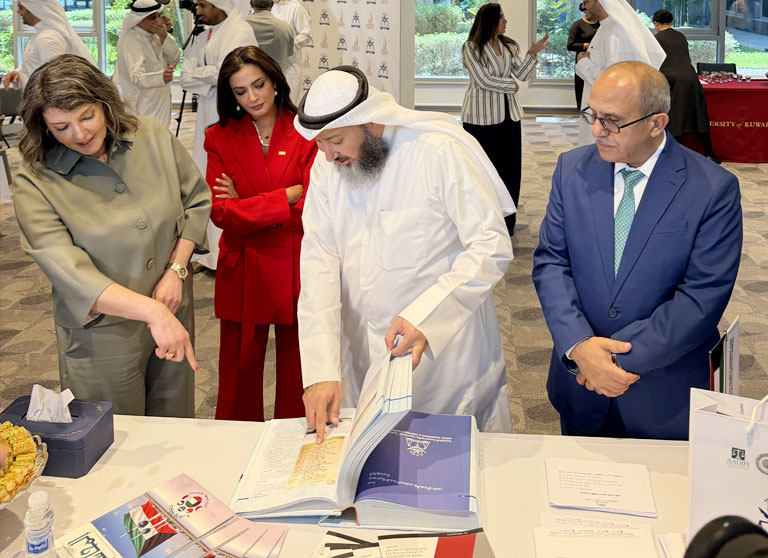
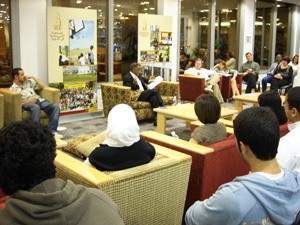
Approximately 60 students, faculty, staff and guests gathered at the American Corner in the AUK library to listen to Dr. Abunafeesa speak about the challenges of peace-building, democracy and national reconciliation in war-torn Iraq.
Abunafeesa began the lecture by examining some of the recent historical events that have contributed to Iraq's current instability, focusing on the post-Cold War and September 11th rise of American unilateralism that led to the 2003 invasion. He commented that the United States continues to dominate Iraq's political arena, ultimately constraining the role of the United Nations Assistance Mission in Iraq.
Until now, the United Nations has not been able to effectively carry out its mandate, backed by Security Council Resolution 1546, of aiding Iraq's peace-building and reconstruction efforts. The organization's activities have been limited to helping with electoral commissions and distributing vaccinations to 5 million children.
The United States is the "greatest" country in the world in terms of resources, he noted, and therefore is most able to make a positive change in Iraq. He urged U.S. policymakers, particularly the incoming Democratic leadership, to consider two very important issues when deliberating a change in Iraq policy. First, there must be a timetable for troop withdrawal. Second, there must be amendments to the Iraqi constitution, which he called "very divisive" in its current form for not ensuring equal distribution of oil revenues among the country's regions. Abunafeesa warned that without these measures, Iraq will split into sectarian parts.
He lauded current Prime Minister Nouri Al-Maliki's 34-point program introduced in May of this year, which includes plans for accelerating the training of Iraqi forces to speed up the departure of foreign troops and for fostering national reconciliation. Currently Baghdad suffers from "invisible borders" separating Sunnis from Shi'a, a situation that requires many Iraqis to carry two identification cards as a form of protection, each bearing a typically Shi'a or Sunni name.
To those who argue that there is "no imposition of democracy in Iraq," Abunafeesa highlighted several factors indicating otherwise, namely that the constitution was drafted by the United States; the recent parliamentary elections did not take place in an environment conducive to elections; the UN was not asked to supervise or monitor the elections; and preparations for the elections were not done in the proper way. He underscored his argument by affirming, "Democracy is a home-grown issue. It cannot be imposed."
Dr. Abunafeesa gives a lecture at AUK
Related News