


Faculty Highlight: Dr. Ghazi Nassir

AUK Associate Professor of English Language and Literature Dr. Ghazi Nassir attended The 42nd American Society for Eighteenth-Century Studies Annual Meeting in Vancouver, British Columbia, Canada on March 17-20, 2011. Professor Nassir presented a paper titled "Un-Johnsonian Sequels."
The paper focuses on the two attempts that have been made to correct the supposed defect in the conclusion of Rasselas: Dinarbas; A Tale: Being a Continuation of Rasselas, by Ellis Cornelia Knight in 1790, and The Second Part of the History of Rasselas, Prince of Abyssinia, by Elizabeth Pope Whately in 1835. One might ask the following question: what Johnson's opinion would have been, had he been alive to express an opinion, of two attempts to extend and complete the narrative of Rasselas? The paper argues that Johnson would have rejected both attempts to compose sequels to Rasselas because his commitments to religion were at odds with romantic narratives, the genre of these sequels are written in, and because of his repulsion against glorifying images of war and military conflict which they contain in excess. The premise of peruse of happiness in these two sequels is marked by many basic references that would have been unthinkable by Samuel Johnson. After all, sequels, like in movies, do not recreate the same perceptions, outcomes, and reactions. Thus, this paper's main purpose is to assess these sequels not only as imitations of Rasselas, but as a critical response to it. Simply put, neither author followed Johnson's dictum that "happiness, as well as virtue, consists in mediocrity."
The paper focuses on the two attempts that have been made to correct the supposed defect in the conclusion of Rasselas: Dinarbas; A Tale: Being a Continuation of Rasselas, by Ellis Cornelia Knight in 1790, and The Second Part of the History of Rasselas, Prince of Abyssinia, by Elizabeth Pope Whately in 1835. One might ask the following question: what Johnson's opinion would have been, had he been alive to express an opinion, of two attempts to extend and complete the narrative of Rasselas? The paper argues that Johnson would have rejected both attempts to compose sequels to Rasselas because his commitments to religion were at odds with romantic narratives, the genre of these sequels are written in, and because of his repulsion against glorifying images of war and military conflict which they contain in excess. The premise of peruse of happiness in these two sequels is marked by many basic references that would have been unthinkable by Samuel Johnson. After all, sequels, like in movies, do not recreate the same perceptions, outcomes, and reactions. Thus, this paper's main purpose is to assess these sequels not only as imitations of Rasselas, but as a critical response to it. Simply put, neither author followed Johnson's dictum that "happiness, as well as virtue, consists in mediocrity."
Dr. Ghazi Nassir
Related News

AUK Students Embark on Semester Abroad at Sciences Po
27, Sep 2026

Dr. Nizar Hamzeh Publishes Research on Kuwait’s Constitutional Approach to International Law
16, Sep 2026
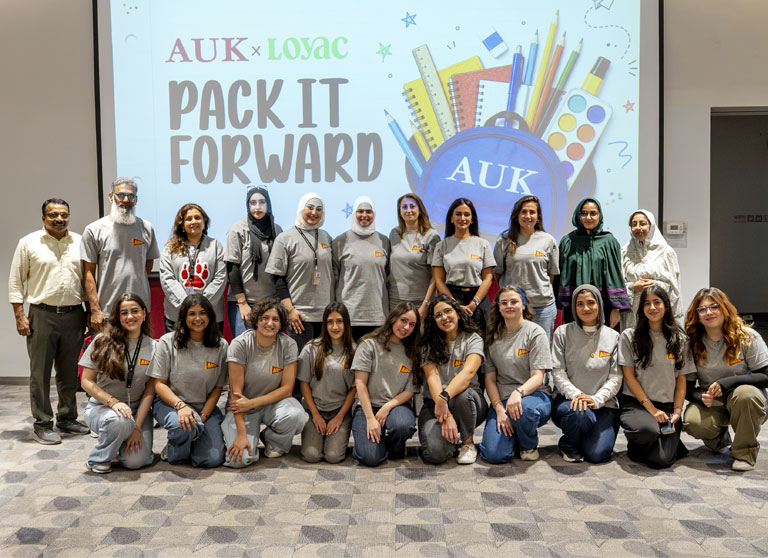
AUK Provides 200 School Bags to Support Families in Collaboration with LOYAC
13, Sep 2026
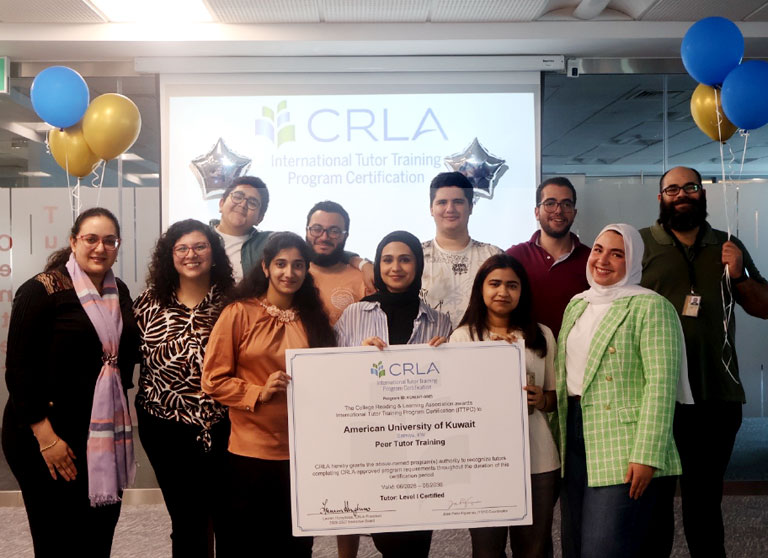
AUK Tutoring Center Renews International CRLA Certification
25, Aug 2026

American University of Kuwait Partners with Ruba to Facilitate Flexible Tuition Payment Solutions
24, Aug 2026

American University of Kuwait Professor Clark Stoeckley Showcases Work at Dartmouth
18, Aug 2026
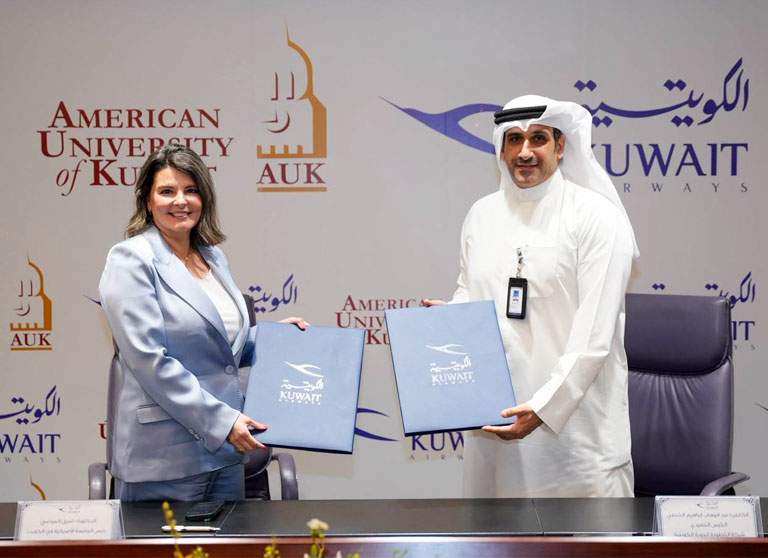
American University of Kuwait and Kuwait Airways Sign Memorandum of Understanding to Strengthen Academic and Professional Collaboration
09, Aug 2026
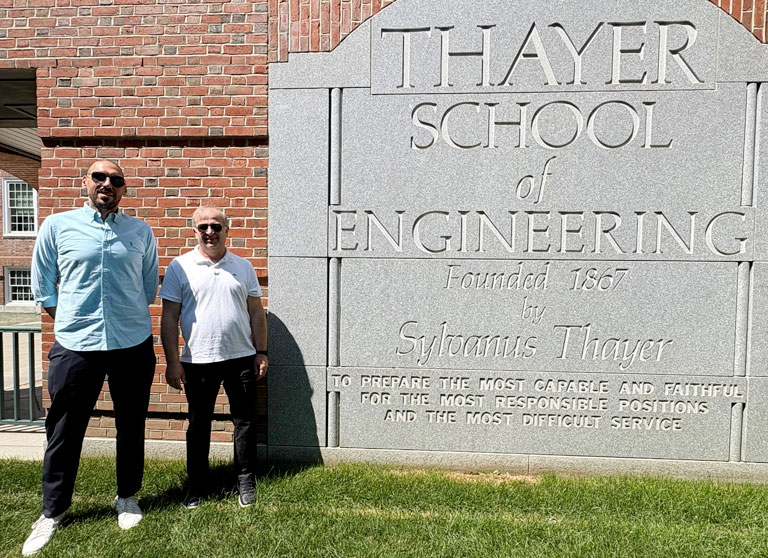
AUK Faculty Strengthen International Research Collaboration Through Dartmouth Partnership
26, Jul 2026

AUK Showcases Its Academic Programs at Universities Exhibition
24, Jul 2026
AUK Signs an MOU with the Kuwait Association of Accountants and Auditors to Strengthen Academic and Professional Collaboration
22, Jul 2026