


Halim Choueiry Conducts 3-day GDES Workshop
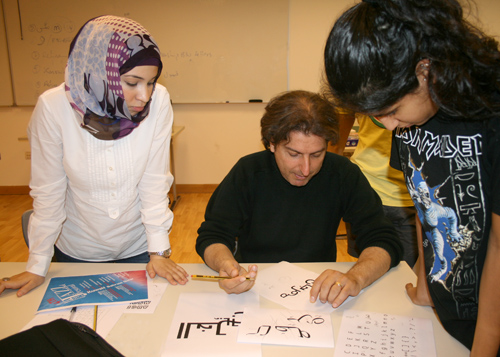
Over the course of three days, May 7-9, Halim Choueiry conducted a workshop for junior and senior GDES students at the American University of Kuwait, titled "Latin into Arabic" Choueiry, a famous graphic designer and Assistant Professor of Graphic Design, and Vice-President of Icograda (International Council of Graphic Design Associations), has tremendous energy and passion for the work he does, and very effectively transmitted that excitement on to the students involved, helping them through every painstaking step of the process.
The first day of the workshop consisted of a lecture and orientation for the students to understand the purpose of the assignment. Choueiry began by saying that we all "live by narrative, by stories, by the semiotics of things," by the way things are transformed, changed, and magnified, manifesting themselves "typographically, as the symbols of the story." It's not just the narrative of the artistic product, however, that Choueiry is talking about: it is the act of writing in and of itself. Like the chalky handprints of Neanderthal settlers in the caves of Lascaux and the rocky desert of the Libyan Sahara, the act of epigraphy and making one's mark in the world is what Choueiry finds so fascinating. "When designing something," he pointed out, "you need to guide your viewer to find a relationship between the words, the images, if they're there, and the meaning, and give all of these good readability."
The lecture detailed the history of the Arabic script "lughat a-Dad," or the language of a-Dad detailing briefly the developments the Arabic script has made since the ninth century, from the addition of diacritical marks to the development of the different scripts, from Kufic to Naskhi, Thuluth to Diwani, and so on. He also mentioned the inter-connectedness of the various Semitic languages, Aramaic, Hebrew, and Syrianic, also mentioning as the turning point in the synthesis of scripts, "Kashuni," Arabic written in Aramaic letters. From this, Choueiry said, the students would produce their own new synthesized creations of script that flowed well together.
For the next two days of the workshop, the students worked very hard on their own small projects. Every student brought parts of their portfolios for one-on-one sessions with Choueiry before they started on their Latin to Arabic project. On the final day, students made some final refinements and adjustments to their work before printing and mounting it on black board so that they might present their work before the class. Also, Mark, the creator and founder of the famous Kuwaiti blog, 2.48 am, was present to view and judge their work alongside Choueiry.
In discussing the real art and progress that one achieves in experimenting with different forms of expression, Choueiry quoted from Antoine de Sainte-Exupery's beloved fable of The Little Prince, speaking to what was by now an enchanted audience that "you can always see things clearly with your heart; what is essential is invisible to the eyes."
The first day of the workshop consisted of a lecture and orientation for the students to understand the purpose of the assignment. Choueiry began by saying that we all "live by narrative, by stories, by the semiotics of things," by the way things are transformed, changed, and magnified, manifesting themselves "typographically, as the symbols of the story." It's not just the narrative of the artistic product, however, that Choueiry is talking about: it is the act of writing in and of itself. Like the chalky handprints of Neanderthal settlers in the caves of Lascaux and the rocky desert of the Libyan Sahara, the act of epigraphy and making one's mark in the world is what Choueiry finds so fascinating. "When designing something," he pointed out, "you need to guide your viewer to find a relationship between the words, the images, if they're there, and the meaning, and give all of these good readability."
The lecture detailed the history of the Arabic script "lughat a-Dad," or the language of a-Dad detailing briefly the developments the Arabic script has made since the ninth century, from the addition of diacritical marks to the development of the different scripts, from Kufic to Naskhi, Thuluth to Diwani, and so on. He also mentioned the inter-connectedness of the various Semitic languages, Aramaic, Hebrew, and Syrianic, also mentioning as the turning point in the synthesis of scripts, "Kashuni," Arabic written in Aramaic letters. From this, Choueiry said, the students would produce their own new synthesized creations of script that flowed well together.
For the next two days of the workshop, the students worked very hard on their own small projects. Every student brought parts of their portfolios for one-on-one sessions with Choueiry before they started on their Latin to Arabic project. On the final day, students made some final refinements and adjustments to their work before printing and mounting it on black board so that they might present their work before the class. Also, Mark, the creator and founder of the famous Kuwaiti blog, 2.48 am, was present to view and judge their work alongside Choueiry.
In discussing the real art and progress that one achieves in experimenting with different forms of expression, Choueiry quoted from Antoine de Sainte-Exupery's beloved fable of The Little Prince, speaking to what was by now an enchanted audience that "you can always see things clearly with your heart; what is essential is invisible to the eyes."
Halim Choueiry with AUK students
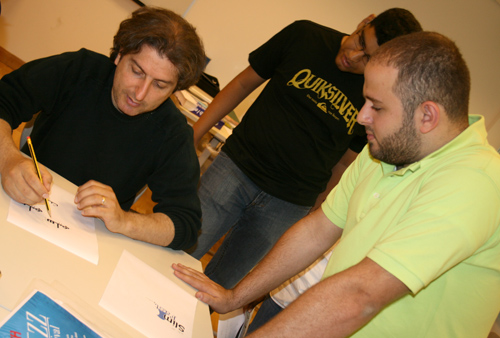
Halim Choueiry with AUK students
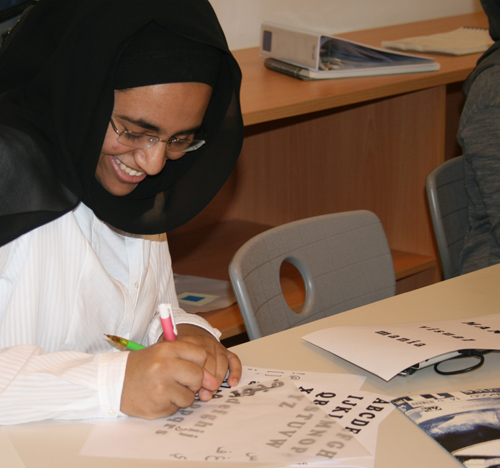
GDES student work on her project during the workshop
Related News
AUK Students Embark on Semester Abroad at Sciences Po
27, Sep 2026
Dr. Nizar Hamzeh Publishes Research on Kuwait’s Constitutional Approach to International Law
16, Sep 2026
AUK Provides 200 School Bags to Support Families in Collaboration with LOYAC
13, Sep 2026
AUK Tutoring Center Renews International CRLA Certification
25, Aug 2026
American University of Kuwait Partners with Ruba to Facilitate Flexible Tuition Payment Solutions
24, Aug 2026
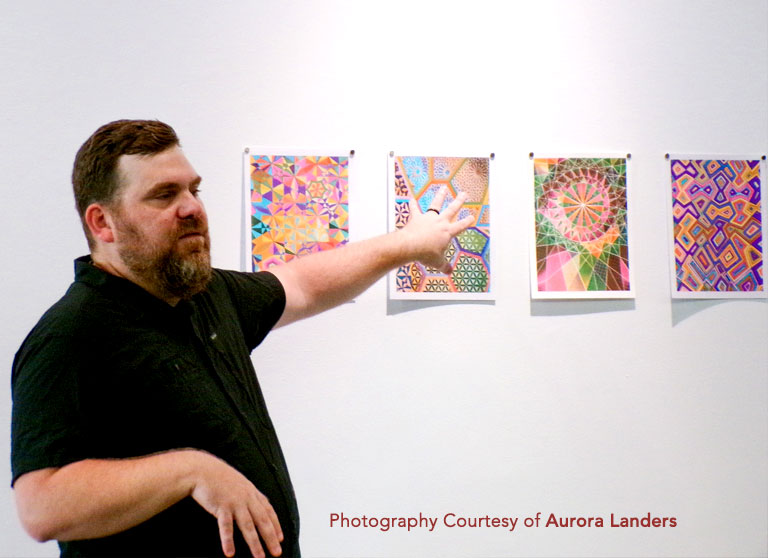
American University of Kuwait Professor Clark Stoeckley Showcases Work at Dartmouth
18, Aug 2026
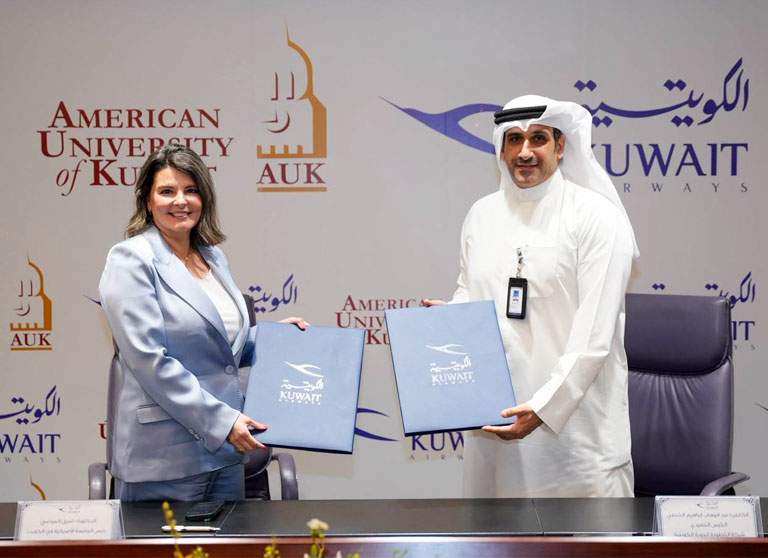
American University of Kuwait and Kuwait Airways Sign Memorandum of Understanding to Strengthen Academic and Professional Collaboration
09, Aug 2026
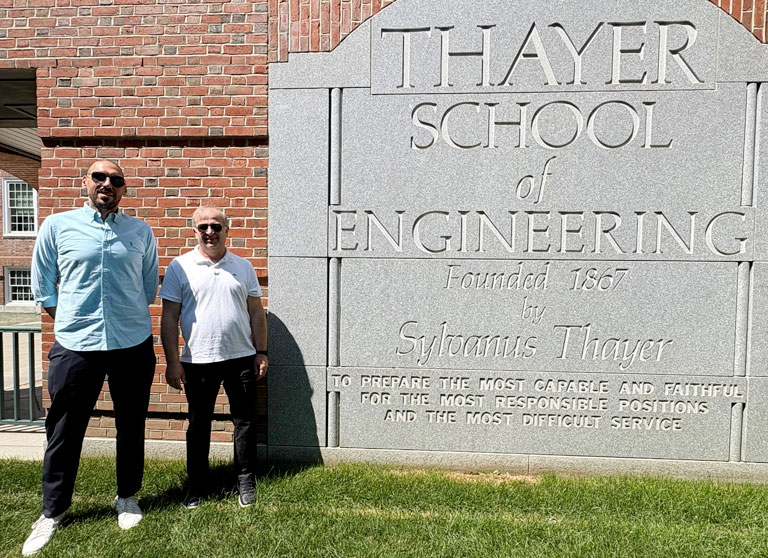
AUK Faculty Strengthen International Research Collaboration Through Dartmouth Partnership
26, Jul 2026
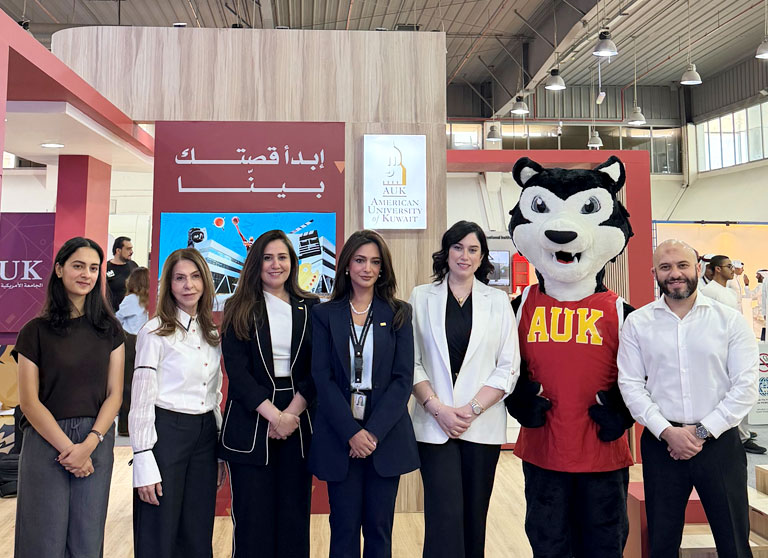
AUK Showcases Its Academic Programs at Universities Exhibition
24, Jul 2026
AUK Signs an MOU with the Kuwait Association of Accountants and Auditors to Strengthen Academic and Professional Collaboration
22, Jul 2026