


Illuminating the Sun’s Path: Dr. Abrar Al-Jamaan’s Contribution to Solarigraphy
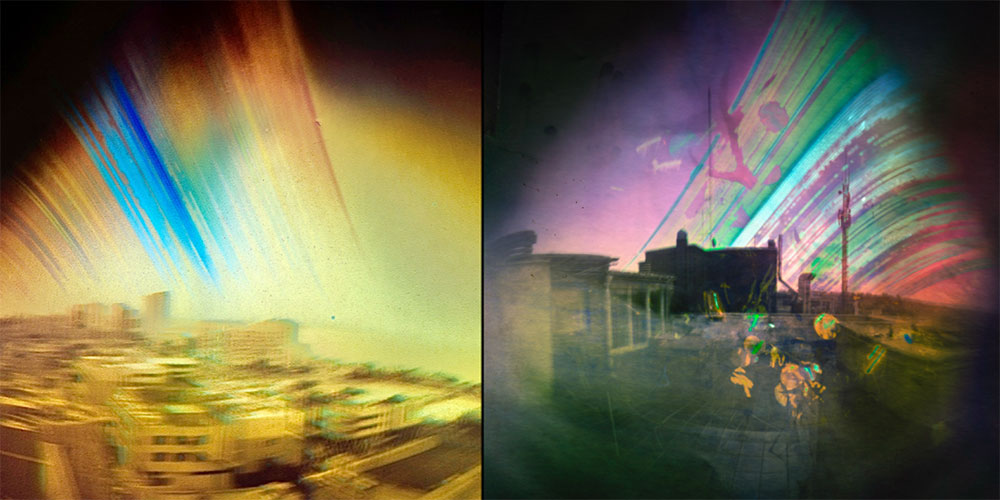
Dr. Abrar Al-Jamaan, assistant professor of Mathematics at AUK has published an article on soligraphy in the Astronomy and Geophysics journal of the Royal Astronomical Society. Solarigraphy is a distinctive photographic technique that employs specially constructed pinhole cameras, often crafted from upcycled materials like tin cans or film canisters. By exposing photosensitive paper to sunlight over extended periods—sometimes months or even years—these cameras create mesmerizing images that trace the Sun's path across the sky.
A global project has generated nearly 10,000 solarigraphs from over 100 countries, offering a worldwide perspective on the Sun's movement. This article highlights two specific locations: Kuwait and Madrid. In Kuwait, a camera was strategically mounted to incorporate the American University of Kuwait (AUK) buildings as a backdrop, while in Madrid, cameras were positioned to track the Sun's journey from winter to summer. The resulting images showcase different patterns influenced by local weather conditions: clear days produce continuous lines, whereas cloudy days result in broken, fragmented traces. This visual representation provides insight into the relationship between the Sun’s behavior and regional climate variations.
In essence, the solarigraphy project is more than just a visual spectacle. It advances our comprehension of solar dynamics, enhances renewable energy solutions, and serves as a creative bridge between art and science, encouraging us all to explore and appreciate the wonders of our universe.
To read Dr. Abrar’s article, click on this link.
A global project has generated nearly 10,000 solarigraphs from over 100 countries, offering a worldwide perspective on the Sun's movement. This article highlights two specific locations: Kuwait and Madrid. In Kuwait, a camera was strategically mounted to incorporate the American University of Kuwait (AUK) buildings as a backdrop, while in Madrid, cameras were positioned to track the Sun's journey from winter to summer. The resulting images showcase different patterns influenced by local weather conditions: clear days produce continuous lines, whereas cloudy days result in broken, fragmented traces. This visual representation provides insight into the relationship between the Sun’s behavior and regional climate variations.
In essence, the solarigraphy project is more than just a visual spectacle. It advances our comprehension of solar dynamics, enhances renewable energy solutions, and serves as a creative bridge between art and science, encouraging us all to explore and appreciate the wonders of our universe.
To read Dr. Abrar’s article, click on this link.
Solarigraphs produced of the daily movement of the Sun from the winter solstice to the summer solstice, starting in Kuwait (left) and ending in Madrid (right)
Related News
AUK Students Embark on Semester Abroad at Sciences Po
27, Sep 2026

Dr. Nizar Hamzeh Publishes Research on Kuwait’s Constitutional Approach to International Law
16, Sep 2026
AUK Provides 200 School Bags to Support Families in Collaboration with LOYAC
13, Sep 2026
AUK Tutoring Center Renews International CRLA Certification
25, Aug 2026
American University of Kuwait Partners with Ruba to Facilitate Flexible Tuition Payment Solutions
24, Aug 2026
American University of Kuwait Professor Clark Stoeckley Showcases Work at Dartmouth
18, Aug 2026
American University of Kuwait and Kuwait Airways Sign Memorandum of Understanding to Strengthen Academic and Professional Collaboration
09, Aug 2026
AUK Faculty Strengthen International Research Collaboration Through Dartmouth Partnership
26, Jul 2026

AUK Showcases Its Academic Programs at Universities Exhibition
24, Jul 2026
AUK Signs an MOU with the Kuwait Association of Accountants and Auditors to Strengthen Academic and Professional Collaboration
22, Jul 2026