

The Second Middle East and North Africa Regional Conference of Psychology
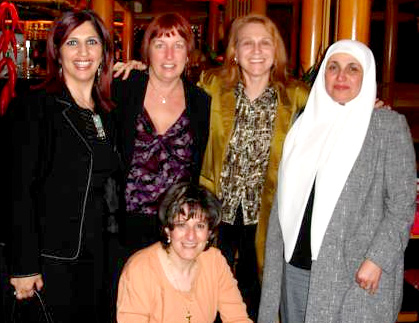
On April 29, 2007, Dr. Conerly Casey and Dr. Juliet Dinkha presented a paper, Memory and Subjectivity among Kuwaiti Youths: Child Witnesses of the 1990 Iraqi Invasion of Kuwait at The Second Middle East and North Africa Regional Conference of Psychology in Amman, Jordan. Their findings suggest that Kuwaiti young adults continue to have intrusive images of tortured and mutilated bodies triggered by the 2003 U.S. War on Iraq, and either obsessive anxious vigilance about the War on Iraq or complete disengagement. Young adults feel increased anxiety and aggression, using drugs and alcohol to lessen these feelings. They also report insecurity and confusion about human accountability for the Iraqi invasion, increased mistrust, nationalism and ethnic chauvinism. The effects of trauma and the traumatic remembrances of their respondents reflect a convergence of veridical recall, socialization and enculturation, and the trans-generational transmission of trauma through Kuwaiti family and social interactions. Dr. Casey and Dr. Dinkha suggest that these entangled memory strands, personal and social, foster ongoing insecurity, mistrust, nationalism and ethnic chauvinism, requiring relief that individuals may need, as well as attention to social and political responses to trauma in Kuwait.
The paper presented by Dr. Casey and Dr. Dinkha was well-received, generating substantial interest in the social and cultural contexts of well-being, and in combining psychological and anthropological approaches to research on psychology in this region. The paper led to potential research collaborations with faculty at Kuwait University that will deepen existing knowledge of the relations of individual Kuwaitis to their social and cultural communities.
This was the second presentation of their collaborative research. On December 5, 2006, Dr. Casey and Dr. Dinkha presented a paper, Tense Pasts: The 1990 Iraqi Invasion of Kuwait, Environmental Contaminants, and PTSD and Depression at Kuwait University's Third International Conference of the College of Social Sciences.
In addition to Dr. Casey's and Dr. Dinkha's presentation of their collaborative research, Dr. Dinkha presented two additional papers. Dr. Dinkha used symbolic interactionism as a framework in her paper, Foreign Workers in Kuwait: The Experience of Women Faculty, to explain the mechanisms students use in classroom settings to either perpetuate privilege systems and/or to influence the perceptions of others regarding the teaching and scholarship of women professors - especially those who are expatriate residents. Dr. Dinkha found that some students are particularly engaged in using privilege to devalue the professor and the academic process. Some are more engaged than others in using their sociopolitical position/s to exert power and authority over women faculty of color. Preliminary findings suggest that the dynamics of such relationships are stronger in Kuwait than in the United States as a result of differences in class structure and social welfare systems.
Dr. Dinkha presented a third paper (co-authored with her student Safaa Abdulhamid) titled How Identity Is Constructed: Analysis of Four Case Studies. Psychologists suggest that ethnic identity is a template through which people learn cultural knowledge, beliefs, norms, and expectations. Ethnic identity is a lens through which people perceive and define objects, situations, events, and other people. Dr. Dinkha's findings suggest that Kuwaiti young adults of mixed ethnic background create identities that incorporate values learned at home and in Kuwaiti communities in which they experience discrimination. Many suggest that they have created personal identities that help them to co-exist in Kuwait and to access basic resources such as education and healthcare, but have not been successful in forming identities that make them feel happy or proud of themselves.
Dr. Dinkha and Dr. Casey have agreed to participate in a collaborative book project that will be edited by Dr. Dinkha and Dr. Judy Kuriansky, representative of the International Association of Psychology to the United Nations. The book will combine psychological and anthropological approaches to the changing roles of women in the Middle East.
Related News