


The Turbulent Gulf and the GCC
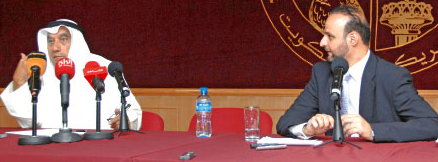
The former Secretary-General of the Gulf Cooperation Council (GCC) and Kuwaiti representative to the United Nations, Ambassador Abdullah Bishara, told a public audience at the American University of Kuwait (AUK) on Sunday, October 25, 2009, that the GCC could achieve "glory" through policies of moderation aimed at defeating religious fundamentalism and mitigating Iranian influence in the Gulf. Bishara's lecture, entitled "The Turbulent Gulf and the GCC," was sponsored by AUK's Gulf Studies Center and attended by members of the general public and the diplomatic corps, in addition to AUK faculty, staff, and students.
Focusing his twenty-five minute address on the twin historical challenges of Iraq and Iran, Bishara sought to assess the GCC's overall legacy in achieving its goals; Bishara claimed that "in the final outcome...we have pan-Arabism, radicalism, fundamentalism on the run," and hailed a "triumph of moderation" in the region. The GCC's first Secretary-General, from its inception in 1981 until 1993, Bishara described the GCC as a "status quo power," and spoke of the GCC's continuing mission to "build a wall against disorder flowing from Tehran and Baghdad." Weighing the Council's "profits and losses," Bishara said that the Arab Gulf states have ably "preserved the order of the Gulf," and made wise use of their wealth, creating an island of political and economic stability in the Middle East. Bishara cited this stability, based on the dependability, trustworthiness, and confidence of the region's governments and economies, as an essential precondition for the GCC's engineering of "the internationalization of the Gulf."
After critiquing the GCC's slow pace in fostering good governance and democratization, describing its deliberative process as "too cautious, too reluctant," Bishara nevertheless marveled at the GCC's rapid response in 1990 and 1991 to the Iraqi invasion of Kuwait. "During the Kuwait occupation, I saw a different catalog of traits" from the Gulf leaders, Bishara said. In that crisis, Bishara saw "an amazing coalition of determination, wealth, credibility, reliability, and friendship."
During a question-and-answer session following the lecture, Bishara warned of the grave risk posed by a nuclear Iran to the GCC's mission, noting that such a development "would tip the balance of power" and "impact the regional order so dear to the GCC," and advocated region-wide "Programs of Enlightenment" in religious re-education to combat "the curse of fanaticism."
Focusing his twenty-five minute address on the twin historical challenges of Iraq and Iran, Bishara sought to assess the GCC's overall legacy in achieving its goals; Bishara claimed that "in the final outcome...we have pan-Arabism, radicalism, fundamentalism on the run," and hailed a "triumph of moderation" in the region. The GCC's first Secretary-General, from its inception in 1981 until 1993, Bishara described the GCC as a "status quo power," and spoke of the GCC's continuing mission to "build a wall against disorder flowing from Tehran and Baghdad." Weighing the Council's "profits and losses," Bishara said that the Arab Gulf states have ably "preserved the order of the Gulf," and made wise use of their wealth, creating an island of political and economic stability in the Middle East. Bishara cited this stability, based on the dependability, trustworthiness, and confidence of the region's governments and economies, as an essential precondition for the GCC's engineering of "the internationalization of the Gulf."
After critiquing the GCC's slow pace in fostering good governance and democratization, describing its deliberative process as "too cautious, too reluctant," Bishara nevertheless marveled at the GCC's rapid response in 1990 and 1991 to the Iraqi invasion of Kuwait. "During the Kuwait occupation, I saw a different catalog of traits" from the Gulf leaders, Bishara said. In that crisis, Bishara saw "an amazing coalition of determination, wealth, credibility, reliability, and friendship."
During a question-and-answer session following the lecture, Bishara warned of the grave risk posed by a nuclear Iran to the GCC's mission, noting that such a development "would tip the balance of power" and "impact the regional order so dear to the GCC," and advocated region-wide "Programs of Enlightenment" in religious re-education to combat "the curse of fanaticism."
The former Secretary-General of the Gulf Cooperation Council (GCC) and Kuwaiti representative to the United Nations, Ambassador Abdullah Bishara with the Director of the Gulf Studies Center & Associate Professor of History and International Studies, Dr. Hesham Al-Awadi
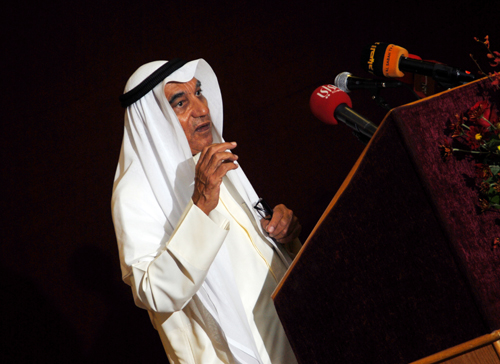
The former Secretary-General of the Gulf Cooperation Council (GCC) and Kuwaiti representative to the United Nations, Ambassador Abdullah Bishara
Related News

AUK Students Embark on Semester Abroad at Sciences Po
27, Sep 2026

Dr. Nizar Hamzeh Publishes Research on Kuwait’s Constitutional Approach to International Law
16, Sep 2026
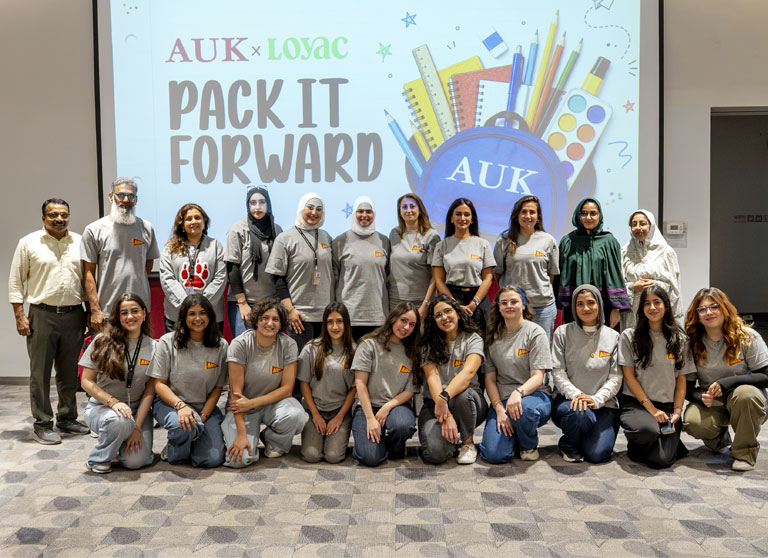
AUK Provides 200 School Bags to Support Families in Collaboration with LOYAC
13, Sep 2026
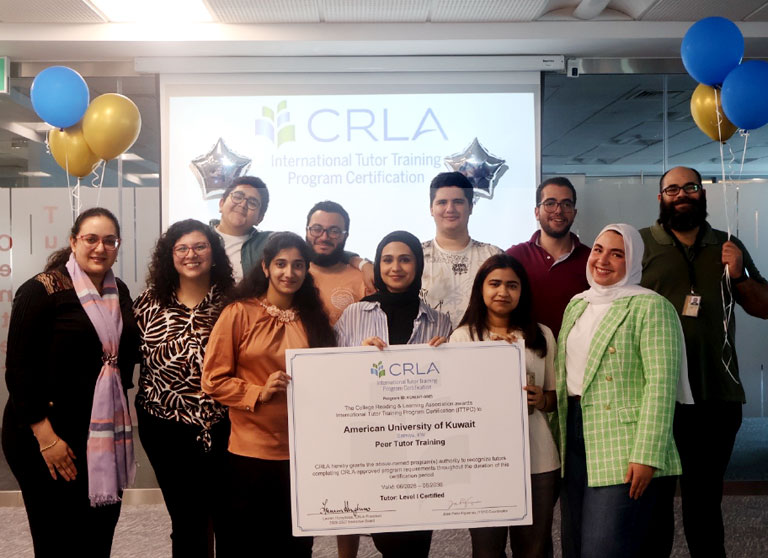
AUK Tutoring Center Renews International CRLA Certification
25, Aug 2026

American University of Kuwait Partners with Ruba to Facilitate Flexible Tuition Payment Solutions
24, Aug 2026
American University of Kuwait Professor Clark Stoeckley Showcases Work at Dartmouth
18, Aug 2026
American University of Kuwait and Kuwait Airways Sign Memorandum of Understanding to Strengthen Academic and Professional Collaboration
09, Aug 2026
AUK Faculty Strengthen International Research Collaboration Through Dartmouth Partnership
26, Jul 2026

AUK Showcases Its Academic Programs at Universities Exhibition
24, Jul 2026
AUK Signs an MOU with the Kuwait Association of Accountants and Auditors to Strengthen Academic and Professional Collaboration
22, Jul 2026