

Women's Political Participation, Leadership and Political Activism by Dr. Sarah Brewer
AUK had a brief but compelling talk from a very charismatic Dr. Sarah Brewer, Associate Director of the Women and Politics Institute at American University in Washington DC, and author of numerous notable publications such as Gendering American Politics: Perspectives from the Literature, Women Campaign Consultants: A New Actor in the Campaign Process, and Women in Politics: Outsiders or Insiders?
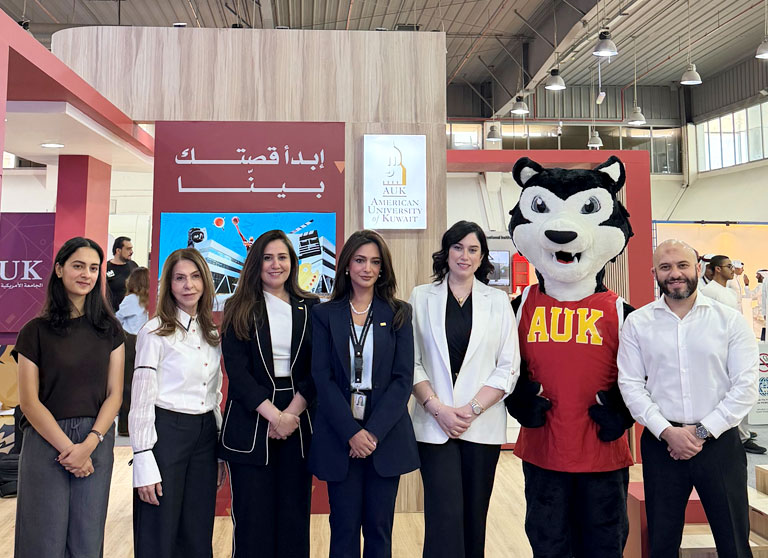
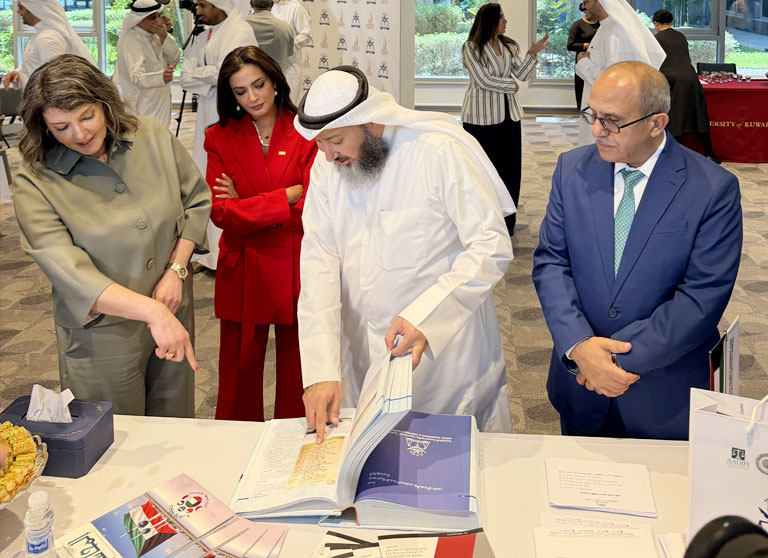
Approximately 50 students, faculty and staff members gathered at the American Corner at the library to listen to Dr. Brewer speak about the challenges of Women's Political Participation.
Brewer noted that much of what stands in the way of women's political participation are societal barriers. Women are generally not ambitious enough, this is partly due to them being part of societies that don't look favorably upon strong, ambitious women, and having historically not been socialized into politics.
A poll in the United States showed that only 40% of women have ever thought about running for office, while nearly all men said to have thought about it at some point in their lives.
Access problems have been eradicated, both in the US and now in Kuwait, but there still exist many structural barriers that keep women from entering the political sphere, she said. There are business and social networks that govern politics which are traditionally dominated by male society, and those are the most difficult barriers to deconstruct.
Brewer said it was very important to mention the work of one organization which was built on the idea of empowering women nation-wide to enter politics. Emily's List, founded by Ellen Malcolm in the mid-1980s, sought to raise funds and sponsor women all over the US who were running for public office. The methods of Emily's List were revolutionary at the time because they did not limit funding to any particular district.
She went on to describe the ability barrier in women. A self-inflicted problem, the ability barrier stems from a woman's own self-doubt and feelings of inadequacy. Studies showed, she said, that men despite how unqualified they are, always feel like they can do the job. Women, on the other hand, no matter how qualified, tend to feel like they don't know and can't do enough. Women need a lot more encouragement than men to run for office, and are quickly discouraged by not winning, and often don't try again.
Brewer commended Kuwaiti women for their recent enfranchisement and urged them to make use of their rights and to not shy away from entering the political arena. She congratulated Jawaher Ali-Redha, President of AUK's student body, for having won the title and encouraged her to stay politically active, noting that people who start practicing politics at the university level are more likely to succeed in making a political career for themselves later in life.
Related News