

News
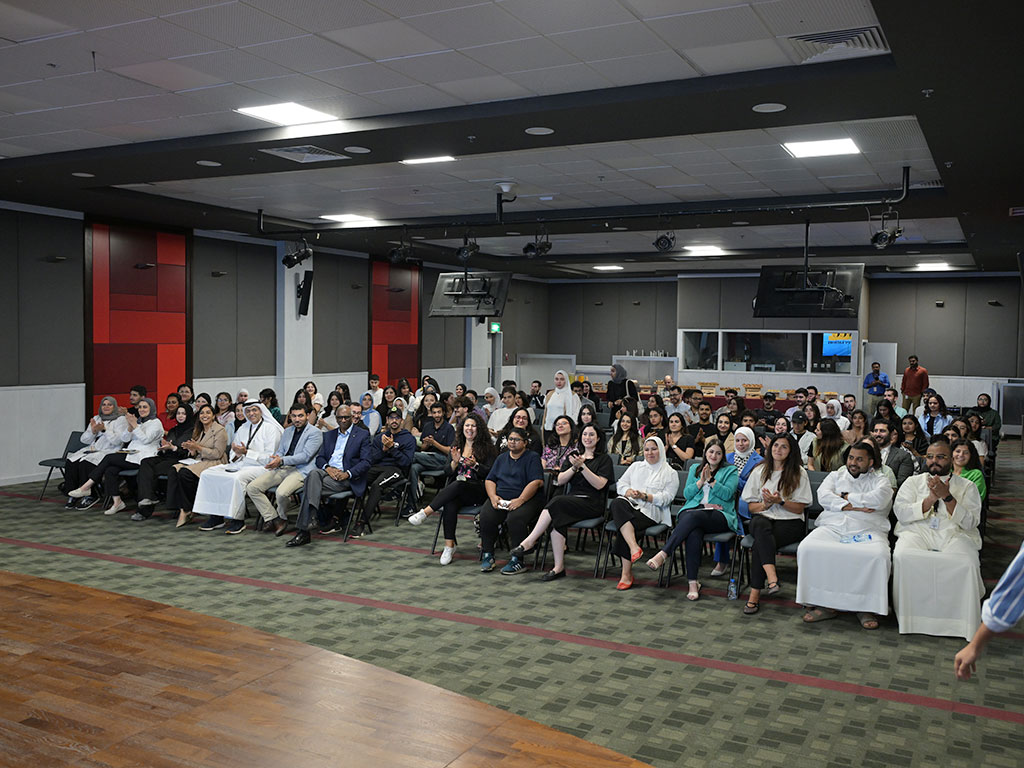
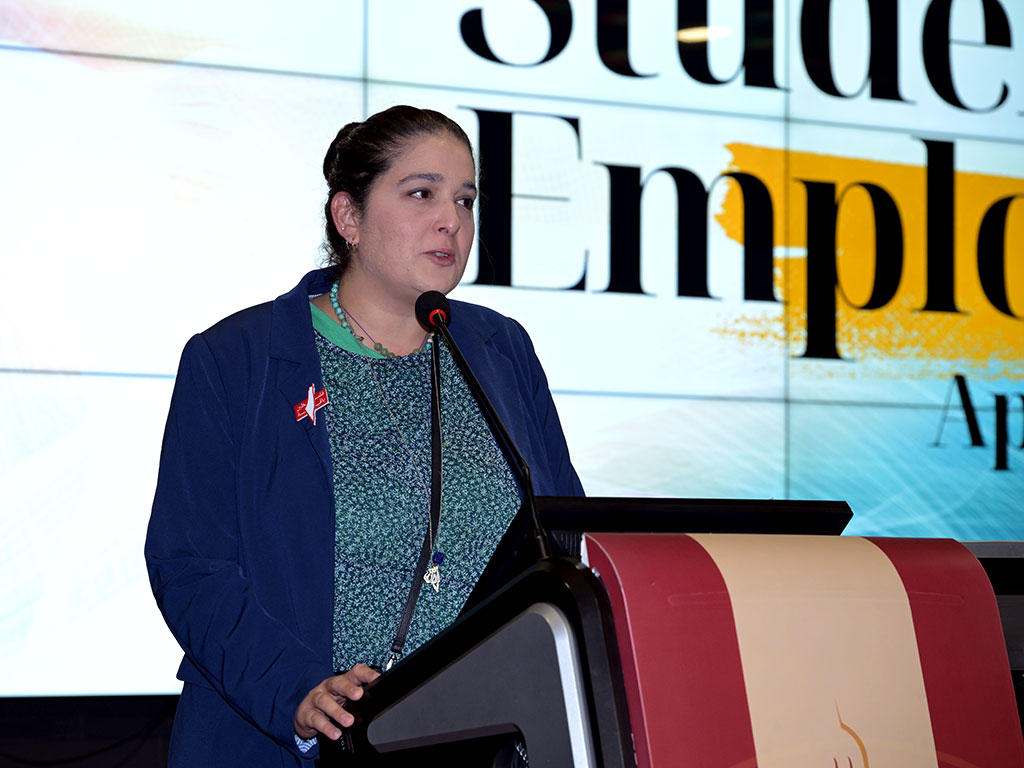
The 3rd Annual AUK Spring Career Fair was held on Sunday April 1st 2007. It was a huge success. 28 local companies registered and over 400 students attended the fair. The companies set up booths and offered miscellaneous services, freebies, and advice. Students were offered the chance to talk with representatives and apply for internships and jobs.
Employers commented repeatedly on how impressed they were with the students' preparation. Many students were dressed professionally and brought copies of their CVs, and several students were scheduled for job interviews as a result of their active participation.
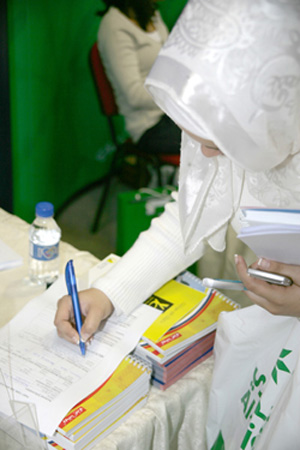
Approximately 300 students attended AUK's Second Annual Health Fair, which was held on campus on Monday 12 March. Through free samples of foods and services, gift vouchers and discount memberships students were introduced to a variety of healthy options in Kuwait. The outdoor daytime event offered students free eye tests, dental, and diabetes check-ups. Skin specialists were also on-hand to give free skin care tips and skin product giveaways.
The following establishments participated in the Fair:
- International Clinic came with promotional items and gift vouchers for their clinic's services.
- United Laboratories performed free blood pressure and diabetes testing.
- Maidan Dental Clinic offered free dental checkups and opened new files for free.
- Blendz gave free samples of their health shakes and smoothie.
- Dr Juliett Dinkha provided individual depression screenings.
- Student Success Center provided eating disorder screenings as well as nicotine patches to help quit smoking.
- Crowne Plaza provided free freshly prepared sushi from Sakura, and free restaurant vouchers.
- The Palms provided free massages and information about their dive center.
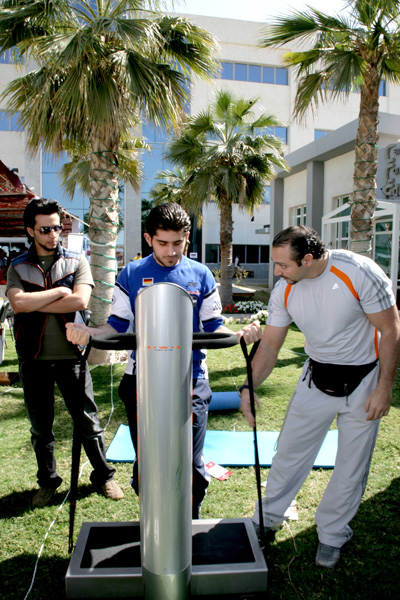
- Flex provided 25% off memberships, and demonstrated their gym equipment.
- Duce & Luce and Fashion Diva provided free hand massages and manicures.
- Neutrogena provided free skin analysis and skin care products.
- Johnson & Johnson provided free eye exams, eye care information, and free contact lenses.
- 6k provided free t-shirts and promoted their weekly exercise runs.
- Fawzia Sultan Rehabilitation Institute provided free physiotherapy assessments and promotional items.
- Sas Radisson provided information about their Viking Club.
- Lofat provided fat free cookies, brownies, and wrapped sandwiches.
- Essentially Fit modeled and donated fitness attire and gym bags.
AUK students attend the health fair
AUK students attend the health fair
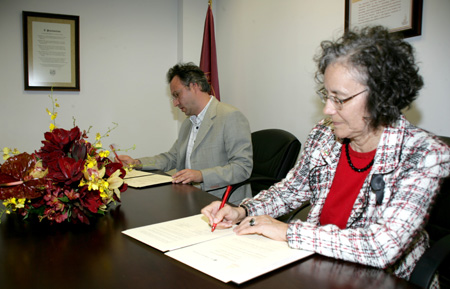
On Monday 12 March, The American University of Kuwait (AUK) signed a Memorandum of Understanding with New Bulgaria University (NBU) in Sofia, Bulgaria. The two universities have agreed to launch a series of advisory and cooperative ventures over the next five years.
Through signing the memorandum, the American University of Kuwait, represented by President Marina Tolmacheva, and New Bulgarian University, represented by Mr. Velin Belev on behalf of Rector Sergei Ignatov, agreed to establish an academic partnership to develop joint activities within the framework of the Agreement, including: the development of programs for the exchange of students and teachers, and the organizing of joint seminars, summer courses, and other activities.
The two universities also agreed to develop joint research projects and may apply for funding from relevant foundations and programs. They will cooperate in expanding the international university contact network and disseminate information about the partners' activities.
American University of Kuwait is a liberal arts institution based on the American model of higher education and fully accredited by the Private University Council of Kuwait. AUK also has a memorandum of cooperation and understanding with Dartmouth College, an Ivy League institution established in 1769 in the state of New Hampshire (USA).
New Bulgarian University was established in 1991. In 2001, NBU obtained institutional accreditation from the National Evaluation and Accreditation Agency for the maximum 6-year period, and in December 2005 it passed through the second accreditation procedure. In 2004 NBU was accredited by The Open University in Great Britain.
It was the first university in Bulgaria to introduce the credit system, Distance Learning, and Continuing Education.
The educational philosophy of NBU is based on the liberal idea of education, relating the acquisition of knowledge and professional specialization to the general spiritual development. More information about NBU can be found at www.nbu.bg.
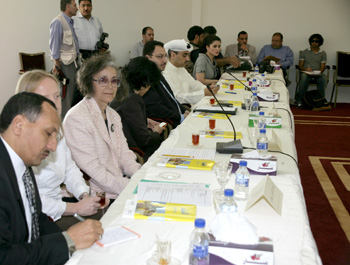
The signing Ceremony at AUK
President Marina Tolmacheva:
It is with great pleasure that we are participating for the fourth time in the Education and Training Exhibition, organized by the Kuwait International Fair (KIF), under the auspices of his Excellency Dr. Adel Al-Tabtabaie, Minister of Higher Education.
The American University of Kuwait is a liberal arts institution, based on the American model of higher education, fully accredited by the Private University Council of Kuwait. AUK has a memorandum of cooperation and understanding with Dartmouth College, an Ivy League institution established in 1769, in the state of New Hampshire (USA).
AUK is dedicated to providing students with knowledge, self awareness, and personal growth experiences that can enhance critical thinking, effective communication, and respect for diversity. AUK seeks to create leaders and life-long learners who aspire to the highest standards of moral and ethical responsibility in their societies.
It is an exciting time at AUK, where I was recently happy to announce the introduction of a new major, and several new minors into the university's academic program. The new major now available is the Bachelor's Degree in Graphic Design, and students can now minor in any of the following new minors: Environmental Studies, Gulf Studies, Arabic, Mathematics, Visual-Performing Arts, Natural Sciences, and Human Resources.
AUK is now in its third year of academic operation, and currently enrolls 1,200 students at our hi-tech and modern campus in Salmiya.
We look forward to meeting prospective students and their parents at the exhibition. Our Admissions staff will be available throughout the four days to explain the admissions process at AUK, talk to visitors about campus life, and provide information on the different academic programs available at AUK.
Personnel from The Center for Continuing Education at AUK will also be available at the exhibition to inform visitors about the courses and programs the center has been offering since April 2006.
Dr. Marina Tolmacheva during the EDUCARE press conference
AUK Booth at EDUCARE
Prospective students visit the AUK booth
Prospective students visit the AUK booth
A total of 280 students have been admitted for Spring Semester 2007 at the American University of Kuwait. 197 of those students have been admitted into the undergraduate program, the remaining 83 have been admitted into the Intensive English Program at the University.
Each semester, the Student Affairs team along with the University New Student Orientation Leaders welcomes a host of new students to the American University of Kuwait. New AUK family members attend daylong sessions, known as PAR, in preparation for academic life at AUK. The Placement, Advisement, Registration (PAR) program is intended to assess the student's academic skills in English and Math and Arabic, give advice for the initial term of enrollment, and teach the student how to use the self-service tools that they will need throughout their college career. Another important aspect of PAR is new student orientation. Students get the opportunity to meet other new students and are mentored, given tours and acclimated to the programs and services of AUK by continuing students. Our goal is instill success before the students begin classes. PAR brings the University to Life for new students; we are happy to welcome them to the AUK family.
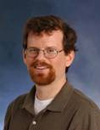
Dr. Michael Herb
Dr. Herb will be with us during the spring semester conducting research and teaching a course on Arab Politics. His research is on Kuwaiti politics, specifically the relationship between the Majlis al-Umma (National Assembly) and the government, to better understand how this has changed over time, and the degree to which Kuwait is - or is not - moving in a more democratic direction. Dr. Herb received his PhD from UCLA, and is currently an associate professor at Georgia State University. He was in Kuwait as a Fulbright student in 1993-94, and later published a book that drew, in part, from his research in Kuwait titled "All in the Family: Absolutism, Revolution and Democracy in the Middle Eastern Monarchies." Dr. Herb has also written on oil and politics, and democratization in monarchical systems of government.
Ms. Hema Mohan
Ms. Mohan will be at AUK through November 2007 conducting research on a system to standardize transliteration from Arabic into English. The first portion of her grant was in Yemen, where she attended Arabic language courses. Additionally, Hema is returning as an Administrative Intern in Student Life, where she first worked as a Dartmouth intern in the spring of 2005. Ms. Mohan graduated from Dartmouth College in 2006 with an A.B. in Arabic and Spanish.
Dr. Urkevich takes a look at the origin and evolution of art form
By Valiya S. Sajjad
Courtesy of Arab Times
24th January, 2007
The event was held on Monday 22nd January, 2007
Sawt is the leading traditional music of Kuwait, says Dr Lisa Urkevich, Head of Humanities and Arts and Professor of Musicology and Ethnomusicology at the American University of Kuwait (AUK).
She was giving a lecture at Dar Al Athar Islamiyyah Monday on the topic "Sawt: The Art Song of Kuwait." Audience were given a demonstration of the art form by a group of Kuwaiti students prior to the lecture.
The professor compared Sawt to the Blues of the western traditions owing to the "rebel nature of its early musicians and its lovelorn lyrics." Sawt pieces are usually performed with one singer accampanied by three main instruments: The Ud (lute), Mirwas (small hand drum) and the violin.
She explained the evolution of Sawt from humble art form intially performed by a small ensemble gathered in an intimate setting with a modest group of guestsinto a celebratory music of the sea community, attracting hundreds of audiences. "Paired dancing and robust handclapping was also part of the early Sawt culture."
"In the early days of its expansion, Sawt was distinguished by descriptive titles such as Sawt Yamani, Sawt Sanyani, Sawt Bubula etc. But these designations had nothing to do with the musical structure, and were merely programmatic. Since around 1950 Sawt has been classified by their rhythmic modes, of which three meters are prominent: Shami (in 8), Arabi (in 6) and Khayyali (in 12). Khayyali is found only in Kuwait, not in Bahrain."
Sawt draws from Arab Traditions, like Yemen, although its core is Kuwaiti. "It was innovated by the Kuwaiti Abdullah Al Farraj (1836-1903) and his early manifestations were kept alive by his immediate followers such as the brothers Khalid Al Bakr Yusuf Al Bakr (1875-1955). Sawt was further developed by famous musicians like Abdulatif Al Kuwaiti (1904-1975); Mahmood Al Kuwaiti and the Jewish brothers Daud (1910-1976) and Saleh Al Kuwaiti (1908-1986). They later moved to Iraq Where their career flourished."
Dr Lisa Urkevich came to Kuwait in 2003 to research through a grant from the US State Department Fulbright program. For over two years, she made field recordings and documented findings on the music and musicians of Kuwait and the neighbouring countries of the Gulf. This contributed to her earlier work in Saudi Arabia where, for four years, she lived and did research in various areas of the kingdom.
Before coming to Kuwait, Dr Urkevich was a professor at Boston University where she taught Arabian music. She has also been a visiting professor at various institutions.
She has four degrees in music: a PhD from the University of Maryland, a MM degree from Florida State University, a BS from Towson University and a BA from the university of Maryland. She is currently working on a CD with a book project with her colleague Ahmed Al Salhi on Kuwaiti Sawt.
Copyright (C) 2007 Arab Times
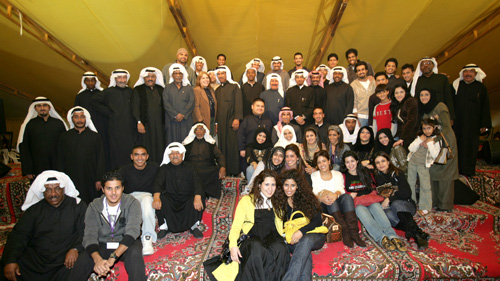
Dr Urkevich with members of Bin Hussain Sea band and AUK students
Dominique Gergen and Rose Mutiso, will be working with various departments on campus from now until late November. Please welcome our newest interns from Dartmouth College.
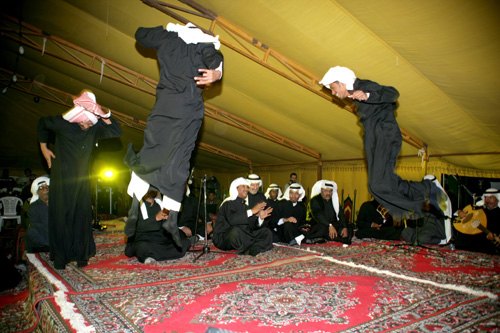
In honor of Liberal Arts week, AUK hosted a cultural performance by Bin Hussein Sea Band, on Tuesday December 12 at 7 p.m.
Bin Hussein Sea Band is the premiere sea band of the Arabian Gulf. This beloved and spirited troupe performs the music of the pearl divers and merchant seamen of Kuwait's past. Their performances are always very popular and genuinely "Kuwaiti."
The tent on AUK's campus was filled with faculty and staff, students and their families and pleasurable time was had by all.