


News
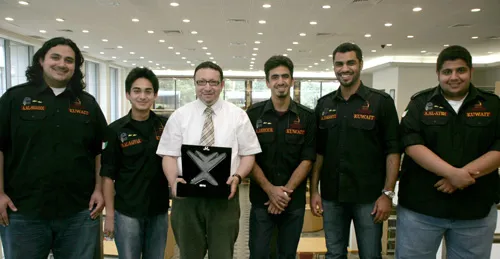
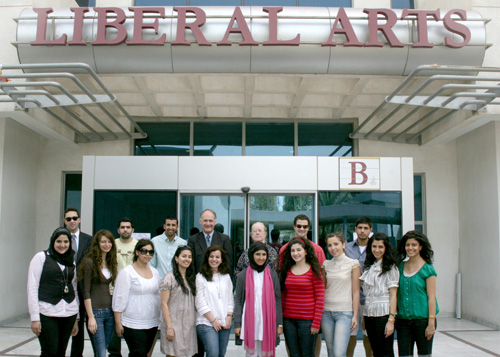
The AUK CSIS team.
American University of Kuwait (AUK) students won the Mobile Development category of Microsoft Gulf 2009 Imagine Cup held in Dubai. The Imagine Cup is endorsed by the United Nations Educational, Scientific and Cultural Organization (UNESCO) which is the UN agency responsible for the promotion of international cooperation in the fields of education, science, culture and communication. Each year the Imagine Cup chooses its theme from the UN Millennium goals.
The competition challenged the regions' most talented students to 'Imagine a world where technology helps solve the toughest problems facing us today.' The United Nations has identified some of the hardest challenges in the world today in its Millennium Goals. This year the Imagine Cup Gulf region used these ambitious challenges as a guiding light to inspire change all over the Gulf region.
The AUK CSIS team project was titled ElectReduce which is a real time energy consumption monitor that helps reduce electricity consumption using mobile phones. The AUK team spent numerous weeks researching, designing and implementing a working prototype solution to their chosen problem and building a presentation that put them in first place and won the admiration of the judges, the audience as well as the other teams. The team was sponsored by Burgan Bank and Microsoft.
The AUK CSIS team was composed of Dr. Amir Zeid, Program Lead of Computer Science who served as mentor and coach, and the following students:
Abdullah Al-Shaikh, Computer Science and Information Systems (double major)
Salman Al-Saffar, Information Systems major
Ahmad Ashour, Computer Science major
Abdelwahab Al-Atiqi, Information Systems major
Ali Dashti, Information Systems major
Released by the PR & Marketing Department
Photography by the AUK Public Relations & Marketing Department (C)2009
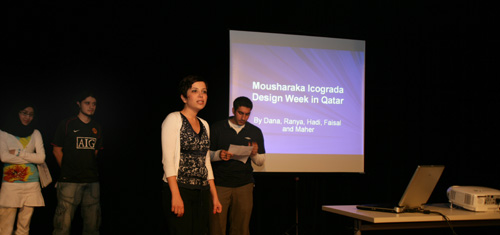
With the theme Mousharaka, a term which in Arabic means "collaboration", the event aimed to bring together practitioners, scholars, and students across design disciplines, cultures and regions to build bridges and raise awareness of the importance and promise of collaboration, and create bonds necessary to achieve the full potential of design in the Gulf region.
The week-long event was composed of two parts, an education symposium and a professional conference, both of which provided ample opportunity for attendees to engage in discussions and activities that related to collaboration in the academic discipline of design. The Professional Conference featured four keynote speakers and eight prominent presenters who shared their perspectives on design and design collaborations. Additionally, the event launched Design Debate Doha, in which the design community addressed global design issues.
For Ranya Al-Mastaki, one of the five AUK students who attended the conference, the best part was having the opportunity to network with big names in design, like David Gibson, published pioneer in the field of public information design and Co-founder and Managing Principal of Two Twelve Associates, Inc in New York City.
Al-Mastaki left the conference not only with a deeper understanding of the importance of collaboration in design but also aware of the years of experience necessary to maintain a personal touch in a collaborative design, which often proves to be a challenge for beginning design students.
For more information on Graphic Design at AUK, please visit: http://www.auk.edu.kw/academics/deg_programs/graphic_design.jsp
For more information on the conference, including a schedule of the events, visit the website at: www.mousharaka.com
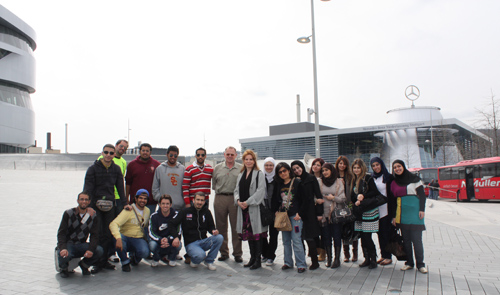
The students' study abroad program was sponsored by Burgan Bank and a private sponsor eager to help senior students have a chance to see theories they learn at AUK in practice employed by the most modern manufacturers in Europe.
The students began their tour in Frankfurt visiting Deutsche Bank where they found operations on the trading floor most interesting. The students also visited the Frankfurt Stock Exchange.
A visit to the SMART car plant at Smartville provided an opportunity to see the complete assembly line at Europe's most modern car assembly plant. visit to John Deere provided an opportunity to see the different elements which are needed in the production of significantly larger machines particularly agricultural machines like the combine harvester.
The impressive precision links supported by advanced computer programs and high-tech manufacturing equipment provide practical experience in the extremely complex world of the modern factory.
The students visited DOW Chemical plant where they were taken through the polystyrene extrusion process and saw the production of various sizes of Styrofoam. Visits to Daimler Benz and General Motors provided excellent examples of the shared relationships between these companies when manufacturing and supplying parts for the powertrains of Mercedes, General Motors, and BMW automobiles.
The students also had opportunities to learn about the interrelationship between business and culture in Europe where finance and manufacturing still "fit in" with everyday life and the "greening" of industry. Significant efforts to become energy efficient were in evidence at every plant visited.
Study Abroad is very much in keeping with the Mission of the American University of Kuwait to provide students "with knowledge, self-awareness, and personal growth that can enhance critical thinking." These students will bring back their experiences and share them in class with other students and promote a better understanding of the complex world of the global economy.
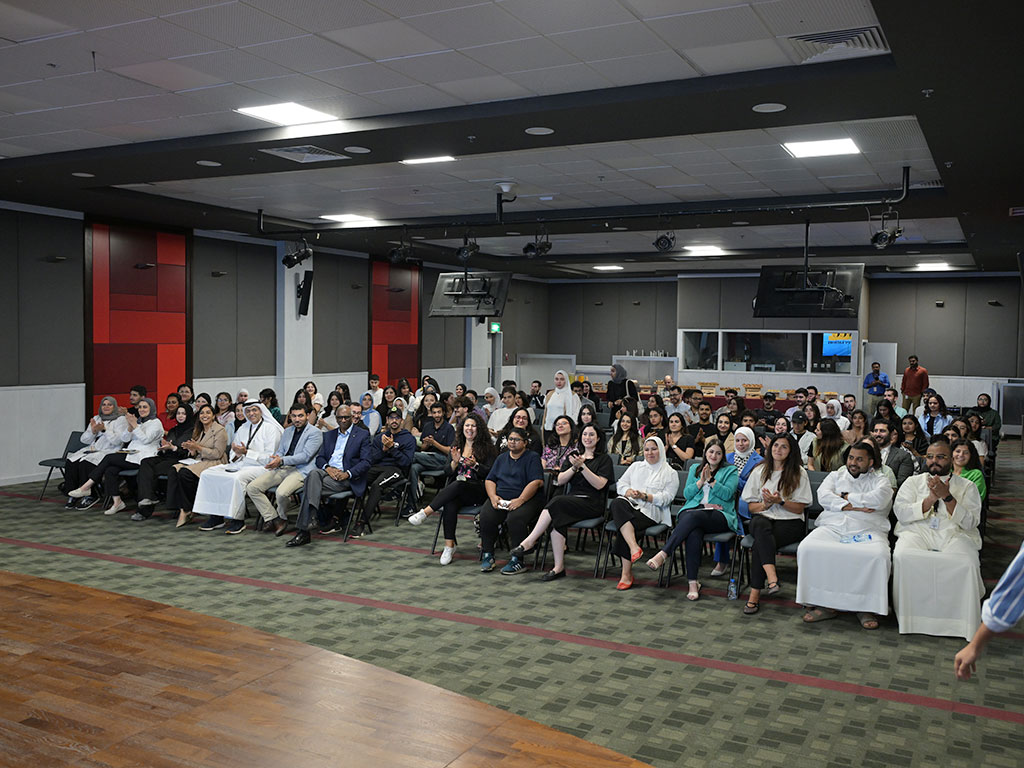
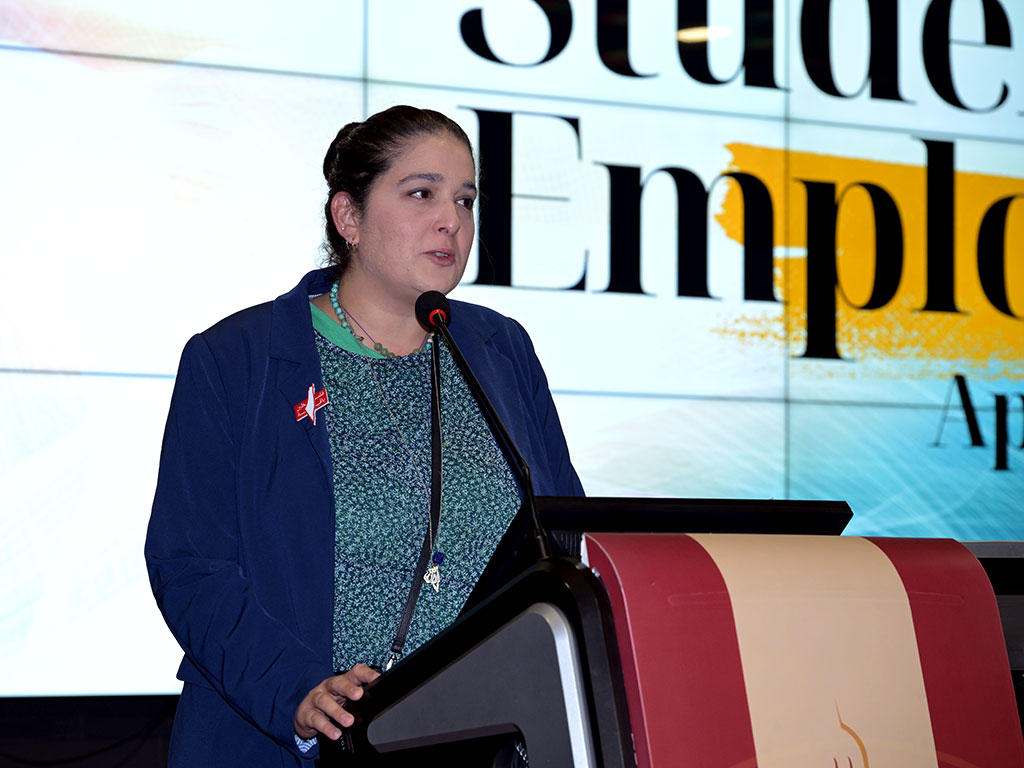
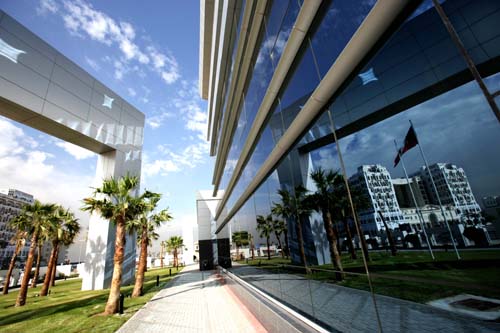
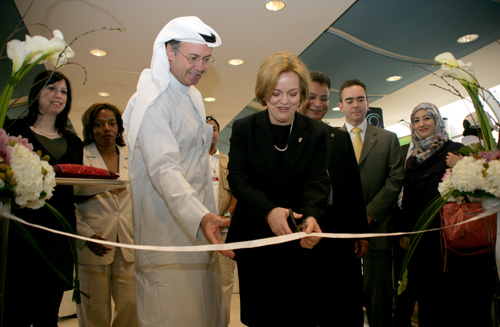
AUK students will have the opportunity to meet recruiters and learn about the employment opportunities available to them in the local and international market. Cutting of the ribbon by the Platinum Sponsor and words from the AUK President will commence at 10 am.
In keeping with AUK's mission of providing liberal arts education for well-rounded, effective graduates, the students on this field trip will be taking responsibility for their own learning. Students are required to develop their own topics and make contacts in Iceland with business people who can provide them with first-hand information they will require to address their questions about the effects of the collapse of Iceland's banks. They will be exposed to many new experiences, such new life experiences will broaden their understanding and enhance their confidence in facing new challenges. This kind of learning lies at the heart of liberal education. What these students learn in Iceland could be crucial should Kuwait face a banking crisis in the future.
Departure: Friday April 10, 2009
Return: Sunday April 19, 2009
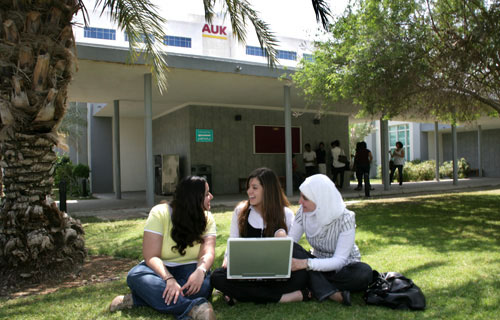
The coverage allows users to access the internet via the sponsored 'Zajil' internet connection from the list of available WI-FI networks. Once the network is selected, the internet browser will open to 'Zajil's' welcome page, where a click on 'connect' will establish an internet connection for one hour at a time.
Fifteen companies participated in the event which was sponsored by AUK and Zain. This is the first time AUK takes part in the exhibition, promoting technology driven majors such as Information Systems, Computer Science and Computer Engineering.
Some of the companies participating include: DIGITS, the American University of Kuwait, Zain, AAB International Photographic Company, Fun Watch, Gulfnet Communications Company, and Boubyan Bank.
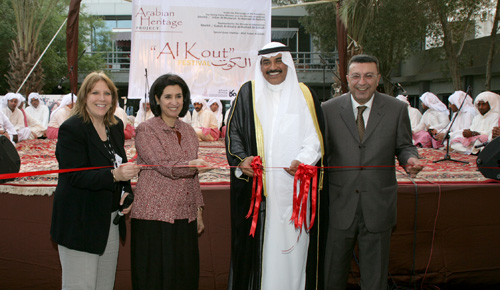
Under the Patronage of His Excellency Acting Prime Minister and Minister of Defense Sheikh Jaber Al-Mubarak Al-Hamad Al-Sabah, who was represented by the Minister of Information, Sheikh Sabah Al-Khalid Al-Sabah the festivities commenced at 5 pm and the Hamid bin Hussein Sea Band followed with a performance that attracted many members from the AUK community as well as from the public. Other special guests that attended the festival included Patron and Founder of the Sadu House, Sheikha Altaf Salem Al-Ali Al-Sabah and US Ambassador Deborah K. Jones.
In addition to seven hours of stage performances, the festival featured a bazaar, with several booths from local businesses and vendors, set up along the main corridor of the University, as well as art exhibitions by the National Museum, Sawt musicians, Bedouin poetry, distinguished live craftsmen, student art exhibits, and many other examples of authentic Kuwaiti traditions and culture.
Dr. Lisa Urkevich, Director of the Arabian Heritage Project, said that she was very pleased with the public turnout at the festival and looks forward to future events put on by the Arabian Heritage Project including a lecture series by the Sadu House.
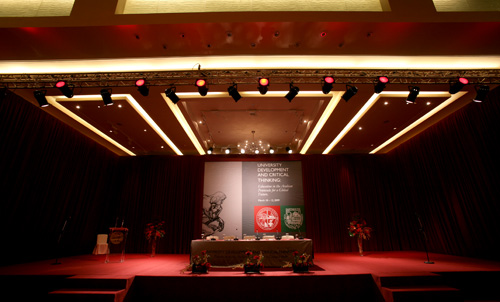
In her opening remarks, Sheikha Dana Nasser Al-Sabah, Chair of the AUK Board of Trustees and one of the university's founders, summarized the spirit of the conference, reminding an audience of more than 300 educators, policy leaders, scholars, and students that "Arab higher education institutes have existed for more than a millennium," Pointing to the break in that tradition, she noted that at the present time, "almost 60 percent of our universities are less than 15 years old." Sheikha Dana focused on the implications of and the challenges associated with, building complex and high-quality institutions of higher learning, "The successful development of [these institutions] is not a matter of choice for our region," she said, "but rather, an imperative that promises to break the status quo of the declining trend in education." She urged educators and leaders to take an active role in influencing public policy "to facilitate the formulation of higher education models that are indigenous, yet meet international standards."
His Royal Highness Prince El-Hassan Bin Talal, Hashemite Kingdom of Jordan, delivered the keynote address at the opening session. He spoke of the university as a center for human development; of its role through history and the challenges it confronts today. "Muslims have inherited from their first generation," he said, "the wisdom of 'Seek knowledge, even unto China'. Now we do not have to travel to China or to America: Dartmouth College and the American University have travelled to be with us here in Kuwait, to engage in what I have often referred to as the noble art of conversation."
His Highness sounded a cautionary note about university development at a time of financial instability. "In the current global economic crisis, will institutions dedicated to ensuring human dignity be last on the list for policymakers? They may well be, if history is a guide. But with crisis comes opportunity for change."
On the theme of "Critical Thinking," Prince El-Hassan observed, "Achieving human dignity on a global level requires more than just education. It requires a particular kind of education...we need 'lateral thinking,' he said, "the kind of thinking that students in liberal arts institutions are encouraged to learn." He used the AUK-Dartmouth collaboration as a model, saying
"At [AUK], East and West are getting together to find out more about each other. We should make it our aim to encourage our young Arab people to re-examine their views about those from the West, as well as those from the West to re-examine their views about the Arabs, Muslims and Islam. This would be an added bonus from our drive for critical, collective intelligence. This is our way to shape the future."
Conference co-organizers Dale F. Eickelman, the Ralph and Richard Lazarus Professor of Anthropology and Human Relations at Dartmouth College in Hanover, New Hampshire, and Clifford Chanin of New York closed the evening's event. "Everyone is committed to a knowledge-based society," they said. "The issue that we have to explore is how this aspiration translates into building institutions of higher education in this region." Eickelman also serves as the Relationship Coordinator for the Dartmouth College-American University of Kuwait Project.
The following two days saw participants tackling a number of issues including the global culture of critical thinking, exercising leadership in new universities, the impact of gender issues in higher education in the region, Islamic educational traditions in critical thinking, and university development and public awareness.
A partial list of institutions who sent representatives to the conference includes Kuwait University, the University of Bahrain, the Qatar Foundation, Zayed University (UAE), Jordan's Hashemite University , Princess Sumaya University, the University of Nizwa (Oman), the Lebanese American University, United Arab Emirates University, the Aga Khan University Institute for the Study of Muslim Civilizations (London), the Council on Islamic Ideology (Pakistan), the University of Sharjah, and the Teagle Foundation (New York).
The American University of Kuwait is the first private liberal arts institution in Kuwait. It is dedicated to providing students with knowledge, self-awareness, and personal growth experiences that will enhance critical thinking, effective communication, and respect for diversity. It works closely with Dartmouth College to provide a wide-ranging liberal education to students from across the Gulf nations, grounded in the region's culture and based on the American model.
Dartmouth College, renowned for its focus on undergraduate liberal arts education, was founded in 1769. Located in Hanover, New Hampshire, it is a member of the Ivy League. Its collaboration with AUK began in 2003 with a Memorandum of Understanding that allowed the two institutions to work together. The range of collaborative projects between AUK and Dartmouth continues to grow, to the benefit of both institutions.