

News
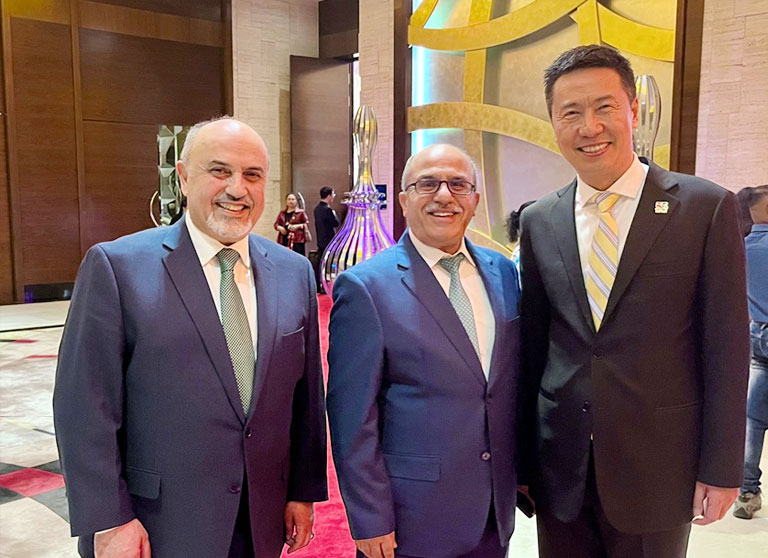
AUK was represented at the celebration marking the 55th anniversary of diplomatic relations between the State of Kuwait and the People’s Republic of China, held at the invitation of the First Secretary of the Embassy of the People’s Republic of China.
Representing AUK’s College of Business, Dean Dr. Mohammed Elian and Dr. Nabeel Sawalha attended the commemorative event, which brought together members of the diplomatic corps, academic institutions, and distinguished guests. The program featured a traditional Chinese acrobatic performance, cultural presentations, and a formal dinner reception honoring more than five decades of bilateral relations between Kuwait and China.
The invitation followed the Embassy’s recent participation as Guest of Honor at the Culture Showcase organized by Dr. Sawalha for the International Business course at AUK. The showcase provided students with direct exposure to international diplomatic perspectives, reinforcing the practical and global dimensions of business education.
AUK’s participation in the anniversary celebration reflects the College of Business’s ongoing commitment to outreach, international engagement, and academic collaboration. Such initiatives support the University’s broader internationalization efforts and create valuable opportunities for cultural exchange and experiential learning.
Through sustained partnerships with diplomatic and global institutions, AUK continues to advance its mission of preparing students to succeed in an increasingly interconnected world.
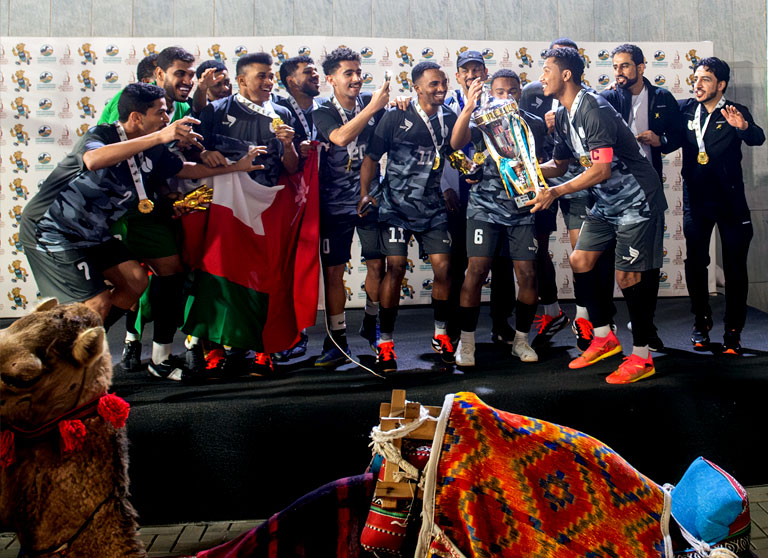
AUK successfully concluded the second season of the Gulf Universities Championship (GUC), welcoming student-athletes from across the Gulf Cooperation Council for three days of competitive play marked by sportsmanship and regional engagement.
Building on the success of its inaugural season, the championship expanded this year to include Futsal and Padel competitions for men and women, reflecting AUK’s ongoing commitment to promoting active lifestyles and strengthening inter-university collaboration through sport. Participating institutions included AUK and the American University of the Middle East from Kuwait, the University of Technology and Applied Sciences from Oman, the University of Doha for Science and Technology from Qatar, and the American University of Bahrain.
In Women’s Padel, the American University of Bahrain secured first place, followed by the American University of the Middle East in second and AUK in third. The Men’s Padel competition saw the American University of Bahrain claim first place, with AUK placing second and the University of Doha for Science and Technology finishing third. In Men’s Futsal, the University of Technology and Applied Sciences earned first place, the University of Doha for Science and Technology placed second, and the American University of the Middle East secured third.
Individual honors in Futsal were awarded to Zaher Alaysari of the University of Technology and Applied Sciences as Top Scorer, Abdullah Alalawee of the same institution as Best Goalkeeper, and Yousef Shrief of the University of Doha for Science and Technology as Most Valuable Player.
“This championship reflects what university sports should represent—unity, character, and opportunity,” said Omar Mehdi, Director of Student Life at AUK. “Bringing together universities from across the Gulf creates meaningful connections beyond competition. We are proud to host GUC for a second season and to continue building a platform that supports student growth, wellness, and regional collaboration through sport.”
With increased participation, expanded sporting disciplines, and strengthened partnerships, GUC Season 2 represents another milestone in positioning AUK as a leading hub for collegiate athletics in the region. Planning is already underway for future seasons, with a continued focus on expanding opportunities for student-athletes across the Gulf.
Images from the event
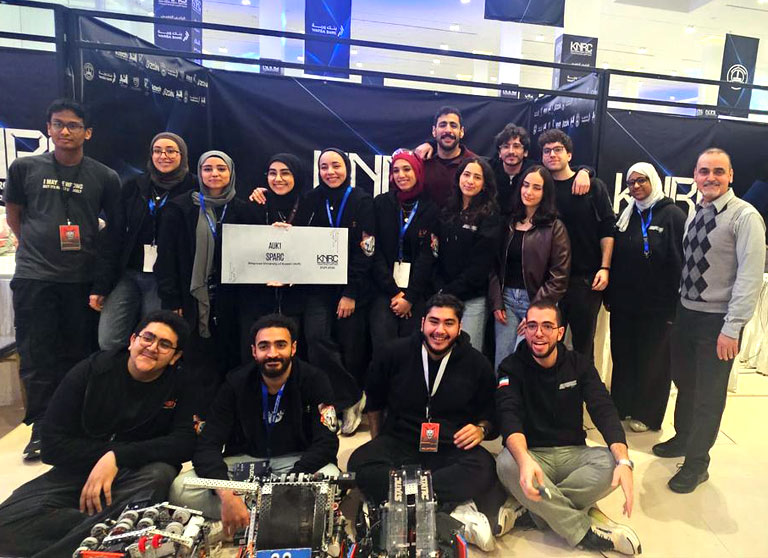
AUK proudly announced that students from the College of Engineering and Applied Sciences (CEAS) earned the Best Sportsmanship Award and advanced to the finals in the VEX Robotics Tournament category at the Kuwait National Robotics Competition (KNRC) 2026. The competition took place over two days, February 7–8, bringing together university teams from across Kuwait.
AUK participated with two teams composed of 12 students from CEAS. The teams were coached by Dr. Ali Roumani, Assistant Professor at CEAS, and co-supervised by Eng. Omar Elkalesh and David Lang.
The Kuwait National Robotics Competition is an annual national event that gathers students from middle schools, high schools, and universities to compete in innovative robotics challenges. Supported by the Ministry of Education and the Youth Public Authority, KNRC provides a platform for participants to apply engineering and programming skills in a hands-on, competitive environment. Students design, build, and program robots from basic components to address real-world challenges and inspire future technological solutions for Kuwait.
Dr. Ali Roumani emphasized the significance of such competitions, and said, “Computing and technology competitions play a vital role in empowering students’ academic education with applied technical and real-life experiences. They foster creativity and innovation, enhance programming, design, engineering, and problem-solving skills, promote teamwork and leadership, and strengthen computational thinking, communication, and presentation skills. Participating in this competition elevates AUK’s presence within regional academic and technology communities and reflects our university’s commitment to innovation and STEM education.”
The AUK winning team “AUK1” members include Jana EssamEldin Hassan, Raghad Mohamed AboElhliba, Shrouq Hossny AbdelSalam Ahmed, Reem Mohammed ElSabaa, Moemen Hossam ElByah, and Abdelrahman Tareq Abdelmoneim, among other CEAS participants.
The second participating team AUK2 members include Joanna Sawddawi, Malak A Alsabt, Fahad Yusuf Kalloush, Farah Abdullah Almajadi, Malek M Alkashat, Yasmeen Eskandar.
This accomplishment highlights AUK’s ongoing commitment to experiential learning, innovation, and excellence in STEM education, while reinforcing its role in preparing students to contribute to Kuwait’s future technological advancement.
Images from the event
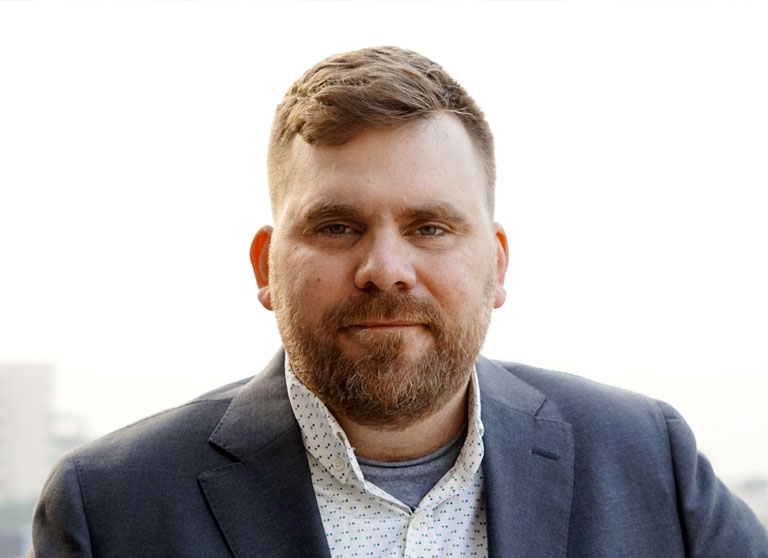
AUK announced that Clark Stoeckley, Associate Professor of Art and Graphic Design, has been awarded a Dartmouth fellowship to advance research exploring the intersection of risograph printmaking and Islamic geometric pattern systems.
Stoeckley’s creative practice spans graphic design, illustration, public art, and printmaking, with a focus on visual communication, cultural research, and socially engaged art. Over the past decade in Kuwait, he has created public murals, exhibited internationally in peer-juried exhibitions, and developed innovative studio curricula that integrate analog and digital methodologies. His recent research centers on Islamic geometric pattern systems and their contemporary reinterpretation through experimental print processes. Stoeckley earned his MFA from Brooklyn College in New York and a BFA from Webster University in St. Louis, Missouri.
Through the Dartmouth fellowship, Professor Stoeckley will produce a cohesive series of twenty multilayered risograph print editions based on geometric patterns derived from mosque architecture.
The research examines how risograph printmaking—a contemporary duplicating technology known for its translucent soy-based inks, layered color interactions, and subtle misregistration—can expand the visual language of Islamic geometric design.
Working in collaboration with Professor Tricia Treacy, Chair of the Studio Art Department at Dartmouth College and an internationally recognized experimental printmaker, Stoeckley will conduct studio experimentation and archival research using Dartmouth’s advanced risograph facilities and the collections of the Hood Museum and Rauner Special Collections. The project fills an important scholarly gap by being among the earliest structured investigations linking risograph printmaking with Islamic geometric pattern systems. It also contributes to broader conversations about decolonizing art and design curricula by foregrounding non-Western visual systems within contemporary print discourse.
The fellowship will directly enhance AUK’s academic offerings by developing a comprehensive risograph module to be integrated into courses such as Introduction to Creativity, 2D Design, Print Production, Illustration, Capstone, and Special Topics.
“Islamic geometric patterns represent one of the world’s most sophisticated visual systems, rooted in mathematics, abstraction, and symbolic depth,” said Professor Clark Stoeckley. “By exploring these structures through risograph printmaking, I hope to generate new conversations about the relationship between tradition and technology. This fellowship allows me to bring those discoveries back to AUK, enriching our curriculum and expanding opportunities for students.”
Clark Stoeckley, Associate Professor of Art and Graphic Design
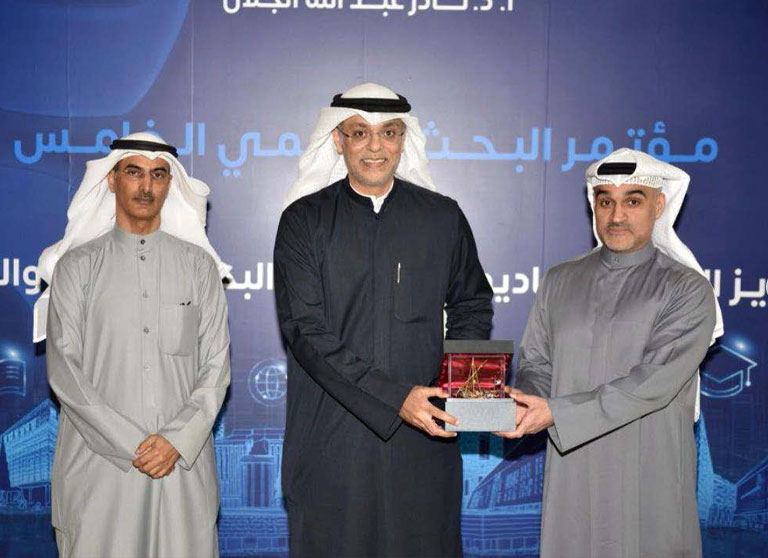
AUK proudly participated in the Fifth Scientific Research Conference. The event was hosted by Kuwait University on 9–10 February under the theme “Fostering Academic Excellence Through Interdisciplinary Research and Innovation.” The conference brought together researchers from diverse disciplines to advance collaboration and innovation in scientific research.
AUK’s delegation included featured Dr. Belal Gharaibeh and Eng. Afsah Abdullah, as well as faculty representatives from the College of Engineering and Applied Sciences: Dr. Amro Nour, Dr. Belal Gharaibeh, Dr. Alia Abo-Ali, Eng. Reem Kassem, and AUK graduate student Abdulaziz Ali Reda.
During the conference, AUK presented four research posters demonstrating strong interdisciplinary integration across engineering, health sciences, sustainability, and industrial innovation.
The first research project, “PRINTHEAT: Thermal Profiling in 3D-Printed Organ-Mimicking Models,” introduced standardized 3D-printed organ models designed to replicate anatomical and thermal characteristics of biological tissues for hyperthermia and thermal therapy research.
The second project, “From SWOT Insights to Generative Design: Advanced Additive Manufacturing of Oil & Gas Spare Parts,” evaluated the feasibility of replacing conventional oil and gas spare parts with AI-optimized, TPU-based 3D-printed components through KFAS-supported research.
The third project, “Optimization of FDM Parameters for Wear and Mechanical Performance in Medical Polymers,” explored the influence of FDM parameters on tensile strength and wear resistance in advanced polymer materials.
The fourth research project, “Predicting the Impact of Air Quality Index on Rheumatoid Arthritis Disease Activity in Kuwait,” examined the short- and long-term effects of air pollutants on rheumatoid arthritis disease activity using national registry and environmental monitoring data, aligning with Kuwait Vision 2035 and the UN Sustainable Development Goals 3, 11, and 13.
For the fourth research project, Dr. Ahmad Alsaber and his multidisciplinary research team were awarded First Place at the prestigious Kuwait Petroleum Corporation (KPC) Prize for their research poster. out of 400 submitted posters, recognizing outstanding interdisciplinary innovation and research excellence.
The award-winning study was led by Dr. Ahmad Alsaber alongside co-principal investigators Adeeba Al-Herz, Maryam Al-Mazedi, Iyad Abu Doush, Afsah Abdullah, Dhary Alkandary, Ahmad T. Al-Sultan, Parul Setiya, and Jiazhu Pan. Supported by the Kuwait Foundation for the Advancement of Sciences (KFAS) and AUK, the research integrated 12 years of air quality data with clinical records from 1,526 rheumatoid arthritis patients using advanced time-series modeling and artificial intelligence techniques.
This data-driven work demonstrates how interdisciplinary collaboration and AI can inform healthcare strategies, strengthen environmental policy, and contribute meaningfully to Kuwait Vision 2035 and sustainable development goals.
AUK’s overall participation in the conference highlighted strong interdisciplinary collaboration across engineering, health sciences, and environmental research, as well as active institutional engagement through the Office of Research and Grants. The conference provided a valuable platform to disseminate research findings, strengthen academic partnerships, and align AUK’s research efforts with Kuwait’s national development priorities.
Images from the event
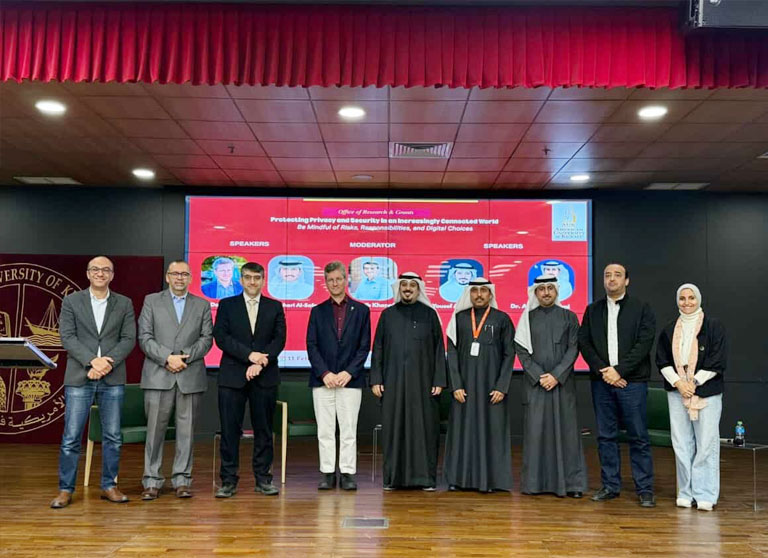
On Wednesday, the Office of Research and Grants at the American University of Kuwait hosted a panel discussion titled “Protecting Privacy and Security in an Increasingly Connected World” at the AUK Auditorium. The event convened experts from academia, government, and industry to examine critical issues surrounding digital privacy, cybersecurity risks, and responsible decision-making in an era defined by rapid technological advancement and widespread digital connectivity.
The session was moderated by Dr. Mounib AlKhanafer of AUK, who guided the discussion and facilitated dialogue among panelists and attendees. Opening remarks were delivered on behalf of the Office of Research and Grants by Dr. Belal Gharaibeh and Ms. Afsah Abdullah, who underscored the growing importance of privacy and security awareness as reliance on digital platforms continues to expand.
In framing the discussion, Dr. AlKhanafer highlighted the evolving digital landscape and the increasing integration of smart devices, online services, and data-driven technologies into daily life. The conversation focused on identifying key risks, clarifying shared responsibilities among stakeholders, and emphasizing the need for informed and ethical digital choices.
The panel featured Dr. David Kotz of Dartmouth College, Dr. Meshari Abdulhammed Alsafran from the Ministry of Justice, Dr. Yousef Alfarhoud of Kuwait University, and Dr. Ali Kazimi, a cybersecurity expert. Drawing on their diverse professional backgrounds, the panelists addressed major privacy and security risks associated with online platforms, mobile applications, and smart technologies, as well as the balance between convenience and security in everyday digital practices. The discussion also examined local, regional, and global legal frameworks for data protection, the importance of interdisciplinary collaboration, and the ongoing challenges posed by emerging cyber threats.
An interactive question-and-answer segment followed, during which faculty members and attendees engaged with the panelists on topics including data protection policies, institutional responsibilities, and practical measures individuals can adopt to strengthen their digital security. The exchange reinforced the relevance of the discussion and highlighted the value of public awareness and education.
The event concluded with closing remarks summarizing the key insights shared throughout the session and emphasizing the collective responsibility of individuals, organizations, and policymakers in safeguarding privacy and security. The discussion reaffirmed the need for continued research, collaboration, and proactive strategies to address the complexities of privacy and cybersecurity in an increasingly connected world.
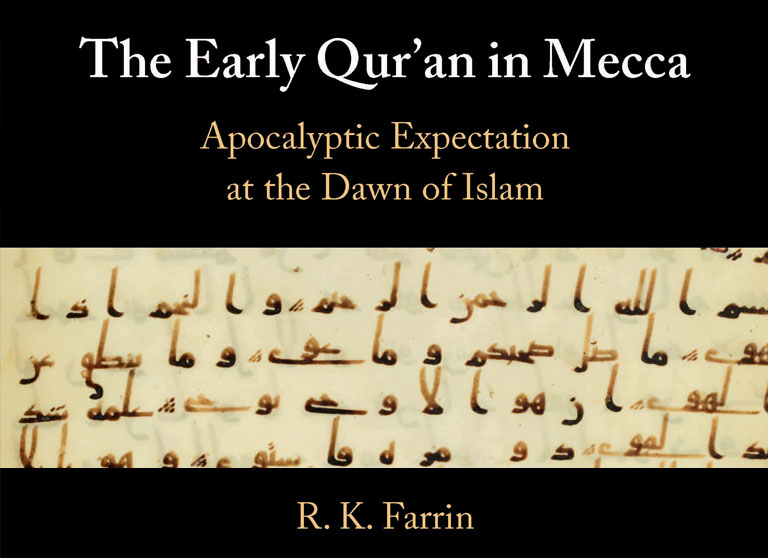
AUK is pleased to announce the publication of a new scholarly work by Dr. Raymond Farrin, Professor of Arabic at AUK. On February 19, Cambridge University Press published his latest book, The Early Qur’an in Mecca: Apocalyptic Expectation at the Dawn of Islam, marking his third authored volume and his second focused on Qur’anic studies.
Dr. Farrin’s previous publications include Abundance from the Desert: Classical Arabic Poetry (2011) and Structure and Qur’anic Interpretation: A Study of Symmetry and Coherence in Islam’s Holy Text (2014). His earlier work examined the intricate structural symmetries of the Qur’an across verses, suras, and the text as a whole, demonstrating how these patterns inform interpretation of the scripture in its final, complete form.
In The Early Qur’an in Mecca, Dr. Farrin adopts a diachronic approach, tracing the Qur’an’s structural and thematic development during its earliest phase of revelation in Mecca. Focusing on the period from approximately 609 to 614 CE, the study analyzes how the Qur’an evolved from a limited number of verses into a growing scriptural corpus. Drawing on quantitative and literary evidence, Dr. Farrin argues that a foundational Qur’anic nucleus emerged during this formative stage, conveying an especially urgent message, with additional units incorporated as revelation continued in Mecca and Medina through 632 CE.
The book situates the Qur’an within the broader context of late antique Arabia, a setting marked by resistance to the spread of monotheism, and explores connections with contemporary Jewish and Christian thought, particularly concerning expectations of the Last Day. Through this analysis, the study offers a deeper understanding of the Qur’an and the historical environment in which it was first recited.
The publication has received advanced scholarly acclaim. Dr. Bilal Orfali, Sheikh Zayed Chair for Arabic and Islamic Studies at American University of Beirut, describes the book as “an erudite and original study that sheds new light on Islam’s emergence and the urgent eschatological vision at its dawn,” noting its significant contribution to Qur’anic studies and the study of Islam’s origins.
The Early Qur’an in Mecca: Apocalyptic Expectation at the Dawn of Islam is available in both print and digital formats.
Book Cover
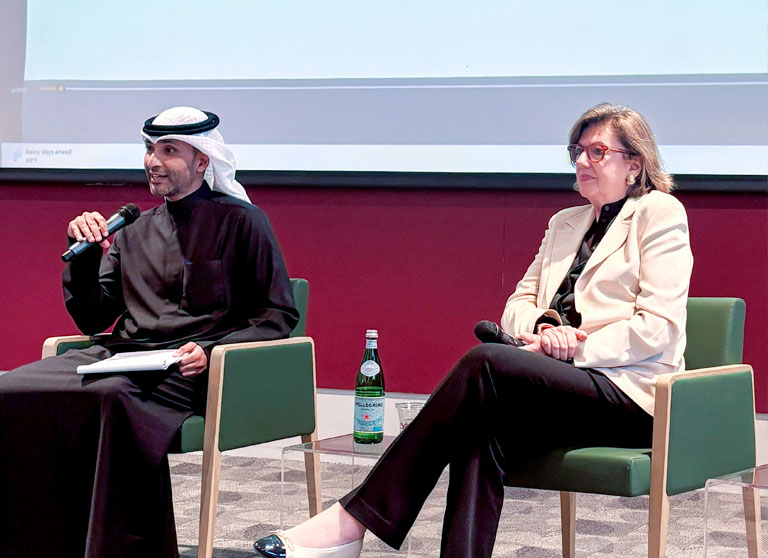
AUK welcomed Laura Frigenti, CEO of the Global Partnership for Education (GPE), for a campus visit and student engagement session addressing the escalating global education crisis, Kuwait’s leadership in development cooperation, and the role of innovative education financing in expanding access to quality learning worldwide.
During the visit, AUK students participated in a dynamic discussion highlighting the urgency of the global learning crisis, with 270 million children currently out of school due to conflict, economic pressures, and tightening global budgets. The conversation emphasized that education remains a cornerstone of human capital development, economic growth, and global stability, and that delayed action risks long-term and irreversible consequences.
The session also spotlighted Kuwait’s longstanding leadership in Arab development cooperation, particularly through the Kuwait Fund for Arab Economic Development (KFAED). For decades, Kuwait has played a central role in supporting economic transformation in low-income countries, reinforcing its global reputation for humanitarian and development leadership.
Speakers highlighted the impact of the collaboration between GPE and KFAED, demonstrating how high-leverage education financing can expand access to quality education and multiply social and economic returns. By combining development finance with grant co-financing, the partnership has delivered results at scale. For example, KFAED’s $20 million investment in Nigeria unlocked an additional $6.67 million in GPE grant funding, significantly expanding learning opportunities for large populations.
Students were also introduced to GPE’s new financing campaign, which aims to unlock innovative funding for education amid global fiscal constraints. The initiative presents partners such as KFAED with an opportunity to multiply their impact and accelerate progress toward inclusive, quality education for millions of children worldwide.
“Speaking with students at the American University of Kuwait reminded me why education matters so deeply. Your generation has the talent and responsibility to shape a more inclusive, prosperous, and peaceful world, and global partnerships in education exist to support that journey,” said Laura Frigenti, CEO of GPE.
Dr. Mohammed Ali, AUK representative, added:
“Engaging with the Global Partnership for Education and Ms. Laura Frigenti offered AUK students a vital perspective on how education financing, systemic reform, and gender equity shape opportunities in crisis-affected and underdeveloped regions. This dialogue reflects AUK’s academic mission to foster globally minded graduates through meaningful engagement with international education leaders and collaborative solutions to shared global challenges.”
The visit reflects AUK’s ongoing dedication to fostering meaningful dialogue, global engagement, and educational opportunities that empower students to become active contributors to international development and social impact.
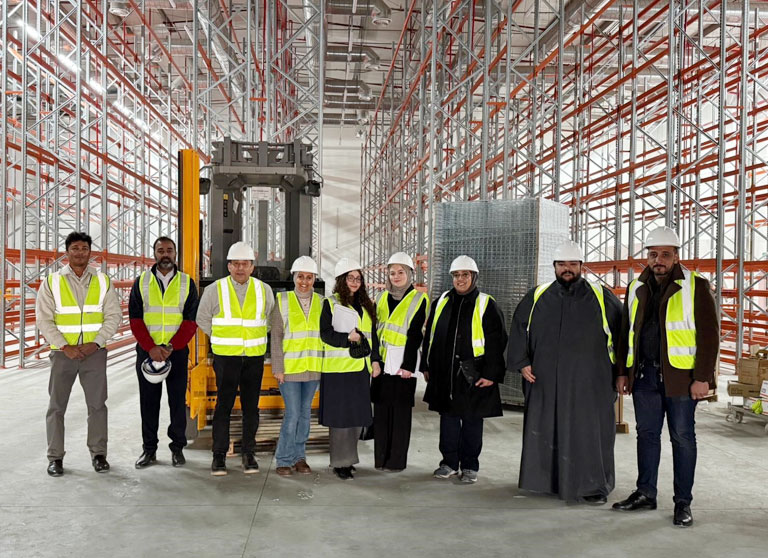
The College of Engineering and Applied Sciences (CEAS) at AUK continues to strengthen its engagement with Kuwait’s local industry as part of its commitment to delivering high-quality education and advancing applied learning. These partnerships support CEAS’s vision of preparing graduates whose skills, achievements, and professional impact are widely recognized.
Industry collaboration plays a central role in enhancing Systems Engineering education by providing students with exposure to real operational environments and professional practices. Through the active involvement of industry partners, students gain valuable insight that supports the integration of theoretical knowledge with practical application.
As part of this effort, Systems Engineering capstone students participated in a supervised educational visit to a warehouse facility in Kuwait. The visit enabled students to observe real-world warehousing and logistics operations, including space utilization, material handling systems, storage and racking configurations, docking and loading processes, and overall workflow organization. This experience formed an essential applied learning component of their capstone projects and reinforced systems-level thinking within a professional context.
Dr. Aliaa Abouali highlighted that integrating field visits into the capstone curriculum allows students to engage directly with operational challenges, strengthening their ability to approach systems integration and planning using industry-relevant methodologies.
Dean Mohammed El-Abd emphasized that strengthening partnerships with local industry is a strategic priority for CEAS. He noted that industry-supported capstone projects enable students to translate classroom learning into practical solutions, enhancing both professional readiness and the overall academic experience.
The College extends its appreciation to Eng. Basma El-Hasan from JTC, Mr. Jude Dsilva and Eng. Pintu Roy from Stack Group, and Dr. Islam Al-Adl from Hamad Saleh Al Homaizi Grandsons Pharma Co. for their support and collaboration, which contributed to the success of this initiative.
Such partnerships are integral to advancing experiential learning and sustaining meaningful collaboration between academia and industry. CEAS looks forward to continued cooperation through future applied projects and educational initiatives.
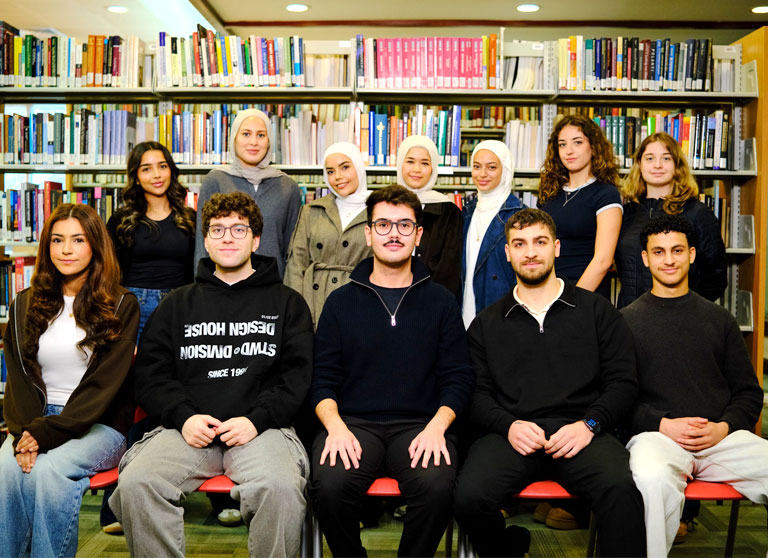
AUK proudly celebrates twelve outstanding students who have been awarded scholarships to participate in international academic experiences during the Summer 2026 semester. These scholarships reflect the university’s commitment to fostering global engagement, academic excellence, and experiential learning that extends beyond the classroom.
The selected students—Hala Krayem, Nora Darkhabani, Sara Al Ali, Laila Alkhalifa, Sara Dallol, Letizia Pescarini, Lucrezia Pescarini, Maryam Al Ashwak, Ali Abou Hawili, Abdulkarim Besiso, Mohammad Kheder, and Khaled Al Otaibi—will take part in a range of study abroad programs, exchange semesters, and professional internships at prestigious partner institutions. Through these opportunities, students will be immersed in diverse academic environments and professional settings that enhance their knowledge, skills, and global awareness.
Participation in international programs plays a significant role in enriching the student experience at AUK. By engaging with different cultures, educational systems, and professional practices, students develop stronger critical thinking abilities, cultural competence, and independence. These experiences contribute meaningfully to their academic journey and personal growth, while also enhancing their readiness for future careers in an increasingly interconnected world.
The Summer 2026 international placements will take place at leading institutions, including The George Washington University in the United States, the University of Roehampton in the United Kingdom, and Dartmouth College in the United States. These partnerships underscore AUK’s dedication to providing high-impact global learning opportunities that align with students’ academic goals and professional aspirations.
As the scholarship recipients embark on this journey of discovery and growth, they proudly represent the American University of Kuwait on the international stage. The university extends its best wishes for their continued success, confident that this experience will have a lasting and meaningful impact on their academic development and future endeavors.