

News
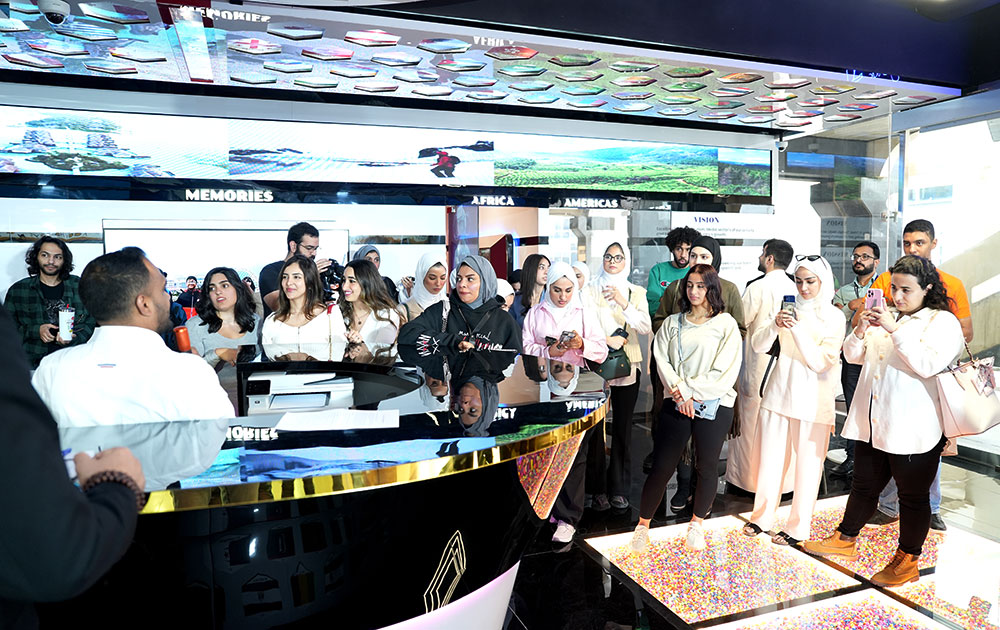
The students became well-acquainted with Flyworld Luxury and their staff. Jobin International Managing Director, Mr. Jobin John, was also in attendance. He discussed with students the concept of mixing both offline and online experiences with customers to offer a one-stop solution for all their travel and touristic needs.
Students also familiarized themselves with the facilities in Flyworld Luxury. This includes the state-of-the-art artificial intelligence technology that uses VR integrated techniques to offer aspiring travelers the opportunity to experience their travel destination.
Field trips as such that integrate a multidisciplinary approach give students the opportunity to expand their knowledge outside the classroom and gain experiences that will aid them in implementing their coursework material.
The conference, titled “Roadmap to Sustainable Quality in Healthcare Through Education, Digitalization & Accreditation,” aims to discuss how major healthcare players, whether regulators, payors, or providers, can better cooperate and develop their business model towards a value-based patient-centric model.
Panel discussion topics include the Kuwaiti healthcare system transition towards managed care, value-based reimbursement, hospitals’ experience with accreditation, change management for integrated quality, health management education, supporting quality management with digital solutions, and the roadmap for getting and sustaining accreditation.
Joining the panel discussion is GATES Group representative, Dr. Adel Olleik; Gulf Insurance Group (GIG) representative, Mr. Ali Al Hendal; and MGS representative, Mr. Assem Rashidi. Moderating the panel discussion is GATES Group Consultancy Services Director, Mr. Samer Hanna.
Attending the conference are senior representatives from Gulf Insurance Group - Kuwait, the first insurance company to lead the life and health insurance business in the local market; MGS, a leader in providing specialized enterprise IT and business solutions and consultancy services; and GATES Group, a regional growth and development company that helps healthcare organizations and professionals solve problems related to policy, performance, operations, quality, and finance with a people-centric approach. Also attending are senior representatives from AUK, private hospitals, and other valuable stakeholders.
The conference will be a great opportunity for conference attendees to expand their knowledge on important topics that revolve around sustainability, education, and digitalization. To register, please visit the following link: https://www.research.net/r/DQD39XF
As part of the American University of Kuwait (AUK), CCE has been recognized as a successful and leading professional development center in Kuwait. Listed as an approved training center at the Civil Service Commission and endorsed by PAAET, CCE has been offering a range of internationally certified professional development programs in leadership, management, business, finance and accounting, human resources, technology, language, teaching, and self-development.
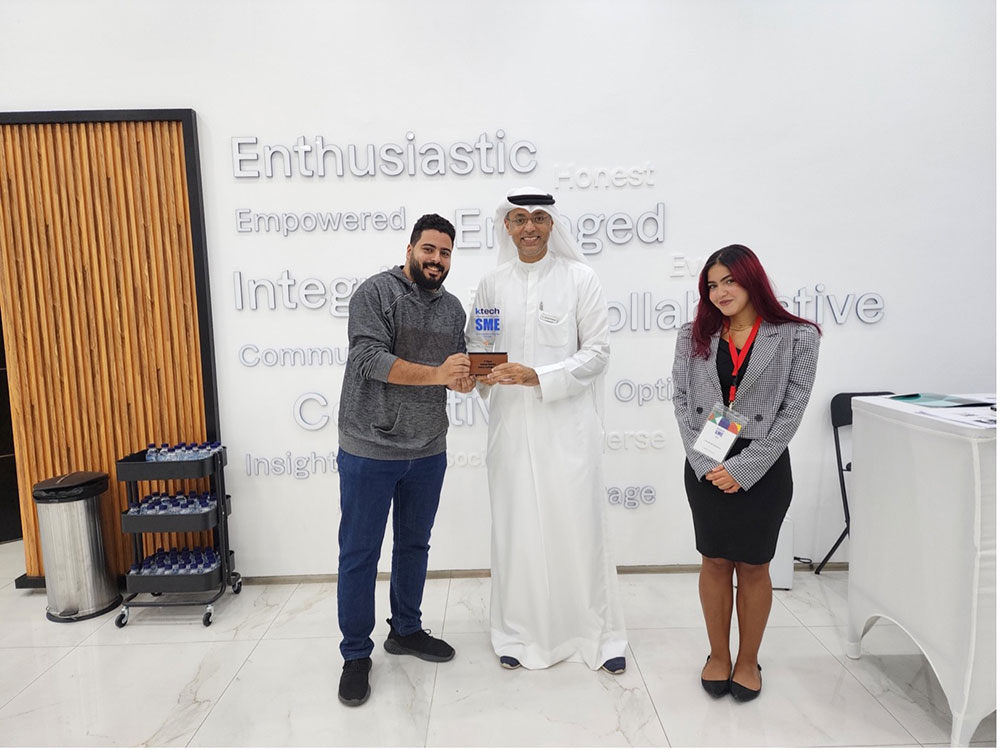
Among 400 participants in the conference, the AUK students presented and discussed their posters; they secured first and second place in the category of Best Poster Award. The first-place poster was titled, “The Moderating Effect of Social Demographics on the Relationship Between Affective Learning Outcomes and Academic Performances in Private Universities in Kuwait Post-Pandemic: Pilot Research.” This poster was presented by Donia Al-Ghouhari, Farah Al-Saleem, Jasem Abul-Rahim, and Moustafa El-Garawany.
The second-place poster was presented by Mubarak Alhajiri, Osamah Alharbi, and Usamah Aljadi. The poster was on the “effect of customer orientation and technology orientation on digital transformation capability of banking sector operational performance in Kuwait.” Both projects were supervised by Dr. Ahmad Alsaber, AUK assistant professor of management, for the students’ management capstone class.
Additionally, Dr. Naeemah Al-Kharafi, AUK assistant professor of management, also presented her academic paper at the conference. Her paper, titled, “Comparison Between Sponsored and Non-Sponsored Regarding Personal Administrative Factors for SMEs from Kuwait During the COVID-19 Pandemic,” included questionnaires distributed to more than 4,000 entrepreneurs and business owners in Kuwait and 948 responses that were obtained from participants and analyzed.
AUK is committed to creating an enlightened and progressive education culture, cultivating a community of scholars and students who benefit from the experiences the University offers them.
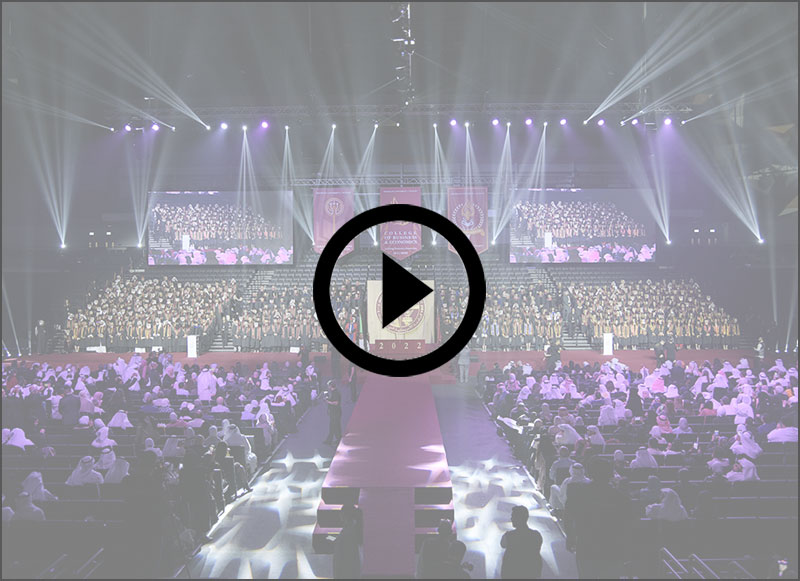
Held at The Arena in 360 Mall, the graduation ceremony was attended by Sheikha Dana Nasser Sabah Al-Ahmad Al-Sabah, founder and chair of AUK's Board of Trustees, members of the AUK board of trustees, diplomats, dignitaries, and the parents of this year's graduates.
Following the national anthem and the Holy Quran recitation, AUK president, Dr. Rawda Awwad gave a speech where she explained the benefits that a liberal arts education has had on the graduates, “Our students today embraced AUK’s liberal arts values in every respect. No matter what major they will graduate with today, every single one of them will be able to respond to the global challenges that require individuals to be original, resourceful, imaginative, inspirational, and innovative. Our students embody these qualities and will pursue their futures gracefully and, above all, with a sense of humility and care.”
This year’s keynote speaker, Dr. Saeeda Jaffar, Senior Vice President and Group Country Manager of VISA for the Gulf Cooperation Council (GCC) region and member of AUK’s board of trustees was selected by Forbes as the top 50 most powerful businesswomen in the Middle East. In her keynote address, Dr. Saeeda Jaffar inspired the graduates to pursue continuous learning to seize all opportunities in an ever-changing world, “Replace fear with curiosity and keep asking questions. Keep on learning. I can’t stress how important this is. We live in a knowledge-based economy and it’s changing faster than anything we’ve ever seen before. The opportunities ahead are incredible. There is AI, intergalactic exploration, sustainability, web3, you name it. Every field is changing. Be bold and grab the opportunities that are out there. It can be a scary thought, to do something different, do something new. And that’s okay. It is about dealing with it and giving yourself the ability to say ‘you know what? I don’t have to have all the answers right now. I have to be okay with that. I will be bold, and I will get it done.’”
Following the keynote address, AUK’s dean of student affairs, Ms. Hala Al-Abdulrazzaq announced the class valedictorian, Ahmad Aldulaie who earned a Bachelor of Engineering in Computer Engineering with a 3.96 GPA. He supplemented his studies at AUK with programming courses that helped him win “Best Project Award” at the College of Engineering and Applied Sciences spring 2022 capstone exhibition. During his speech, Ahmad addressed his peers and reflected upon their effort and dedication, “While our experiences during university years may differ, we are all able to stand here and celebrate our victory today because we had a goal in mind that we wanted to achieve no matter the odds which was to complete our bachelor’s degree, to become leaders in our respective fields, to have a significant impact on our society. Therefore, I remind you and myself that today does not mark an end, it marks the beginning of our next adventure, where we utilize the tools and skills that AUK equipped us with to achieve our goals and dreams.”
The event then proceeded to the part of the ceremony most anticipated by the students—the distribution of their earned degrees. Upon the recommendations of the deans – Dr. Ali Charara, Dean of the College of Arts and Sciences; Dr. Ralph Palliam, Dean of the College of Business and Economics; and Dr. Amir Zeid, Dean of the College of Engineering and Applied Sciences, President Awwad conferred upon the graduates their respective degrees. The graduates were then awarded their diplomas by President Awwad and respective college deans.
In keeping with the academic tradition, the graduates were requested to shift their tassels from right to left, thereby marking their official graduation from AUK. As the ceremony drew to its conclusion, the graduating class celebrated the occasion and took photos with their parents.
Click on the Image to view the Photo Gallery
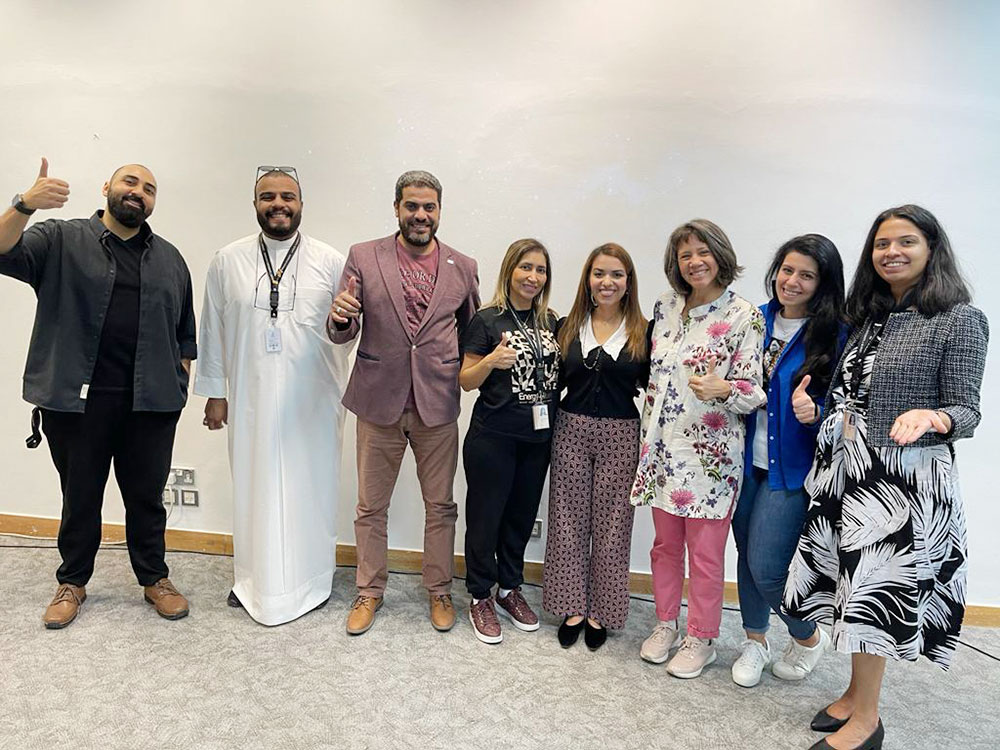
With the goal of promoting healthy eating habits, various exercises, and community activities, the HR Department has thus far launched three workshops, one of which being “Wellness Through Mindfulness” which provided staff exercises and practices that can be done at their desks to refresh their day.
The second activity was a cheese-tasting workshop that was exclusive to campus directors and served as an opportunity to develop AUK’s workplace culture. The third activity was a collaboration with the Office of Student Life where the HR Department launched a bootcamp to encourage physical activity.
Supplementing these efforts, HR also distributed healthy snacks wrapped in biodegradable material to all campus staff members.
HR director, Paul Bassil, expressed his enthusiasm towards launching initiatives that promote healthy habits, “All our employees have embarked on this journey alongside us with determination and ambition. AUK has a distinguished work culture, and through these initiatives, our community maintains its shared set of workplace values, standards, and beliefs.”
More workshops and events will be taking place throughout the academic year that aim to increase workplace morale and reinforce AUK’s tight-knit community.
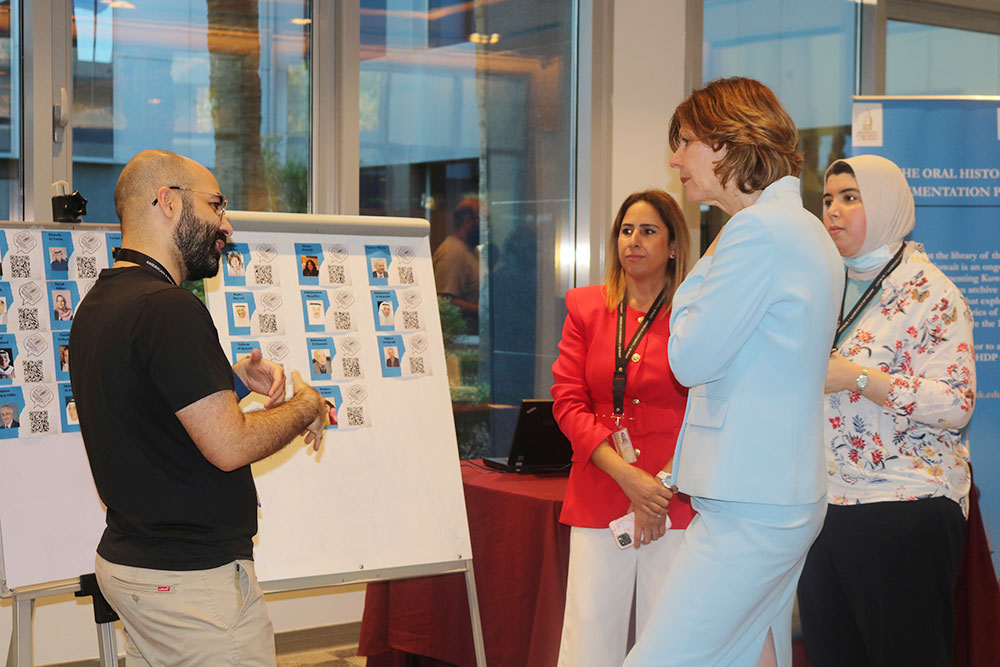
Members of the University leadership and faculty toured a variety of interactive displays showcasing all the available services. Attendees familiarized themselves with the reference and instruction support for class learning, research, and literacy skills; the growing physical and digital collections and databases available to users as well as acquisition, interlibrary loan, and open access textbook services.
Also discussed were the recommendations from across the library’s collections to inspire catalog discovery; the AUK Repository and digital archive of community publications, student work, and special projects; and the Oral History & Documentation Project—the first of its kind in Kuwait, currently recording life histories of notable people born before the 1960s.
The meet and greet served as an opportunity for faculty to inquire about material and request suggestions of compelling content to incorporate into their course curricula.
The AUK library has significantly grown and developed since its inception. The library team plays a vital role in aiding faculty with rare or hard-to-find material for articles and conference papers.
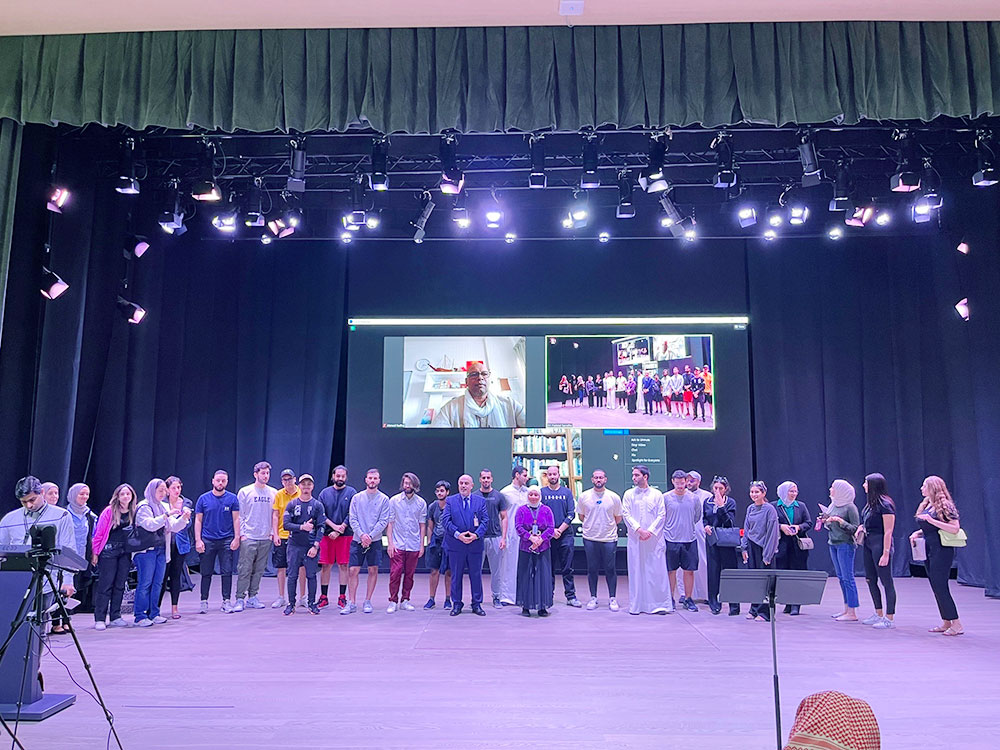
Discussed at the seminar was a new concept known as VMG (Value - Mind - Goal), founded and introduced by Dr. Alhasawai, Mr. Almoathen, and Mr. Fadhul. The concept of “Value” refers to the personal highest value that creates passion and purpose of life, allowing people to fulfill their desires. It is guided by personal inspiration that brings about goal clarity.
They also discussed the concept of “Mind,” which is an expression about the conscious (5%) and subconscious (95%) mental processes, activities, and the storage of thoughts. The subconscious mind influences feelings, behaviors, and actions. Regardless of this influence, the subconscious can be altered and changed through activating the conscious mind.
The final concept of “Goal” highlights the lifelong goals that should be driven by a person’s vision that comes from the imagination of a bright future. When these goals are linked to a person’s highest value, they will be attained through crafting an imagined and inspired roadmap. This becomes the key to transforming personal goals into grounded reality.
Dr. Alhasawai, Mr. Almoathen, and Mr. Fadhul concluded with the positive impact this framework has through enhancing the way people think in social and organizational settings.
Dr. Al-Zu’bi shared his views on the speed at which technology is advancing. He explained that in order to make use of the ability to build nanomaterials atom by atom, theoretical modeling and simulations are essential, helping scientists to investigate many materials that do not exist naturally.
“Without theoretical modeling and simulations, it is nearly impossible to guess the stability of the structure of a nanomaterial with certain wanted properties. Nowadays, scientists decide what material we want to have with which properties. They create a theoretical model, simulate it, then inform the laboratories how to build it. Therefore, technological improvement is speeding up in an extraordinary way,” he stated.
Dr. Al-Zu’bi also talked about the diverse application of nanomaterials; they are used in spintronics devices, smartphones, thin flexible screens, building materials, pollution filters, artificial muscles, medicine, and drug delivery.
The event concluded with open discussion and Q&A session with the audience.
The Faculty Speaker Series is a platform that enables faculty members to showcase their research and scholarly accomplishments. The event also allows AUK to make a difference in the community both in Kuwait and beyond by spreading knowledge and awareness about various topics while offering an opportunity to the general public to take part in the AUK experience.
AUK students develop their capacity to apply technical and non-technical knowledge and skills in engineering, computer science, and information systems through the exceptional education the University offers.
Not only are the College of Engineering and Applied Sciences (CEAS) programs accredited by ABET, but the numbers also speak for themselves. Publishing nearly 96 scholarly articles, issuing 16 registered books, presenting in 277 conferences, and registering 8 patents and designs in the last 5 years, the CEAS faculty achievements reflect the high standard of education that AUK students receive.
Yousef AlHamad is one such student, having secured third place in the 10th Kuwait Collegiate Programming Contest (KCPC), he discussed how AUK has developed his understanding of the technologies he’s most passionate about which include computer hardware and software, game development, and coding. “AUK has aided me through its extracurricular activities and clubs, such as the KCPC event. There are also the electives that offer students other forms of programming and system architecture design,” he said.
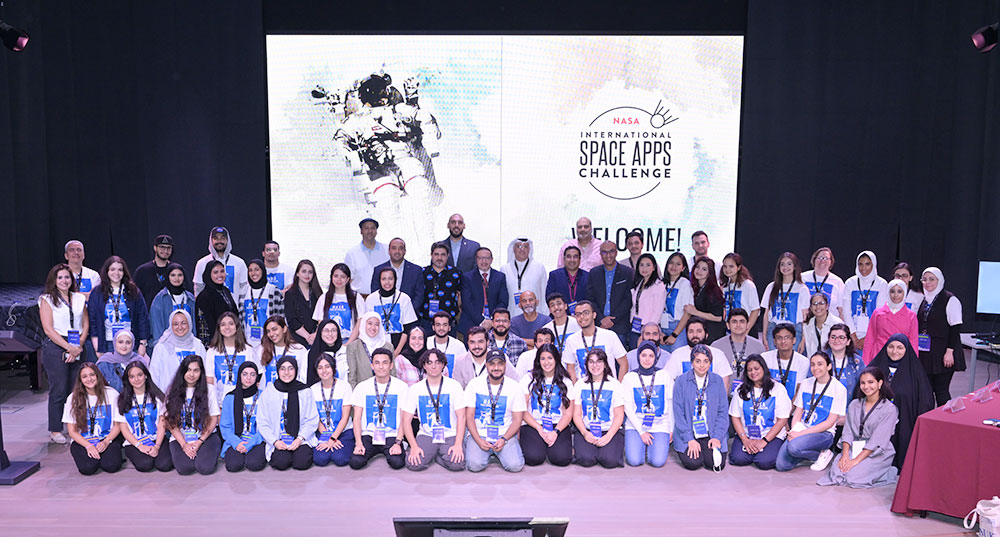
The NASA Space Apps Challenge, the world’s largest hackathon introduced by the National Aeronautics and Space Administration (NASA), is also another event that AUK students participated in. Reflecting on his experience and achievement of his team winning first place, Mustafa Ali Karkour said, “In 48 hours, AUK has held an amazing event to inspire space enthusiasts like us. My team and I competed in the NASA Space Apps Challenge and won 1st place at AUK! During the event, we touched on different challenges to explore the beauty of space before settling on the ‘On the Way to the Sun’ challenge. The challenge made us realize the difficulties NASA's astronauts/spacecraft face and how curiosity-driven they are. I had a great team with a diverse set of skills and with their contributions, we made it happen!”
The effects of the University’s progressive education remain with its students even after they graduate. Alumnus Ali Dashti ‘10 majored in information systems and won first place in the Microsoft competition, Imagine Cup 2009 in Dubai, which was the first title for AUK and Kuwait on a regional level. He reaffirmed that AUK, to him, is “more than an educational organization” and that the student life activities and events were an added value to his life and personal skills.
On the other hand, alumnus Nasser Bader Al-Ostath ’13 majored in computer engineering and obtained the CEH v9 certificate (Certified Ethical Hacker). He applied his advanced skills in hypnosis and conversational hypnosis to the field of social engineering, which is an essential field of security.
It is worth mentioning that the percentage of females in CEAS exceeds international rates. Alumna Yara AlQuorashy ’19 reflects AUK’s continuous advocacy for the inclusion of female engineers. AlQuorashy majored in computer engineering and minored in computer science. She competed in several programming competitions and earned various awards and certifications. Upon graduating, she went on to complete an internship at an international organization that focuses on “integrating innovative technological solutions to drive impact across the different divisions of the organization.”
AUK is dedicated to providing the necessary education that encourages the growth and knowledge of the next generation of pioneers and technologists.
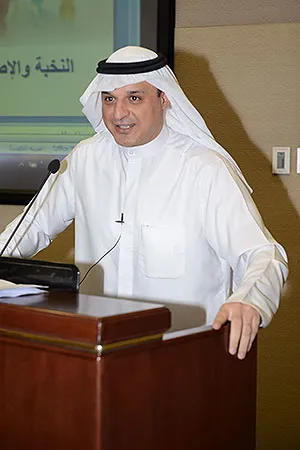
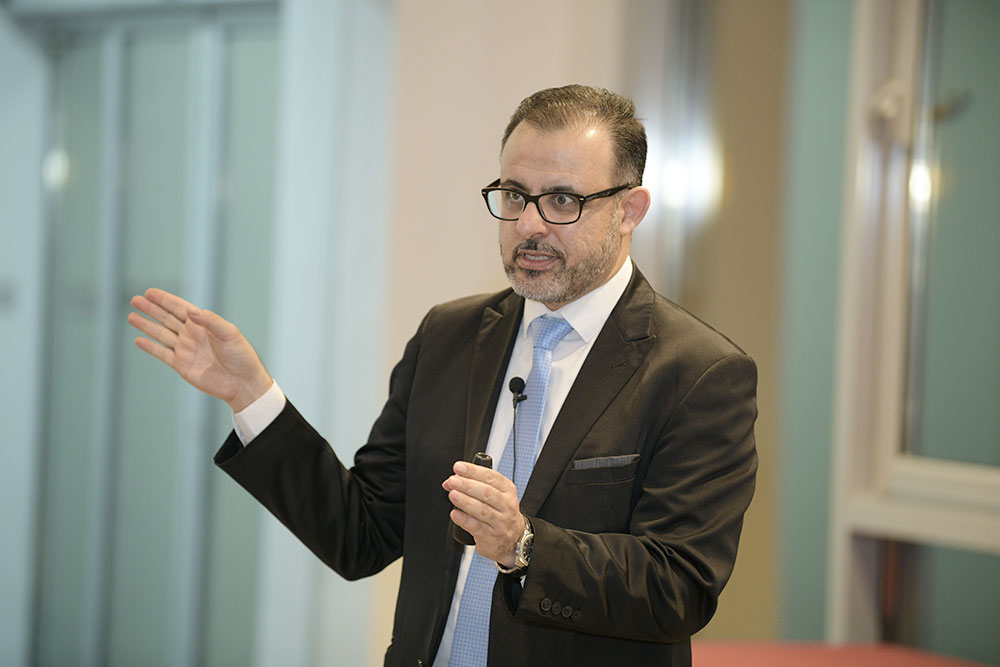
Dr. Hesham Al-Awadi, Professor of History and International Relations at AUK, took part in a joint lecture with the former Minister of Education and Higher Education, Dr. Moudhi Al-Humoud, entitled 'The Elite and Cultural Reform.' The lecture discussed the roles institutes of education and higher education in the Arab countries must play in providing young adults with information about their responsibilities towards their societies.
Dr. Al-Humoud discussed education systems in Arab countries and how they do not instill political awareness among students. She explained that students generally obtain political knowledge from social interactions with families, at parties or through the media. She added that political education should not be limited to information about elections, but must also educate young adults about respecting laws, respecting others, respecting the state and human rights, justice, compassion, and volunteerism.
"...that we must count on the elite to represent through the educational system," said Dr. Al-Humoud. Dr. Al-Humoud. identified the elite as being those who have influence on society. For his part, Dr. Al-Awadi emphasized the importance of empowering students in order to prosper in the 21st century. He argued that the meaning of 'elite' has changed, and is now different from what was traditionally considered in the Arab world during the fifties and sixties. According to Dr. Al-Awadi, in the past, the 'elite' was comprised of the older members of a society who came from a particular class, and were confined to the intellectual or political echelon. "Today, however, the elite might include a younger generation that are empowered by technology and social media and has real influence on a wider sector of society," he added.
Dr. Al-Awadi also spoke of the need to reform education and empower students with global knowledge and 21st century skills, highlighting seven key skills that Arab universities can train students to learn; and they include critical thinking and problem-solving, collaboration across networks and leading, agility and adaptability, initiative and entrepreneurialism, effective oral and written communication, accessing and analyzing information, and curiosity and imagination.
Dr. Al-Awadi concluded that although the younger generation, the new elite, is empowered, they still need the experience and wisdom of the traditional elite; and it is with such a partnership that real progress can occur.
The event was organized by Huroof Cultural Center, and sponsored by the Ministry of Youth Affairs and Sport.
Released by the Office of Public Affairs on the 22nd November 2016
Photography by the Office of Public Affairs (C) 2016