

News
11, Oct 2018
AUKReview 12th Volume Launch Event
The Department of English and the Department of Art and Graphic Design at AUK hosted a launch event for the 2017-2018 edition of the AUKReview. The journal is AUK’s annual student-run arts publication. Composed of works from across the AUK community, it features poetry and prose in English and Arabic, as well as photographs and designs. The 2017-2018 edition marks the 12th volume of the publication.
The event gave audience members an idea of the successes and struggles that went into creating the Review. Dr. David Hadbawnik, Faculty Supervisor and Chair of the Department of English, began the launch by acknowledging the immense amount of work that went into producing the publication. He emphasized the students’ role in producing the publication, as all materials are student-produced and edited. Reflecting on the Review’s distinctive qualities, Dr. Hadbawnik said, “The AUKReview is unique in that it’s a completely student-generated, full-color, high-quality publication that the University produces every year to showcase student writing, art, and images. I don’t know of another quite like it in all the institutions I’ve worked with. In recent years we have attempted to raise the profile of the writing portion of the journal by featuring contests in poetry and fiction, both in English and Arabic, with prizes for the student winners.”
The goal of continuing to improve the Review was clear throughout the event. Associate Professor William Andersen, Art Advisor and Chair of the Department of Art and Graphic Design, discussed possible collaborations with the Art and Graphic Design Student Club while working on the next edition. The club will help publicize the Review, and members will also serve on the jury board to select the work that will be published in the next edition.
This year’s 131-page edition of the Review is a beautiful tribute to the creative abilities of the AUK community. Publication of the AUKReview was supervised by Dr. Hadbawnik, Prof. Andersen, and Assistant Professor Joon Won Lee. The cover and design were created by AUK student Amal Shaher, and the student editors were Abdulrahman Al-Azmi, Nawaf Al-Mahdi, Amal Singer, Ghadeer Ghafour, and Aisha Al-Meshawet. The journal included winners of the second annual English language poetry and fiction contest, as well as a collaborative translation project (English to Arabic) by student Abdullah al-Qouz under the direction of Assistant Professor Inas Mahfouz, with an introduction by Assistant Professor Katherine Hennessey.
To read the 12th volume of the AUKuwait Review, click here.
View More
The event gave audience members an idea of the successes and struggles that went into creating the Review. Dr. David Hadbawnik, Faculty Supervisor and Chair of the Department of English, began the launch by acknowledging the immense amount of work that went into producing the publication. He emphasized the students’ role in producing the publication, as all materials are student-produced and edited. Reflecting on the Review’s distinctive qualities, Dr. Hadbawnik said, “The AUKReview is unique in that it’s a completely student-generated, full-color, high-quality publication that the University produces every year to showcase student writing, art, and images. I don’t know of another quite like it in all the institutions I’ve worked with. In recent years we have attempted to raise the profile of the writing portion of the journal by featuring contests in poetry and fiction, both in English and Arabic, with prizes for the student winners.”
The goal of continuing to improve the Review was clear throughout the event. Associate Professor William Andersen, Art Advisor and Chair of the Department of Art and Graphic Design, discussed possible collaborations with the Art and Graphic Design Student Club while working on the next edition. The club will help publicize the Review, and members will also serve on the jury board to select the work that will be published in the next edition.
This year’s 131-page edition of the Review is a beautiful tribute to the creative abilities of the AUK community. Publication of the AUKReview was supervised by Dr. Hadbawnik, Prof. Andersen, and Assistant Professor Joon Won Lee. The cover and design were created by AUK student Amal Shaher, and the student editors were Abdulrahman Al-Azmi, Nawaf Al-Mahdi, Amal Singer, Ghadeer Ghafour, and Aisha Al-Meshawet. The journal included winners of the second annual English language poetry and fiction contest, as well as a collaborative translation project (English to Arabic) by student Abdullah al-Qouz under the direction of Assistant Professor Inas Mahfouz, with an introduction by Assistant Professor Katherine Hennessey.
To read the 12th volume of the AUKuwait Review, click here.
12th Volume of the AUKReview
08, Oct 2018
Center for Gulf Studies Hosts Lecture on Mental Illness Awareness
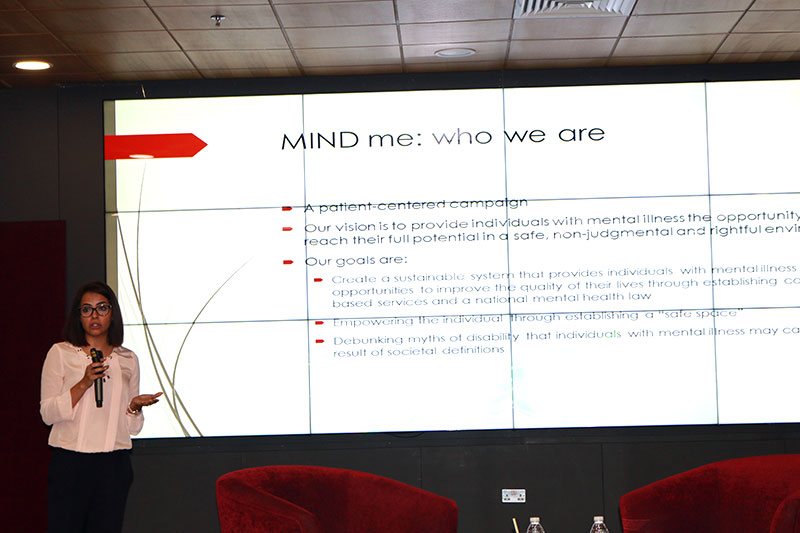
The Center for Gulf Studies hosted a public lecture by Dr. Abeer Hamadah, founder of the MIND me (Mental Illness is Not Disabling me) Campaign. The campaign is an effort to end the stigma surrounding mental illness in Kuwait, to raise awareness about mental illnesses, and to support people who are struggling with mental illness.
Dr. Hamadah began by explaining the mission of the campaign and then talked about specific issues facing mentally ill people in Kuwait. One problem is that Kuwait has no mental health laws, so people may lose their jobs or stop receiving support from their families because of their illness. Another problem is the existing social stigma against mentally ill people which is the most significant barrier that prevents people from seeking help. One of the campaign’s main goals is to try and educate people about mental illness to help reduce the stigma.
After reviewing the broad issues that Kuwait faces, Dr. Hamadah spoke about what individuals should do to support those with mental illness. She cautioned audience members against using labels such as “panicky” or “depressed” to define themselves, since studies have shown that people tend to manifest the behaviors that their label dictates over time. Before ending her talk, she educated audience members on the four most common mental illnesses: anxiety, depression, schizophrenia, and bipolar affective disorder, and highlighted the importance of seeking help when you think you need it.
After the lecture, Dr. Abdullah Alkhulifah from the Fawzia Sultan Healthcare Network came onstage to tell people about the various services available for people with mental illnesses. He explained the importance of finding a therapist that is right for your needs and emphasized the fact that all services are confidential.
Following Dr. Alkhulifah’s presentation, there was a brief Q&A session with Dr. Hamadah. Students were excited about getting involved with the campaign and asked about how they could become volunteers.
Reflecting on the value of the event, Dr. Shareefa Al-Adwani, Director of the Center for Gulf Studies at AUK said, “The Center for Gulf Studies strives to spread awareness of and engage with local and regional NGOs, campaigns, and other civil society actors and groups. The founder of MIND me, Dr. Abeer Hamadah, in coordination with the Fawzia Sultan Healthcare Network and with the fantastic support of doctors, administrators, volunteers, patients, and students, encourages and provides several avenues for the de-stigmatization of mental illness in our community. The free and open academic discussion of this important issue may promote greater understanding in our families, our neighborhoods, and our communities.”
View More
Dr. Hamadah began by explaining the mission of the campaign and then talked about specific issues facing mentally ill people in Kuwait. One problem is that Kuwait has no mental health laws, so people may lose their jobs or stop receiving support from their families because of their illness. Another problem is the existing social stigma against mentally ill people which is the most significant barrier that prevents people from seeking help. One of the campaign’s main goals is to try and educate people about mental illness to help reduce the stigma.
After reviewing the broad issues that Kuwait faces, Dr. Hamadah spoke about what individuals should do to support those with mental illness. She cautioned audience members against using labels such as “panicky” or “depressed” to define themselves, since studies have shown that people tend to manifest the behaviors that their label dictates over time. Before ending her talk, she educated audience members on the four most common mental illnesses: anxiety, depression, schizophrenia, and bipolar affective disorder, and highlighted the importance of seeking help when you think you need it.
After the lecture, Dr. Abdullah Alkhulifah from the Fawzia Sultan Healthcare Network came onstage to tell people about the various services available for people with mental illnesses. He explained the importance of finding a therapist that is right for your needs and emphasized the fact that all services are confidential.
Following Dr. Alkhulifah’s presentation, there was a brief Q&A session with Dr. Hamadah. Students were excited about getting involved with the campaign and asked about how they could become volunteers.
Reflecting on the value of the event, Dr. Shareefa Al-Adwani, Director of the Center for Gulf Studies at AUK said, “The Center for Gulf Studies strives to spread awareness of and engage with local and regional NGOs, campaigns, and other civil society actors and groups. The founder of MIND me, Dr. Abeer Hamadah, in coordination with the Fawzia Sultan Healthcare Network and with the fantastic support of doctors, administrators, volunteers, patients, and students, encourages and provides several avenues for the de-stigmatization of mental illness in our community. The free and open academic discussion of this important issue may promote greater understanding in our families, our neighborhoods, and our communities.”
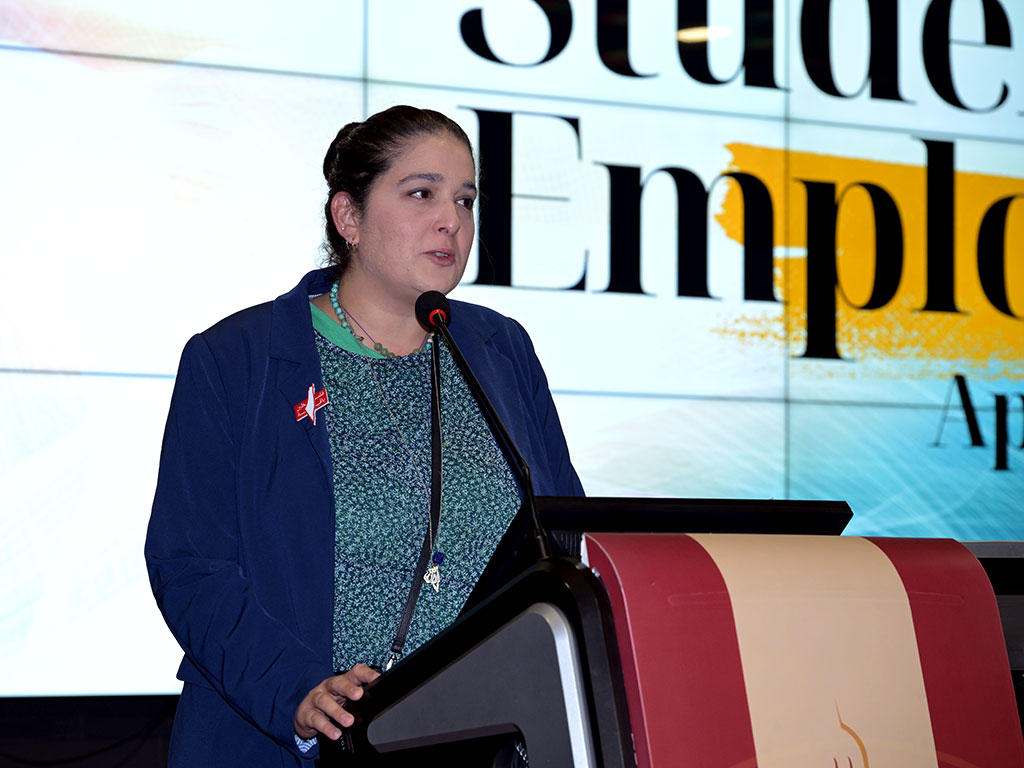
MIND me Campaign Founder and speaker, Dr. Abeer Hamadah
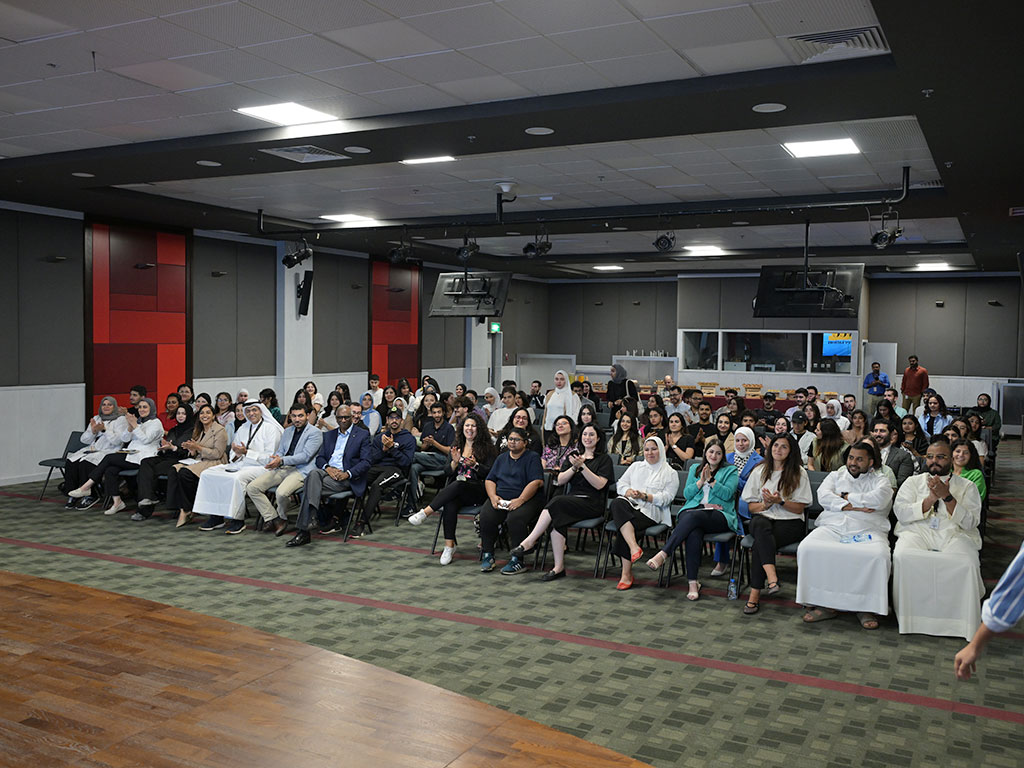
General photo of the audience members at the lecture
Dr. Abdullah AlKhulifah from Fawzia Sultan Healthcare Network
Audience member participating in the Q&A session
Showing
10 Articles
of 1528
30, Sep 2018
AUK Students Participate in George Washington University Study Abroad Program
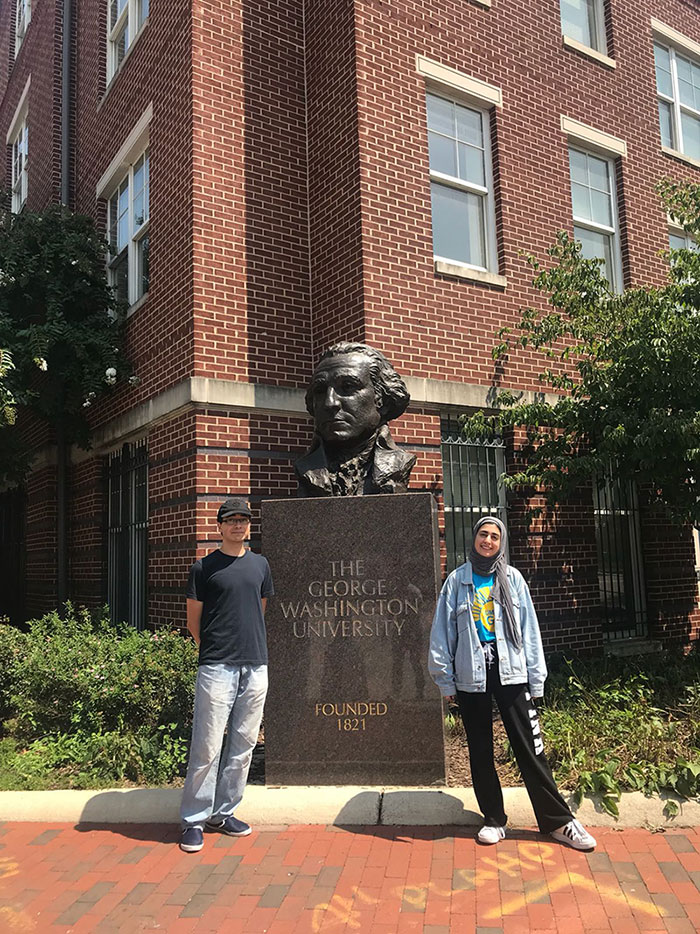
Two AUK students were awarded scholarships to participate in a six-week summer program at George Washington University (GWU). This summer program provides AUK students with the opportunity to take two three-credit undergraduate classes at GWU, along with fully paid tuition, health insurance, and accommodations. Batool Hasan and Omar Khalil were the recipients of this year’s scholarship in the summer of 2018.
Their experiences are summed by the following categories:
Academic:
Batool was exposed to different schools of thinking as this experience pushed her to take classes she would not normally gravitate towards. She registered for two courses, a philosophy course titled Ethics in Business and the Professions, and a Comparative Politics course. Batool greatly enjoyed the ethics class as it tackled moral issues in engineering and encouraged class discussion. The Comparative Politics course offered a nice change from her usual engineering classes through analysis of different political regimes and why they succeed in certain conditions and fail to progress the livelihood of citizens in other circumstances.
Omar was enrolled in two courses—World History and Media Arabic. World History was an intensive yet fascinating course that dealt with many important historical events throughout the world since the 15th century, culminating in how these events have shaped the world as we know it today. Media Arabic was an advanced Arabic course that Omar had initially started with great trepidation but quickly grew to enjoy as he spent classes exchanging cultural ideas with his American classmates. He has learned a great deal about the techniques English speakers utilize in learning Arabic and has imparted knowledge to his classmates on the linguistic dichotomies between Classical Arabic and Modern Standard Arabic.
One of the ways Omar sought to make the most of his stay in Washington DC was by improving his professional skillsets. As a student deeply engaged in app and game development, Omar took part in a couple of developer meet ups where he was able to network with many other game developers, try their projects and receive valuable feedback on an app he is currently working on.
Cultural:
Batool aimed to engage in as many activities as her short time in D.C. would allow. She will forever remember the hustle of the Fourth of July parades and mesmerizing fireworks. Being a fan of museums, she visited the National Museum of African American History and Culture, the Renwick Gallery, the Museum of Natural History, and other lesser known museums such as the International Spy Museum. In addition to that, she had the opportunity to see the White House, visit George Town, the Mount Vernon estate and the old city Alexandria.
Living in the heart of a metropolitan city was a striking change as it was always hustling with movement. Everything from restaurants to supermarkets to university buildings was within walking distance from the dormitory Shenkman Hall. “Staying in a dormitory allowed me to make friends easily as I was always meeting people,” Batool remarks about her experience at Shenkman Hall.
Not only did Omar enjoy his time in Washington DC as a tourist as he visited many of the Smithsonian’s museums as well as the city’s most important monuments throughout his stay, but he also endeavored to experience the city in a way that better integrated him into the environment, helped him cope with culture shock and even made him feel like he was closer to the heart of city life: by living as a local. He cooked for himself as often as he could, revisited several tucked-away yet beautiful bookshops and cafes, befriended locals through meet-ups, discovered obscure reading spots by the Potomac River and even changed up his jogging routes constantly to remain active and spontaneously discover new areas he would never have encountered before.
Personal Growth:
Batool accomplished two goals before her experience at GWU even started: Travelling alone for a long journey, and visiting a country she had not been to before. As soon as she reached the dormitory, she quickly got acquainted with her dorm mates, who later on became a family to her, and joined together to visit the monuments and surrounding area in an effort to make the most out of her experience. Batool also crossed off another item on her bucket list with a visit to New York city, in which she visited the Empire State building and Statue of Liberty.
From developing a sturdier work-ethic from his intensive classes to broadening his cultural awareness, Omar has gone through a lot of personal growth that he attributes to the George Washington Summer Program. There were ups and downs throughout the experience, but everything Omar has gained will benefit him tremendously in his academic, professional and personal life, and he would recommend everyone to take part during the next program.
Their experiences are summed by the following categories:
Academic:
Batool was exposed to different schools of thinking as this experience pushed her to take classes she would not normally gravitate towards. She registered for two courses, a philosophy course titled Ethics in Business and the Professions, and a Comparative Politics course. Batool greatly enjoyed the ethics class as it tackled moral issues in engineering and encouraged class discussion. The Comparative Politics course offered a nice change from her usual engineering classes through analysis of different political regimes and why they succeed in certain conditions and fail to progress the livelihood of citizens in other circumstances.
Omar was enrolled in two courses—World History and Media Arabic. World History was an intensive yet fascinating course that dealt with many important historical events throughout the world since the 15th century, culminating in how these events have shaped the world as we know it today. Media Arabic was an advanced Arabic course that Omar had initially started with great trepidation but quickly grew to enjoy as he spent classes exchanging cultural ideas with his American classmates. He has learned a great deal about the techniques English speakers utilize in learning Arabic and has imparted knowledge to his classmates on the linguistic dichotomies between Classical Arabic and Modern Standard Arabic.
One of the ways Omar sought to make the most of his stay in Washington DC was by improving his professional skillsets. As a student deeply engaged in app and game development, Omar took part in a couple of developer meet ups where he was able to network with many other game developers, try their projects and receive valuable feedback on an app he is currently working on.
Cultural:
Batool aimed to engage in as many activities as her short time in D.C. would allow. She will forever remember the hustle of the Fourth of July parades and mesmerizing fireworks. Being a fan of museums, she visited the National Museum of African American History and Culture, the Renwick Gallery, the Museum of Natural History, and other lesser known museums such as the International Spy Museum. In addition to that, she had the opportunity to see the White House, visit George Town, the Mount Vernon estate and the old city Alexandria.
Living in the heart of a metropolitan city was a striking change as it was always hustling with movement. Everything from restaurants to supermarkets to university buildings was within walking distance from the dormitory Shenkman Hall. “Staying in a dormitory allowed me to make friends easily as I was always meeting people,” Batool remarks about her experience at Shenkman Hall.
Not only did Omar enjoy his time in Washington DC as a tourist as he visited many of the Smithsonian’s museums as well as the city’s most important monuments throughout his stay, but he also endeavored to experience the city in a way that better integrated him into the environment, helped him cope with culture shock and even made him feel like he was closer to the heart of city life: by living as a local. He cooked for himself as often as he could, revisited several tucked-away yet beautiful bookshops and cafes, befriended locals through meet-ups, discovered obscure reading spots by the Potomac River and even changed up his jogging routes constantly to remain active and spontaneously discover new areas he would never have encountered before.
Personal Growth:
Batool accomplished two goals before her experience at GWU even started: Travelling alone for a long journey, and visiting a country she had not been to before. As soon as she reached the dormitory, she quickly got acquainted with her dorm mates, who later on became a family to her, and joined together to visit the monuments and surrounding area in an effort to make the most out of her experience. Batool also crossed off another item on her bucket list with a visit to New York city, in which she visited the Empire State building and Statue of Liberty.
From developing a sturdier work-ethic from his intensive classes to broadening his cultural awareness, Omar has gone through a lot of personal growth that he attributes to the George Washington Summer Program. There were ups and downs throughout the experience, but everything Omar has gained will benefit him tremendously in his academic, professional and personal life, and he would recommend everyone to take part during the next program.
AUK students Batool Hassan and Omar Khalil at George Washington University
19, Sep 2018
AUK Starts the New Academic Year with a Successful New Student Orientation and Welcome Week
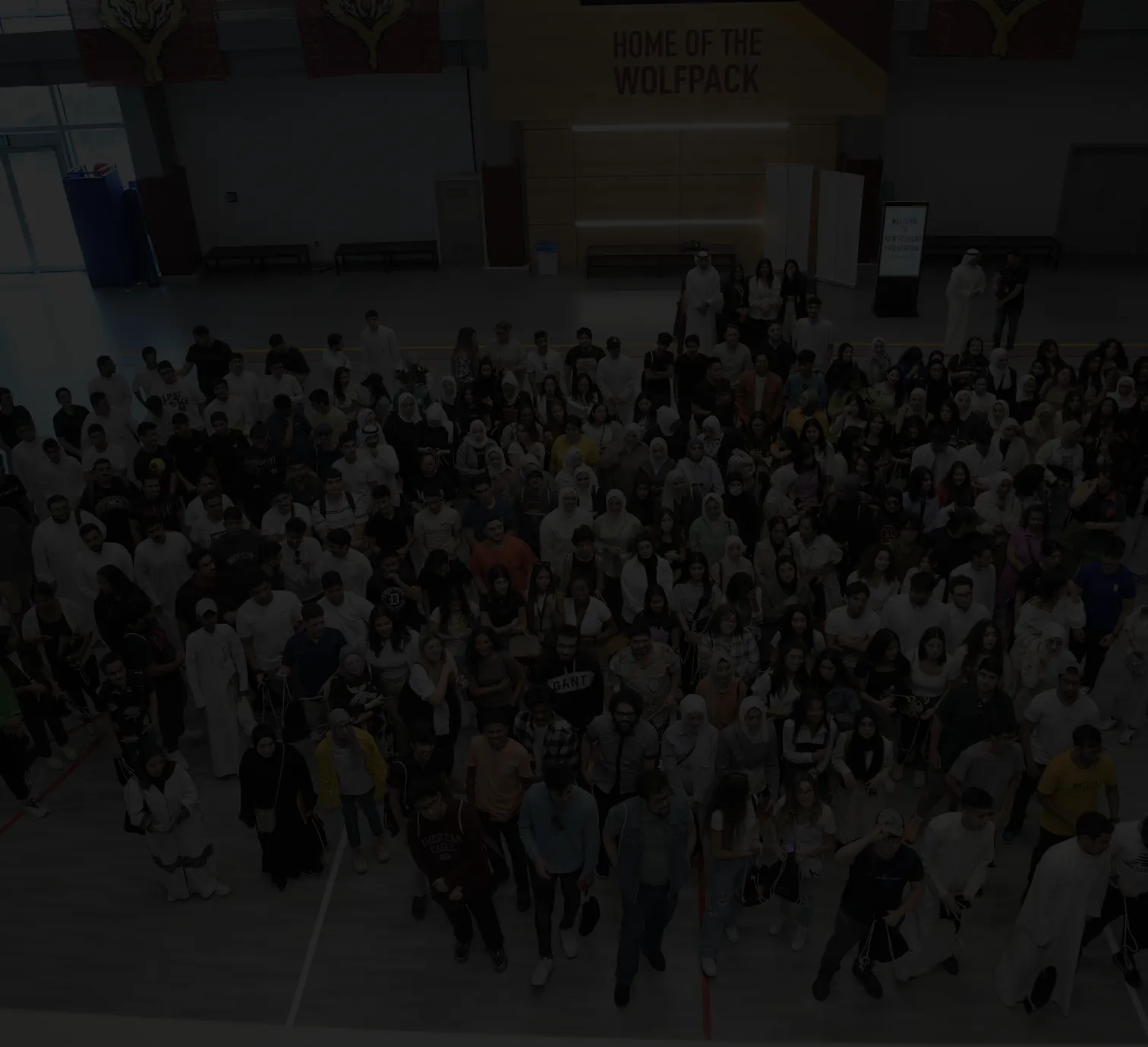
AUK held its bi-annual student orientation where it welcomed first-time students to the AUK campus. The orientation is one of the most highly regarded events on campus as it intends to prepare students to effectively transition into university, while giving students the tools and information needed to become academically and socially successful at AUK.
The orientation was inaugurated by the Dean of Student Affairs, Dr. Hanan Muzaffar who explained that, “New Student Orientation is a vital part of the holistic transition and success of a student during their university experience. At AUK, we are committed to providing an all rounded experience for our students while providing them with a smooth and enjoyable transition, as we continue to enrich their academic, extracurricular and social lives on campus.” Following Dr. Muzaffar’s opening remarks, the Provost, Dr. Rawda Awwad spoke of the timelessness of learning and the significance of diversity of backgrounds and interests in the university community, citing them as some of the reasons that make AUK proud of its community. The speeches ended with a video that highlighted the students’ achievements in their involvements, both on and off campus.
The incoming students were then led on tours around campus and got to know each other through various ice breaking activities. The tour was organized by the Division of Student Affairs that also introduced its voluntary Peer Mentor Program for this year’s new student orientation. Comprised of 12 AUK junior and senior students, each peer mentor is assigned a group of around 30 freshmen to help them acclimate to the University, take them to their first club meetings and events, assist them with finding their way around campus and guide them through the process of dealing with various offices in the University. In commenting on the success of the Peer Mentor Program, Dr. Muzaffar said, “The Peer Mentors were excited for this opportunity, saying that they volunteered for this program because of their love for AUK and their desire to welcome the new students into their community.” Following this, optional activities ranging from an art workshop at the University’s art and therapy room to a basketball game in the indoor court were organized.
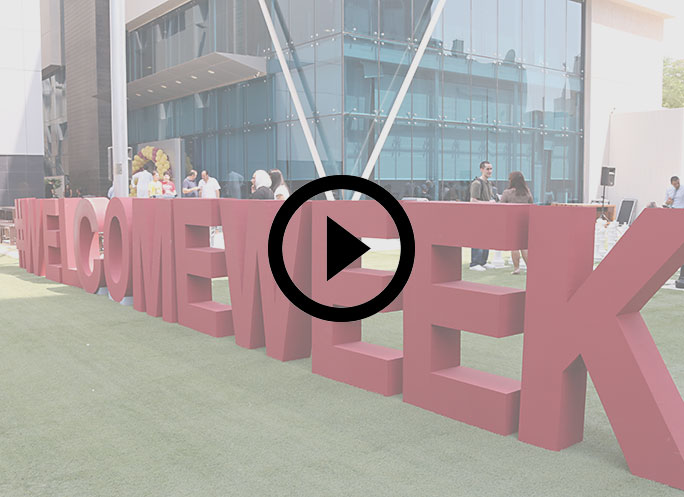
The AUK orientation week continued on campus with the Welcome Week activities that encouraged student engagement within the university community. Organized by the Office of Student Life, Division of Student Affairs, Welcome Week kicked off with a barbecue by the Student Life team, photo challenge, movie night, an involvement fair which consisted of recruitment for student clubs, organizations and university departments; wrapping up the fun-filled week was a mini carnival by AUK’s Student Council.
Commenting on the success of Welcome Week, Dr. Muzaffar said, “Welcome to a new academic year at AUK new and returning AUK students, we have been eager to meet you all! Our Welcome Week activities are here to provide all students with different ways to connect and meet their new and continuing fellow students, staff and available resources at AUK. We are looking forward to a successful fall 2018 semester.”
The orientation was inaugurated by the Dean of Student Affairs, Dr. Hanan Muzaffar who explained that, “New Student Orientation is a vital part of the holistic transition and success of a student during their university experience. At AUK, we are committed to providing an all rounded experience for our students while providing them with a smooth and enjoyable transition, as we continue to enrich their academic, extracurricular and social lives on campus.” Following Dr. Muzaffar’s opening remarks, the Provost, Dr. Rawda Awwad spoke of the timelessness of learning and the significance of diversity of backgrounds and interests in the university community, citing them as some of the reasons that make AUK proud of its community. The speeches ended with a video that highlighted the students’ achievements in their involvements, both on and off campus.
The incoming students were then led on tours around campus and got to know each other through various ice breaking activities. The tour was organized by the Division of Student Affairs that also introduced its voluntary Peer Mentor Program for this year’s new student orientation. Comprised of 12 AUK junior and senior students, each peer mentor is assigned a group of around 30 freshmen to help them acclimate to the University, take them to their first club meetings and events, assist them with finding their way around campus and guide them through the process of dealing with various offices in the University. In commenting on the success of the Peer Mentor Program, Dr. Muzaffar said, “The Peer Mentors were excited for this opportunity, saying that they volunteered for this program because of their love for AUK and their desire to welcome the new students into their community.” Following this, optional activities ranging from an art workshop at the University’s art and therapy room to a basketball game in the indoor court were organized.
The AUK orientation week continued on campus with the Welcome Week activities that encouraged student engagement within the university community. Organized by the Office of Student Life, Division of Student Affairs, Welcome Week kicked off with a barbecue by the Student Life team, photo challenge, movie night, an involvement fair which consisted of recruitment for student clubs, organizations and university departments; wrapping up the fun-filled week was a mini carnival by AUK’s Student Council.
Commenting on the success of Welcome Week, Dr. Muzaffar said, “Welcome to a new academic year at AUK new and returning AUK students, we have been eager to meet you all! Our Welcome Week activities are here to provide all students with different ways to connect and meet their new and continuing fellow students, staff and available resources at AUK. We are looking forward to a successful fall 2018 semester.”
Click on the Image to view the Photo Gallery
19, Sep 2018
AUK Student Council Hosts a Mini Carnival to Start New Academic Year
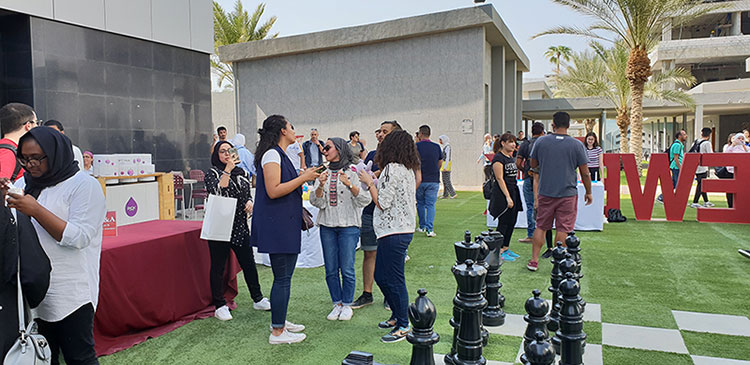
The Student Council at the American University of Kuwait held its first event of the year during the first week of the semester. The Mini Carnival took place in the recreational area and it featured live music, games, and prizes. The carnival was part of the University’s Welcome Week event which brought together students and professors with student council members.
The Mini Carnival included many games such as mini basketball, tower, charades, Pictionary and ring toss. Each was placed on a separate booth and had stuffed animals that were given as prizes to the winners. Students joined the event and showed their enthusiasm as they participated in the carnival’s activities.
The event also featured a Time Capsule booth which allowed freshmen to write letters to their senior selves. The letters were then kept in envelopes that the students sealed and signed with their names and student IDs. The booth was created by the President of the Student Council, Shahad Al-Mousa who said, “As a senior I have always wondered how much AUK has helped me grow. I wish I had a way to document the progress I had made both academically and socially.” She hopes that with the Time Capsule, freshmen would have the opportunity to envision what their experience in AUK would be like.
Alongside the games and prizes, the event also featured live music which was performed by the saxophonist Hussein Elessawy. He played covers of a wide variety of songs to cater to everyone’s taste.
The Council, which consists of an entirely new board called for this carnival as an opportunity to introduce the new team to the students and to provide a source of entertainment for the student body at the end of AUK’s Welcome Week. The event was executed in collaboration with the Student Life Department who provided support for the event and refreshments for the carnival attendees.
Despite the summer heat, the Mini Carnival was a success in that it brought the AUK community together for an enjoyable time.
The Mini Carnival included many games such as mini basketball, tower, charades, Pictionary and ring toss. Each was placed on a separate booth and had stuffed animals that were given as prizes to the winners. Students joined the event and showed their enthusiasm as they participated in the carnival’s activities.
The event also featured a Time Capsule booth which allowed freshmen to write letters to their senior selves. The letters were then kept in envelopes that the students sealed and signed with their names and student IDs. The booth was created by the President of the Student Council, Shahad Al-Mousa who said, “As a senior I have always wondered how much AUK has helped me grow. I wish I had a way to document the progress I had made both academically and socially.” She hopes that with the Time Capsule, freshmen would have the opportunity to envision what their experience in AUK would be like.
Alongside the games and prizes, the event also featured live music which was performed by the saxophonist Hussein Elessawy. He played covers of a wide variety of songs to cater to everyone’s taste.
The Council, which consists of an entirely new board called for this carnival as an opportunity to introduce the new team to the students and to provide a source of entertainment for the student body at the end of AUK’s Welcome Week. The event was executed in collaboration with the Student Life Department who provided support for the event and refreshments for the carnival attendees.
Despite the summer heat, the Mini Carnival was a success in that it brought the AUK community together for an enjoyable time.
General photo of the Mini Carnival attendees
Saxophonist Hussein Elessawy performing at the Mini Carnival
General photo of the Mini Carnival attendees
18, Sep 2018
AUK Students Intern at Dartmouth College
Three AUK students were granted the opportunity to intern during the summer at Dartmouth College-one of the Ivy League institutions in the United States. Leena Elhawary and Dima Jadayel were placed in the Office of Communications, while Omar Matar worked with the TuckGo Department in the Tuck School of Business.
The internship experience allowed the students to dive into a culture filled with different perspectives, meet people from all walks of life, enjoy nature-focused activities, learn about Dartmouth traditions, and have first-hand experiences of working in a professional setting.
Elhawary, Jadayel and Matar share their insights and experiences during their stay in Dartmouth that they believe has helped them shape their characters and pave the way for new goals.
Elhawary and Jadayel worked alongside each other in the Office of Communications. For Elhawary, the highlight of the trip was learning so much from her internship placement projects, taking part in various outdoor activities, as well as meeting many new people. In her spare time, she made sure that she was outdoors as often as she could. As she reminisces on her time at Dartmouth, Leena said, “I made sure to balance work and leisure because I wanted to take advantage of Dartmouth and all the opportunities it offered me. I’d make sure that I’m up early ready to start the day, then after I finish my assigned work, Dima and I would either go for a quick hike, or head over to the river and enjoy the glorious sun at the Dartmouth dock.”
Meanwhile, for Jadayel, getting used to a new routine has always been a thrill to her, as she explains, “You break out of that box you’ve been so comfortable in only to find out more about your strengths and weaknesses, personal traits to improve or eliminate, or even additions to your list of goals.” For the past month, Jadayel was able to open her mind to a new culture and its people. She adopted new unique perspectives that Dartmouth’s creative team instilled in her during her internship at the Office of Communications.
Omar Matar, the only TuckGO-Office of Business intern learned as much as enjoyed his office working hours. He obtained many Microsoft Excel skills that added to his existing knowledge of the computer program. He proudly boosted the Business Consulting team’s operations by creating a whole database that goes over 20 years back which included all the projects completed with all the information needed for future reference. Omar had surrounded himself by many friends that he met from inside and outside the office. Away from work, Omar was fortunate enough to live the town life in Hanover, New Hampshire, as the State enjoyed natural landscapes and a tropical summer weather.
Elhawary, Jadayel, and Matar had an incredible summer interning at Dartmouth. They were able to contribute to and learn from their internship placements and actively engage with the local community. The skills and personal growth that they gained while at Dartmouth is sure to influence their lives for years to come.
The internship experience allowed the students to dive into a culture filled with different perspectives, meet people from all walks of life, enjoy nature-focused activities, learn about Dartmouth traditions, and have first-hand experiences of working in a professional setting.
Elhawary, Jadayel and Matar share their insights and experiences during their stay in Dartmouth that they believe has helped them shape their characters and pave the way for new goals.
Elhawary and Jadayel worked alongside each other in the Office of Communications. For Elhawary, the highlight of the trip was learning so much from her internship placement projects, taking part in various outdoor activities, as well as meeting many new people. In her spare time, she made sure that she was outdoors as often as she could. As she reminisces on her time at Dartmouth, Leena said, “I made sure to balance work and leisure because I wanted to take advantage of Dartmouth and all the opportunities it offered me. I’d make sure that I’m up early ready to start the day, then after I finish my assigned work, Dima and I would either go for a quick hike, or head over to the river and enjoy the glorious sun at the Dartmouth dock.”
Meanwhile, for Jadayel, getting used to a new routine has always been a thrill to her, as she explains, “You break out of that box you’ve been so comfortable in only to find out more about your strengths and weaknesses, personal traits to improve or eliminate, or even additions to your list of goals.” For the past month, Jadayel was able to open her mind to a new culture and its people. She adopted new unique perspectives that Dartmouth’s creative team instilled in her during her internship at the Office of Communications.
Omar Matar, the only TuckGO-Office of Business intern learned as much as enjoyed his office working hours. He obtained many Microsoft Excel skills that added to his existing knowledge of the computer program. He proudly boosted the Business Consulting team’s operations by creating a whole database that goes over 20 years back which included all the projects completed with all the information needed for future reference. Omar had surrounded himself by many friends that he met from inside and outside the office. Away from work, Omar was fortunate enough to live the town life in Hanover, New Hampshire, as the State enjoyed natural landscapes and a tropical summer weather.
Elhawary, Jadayel, and Matar had an incredible summer interning at Dartmouth. They were able to contribute to and learn from their internship placements and actively engage with the local community. The skills and personal growth that they gained while at Dartmouth is sure to influence their lives for years to come.
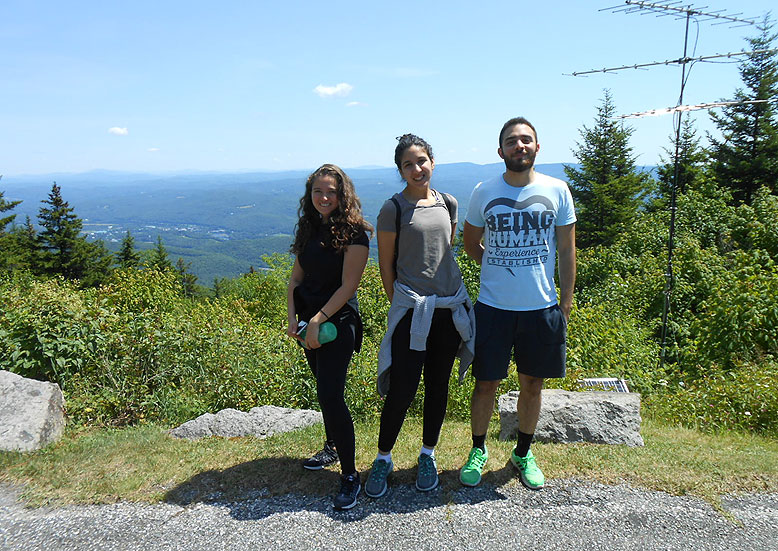
Leena Elhawary, Dina Jadayel, and Omar Matar in Hanover, New Hampshire, USA
16, Sep 2018
AUK Commences New Academic Year
AUK officially opened its doors to the class of 2022 on the 9th of September, 2018. During the first week of classes, AUK held a series of orientations for faculty and staff to introduce newcomers to campus and provide various curricula and administrative updates. AUK Provost Rawda Awwad gave a speech during the annual general staff meeting in which she articulated the significant outcome of each administrative and academic accomplishment in creating an unparalleled environment for students to immerse themselves in their education, as she explains, "All of the hard work that we invested that resulted in successful accreditations, the range of extra and co-curricular student engagement initiatives, research, alumni activities, school visits, moving toward holistic approaches to learning, retention pilots . . . are a means to an end in creating an environment and experience for our students that enables them to compete and lead and create and discover and explore, and actively partake in the shaping of their own cultures and societies, and give back to others."
The general meeting was followed by a panel discussion presented by a group of AUK professors on the best practices for education which include increased student engagement in the classroom, and using the latest technologies and software for a more dynamic educational experience.
The University’s first week of the new academic year was full of student events and activities such as the New Student Orientation Day and Involvement Fair to help further integrate students to their new environment on campus.
It has also been a busy time for campus expansion operations as they continue to progress this year to complete two new buildings at AUK that are expected to add more educational and recreational facilities to the AUK urban Salmiya campus.
The general meeting was followed by a panel discussion presented by a group of AUK professors on the best practices for education which include increased student engagement in the classroom, and using the latest technologies and software for a more dynamic educational experience.
The University’s first week of the new academic year was full of student events and activities such as the New Student Orientation Day and Involvement Fair to help further integrate students to their new environment on campus.
It has also been a busy time for campus expansion operations as they continue to progress this year to complete two new buildings at AUK that are expected to add more educational and recreational facilities to the AUK urban Salmiya campus.
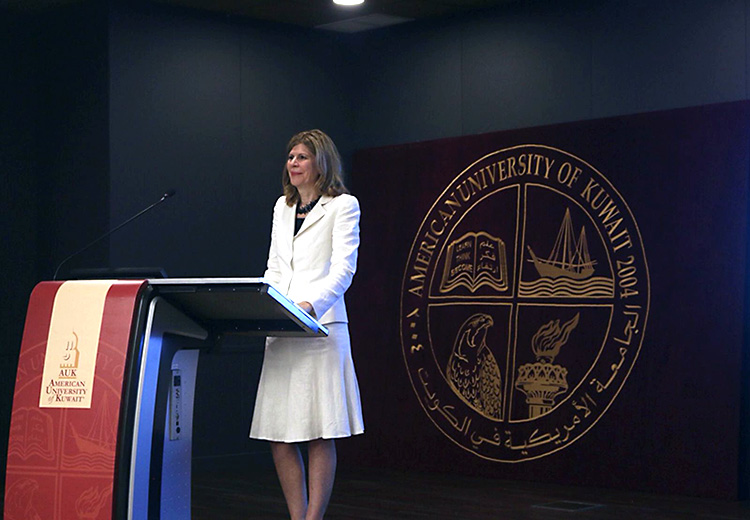
AUK Provost Dr. Rawda Awwad
Dr. Ali Charara, Dean of College of Arts & Sciences
General photo of the audience
Group photo of the students
16, Sep 2018
AUK Welcomes New Dartmouth Interns for Fall, 2018
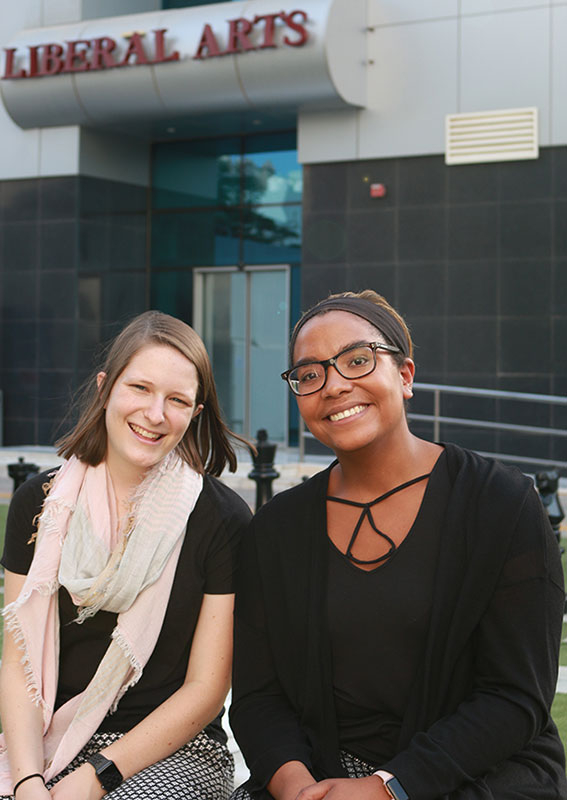
AUK welcomed two new interns from Dartmouth College, Hannah Lang and Allyson (Ally) Gaines. They are both members of the Dartmouth class of 2021 and arrived in Kuwait from Morocco where they spent the summer studying Arabic.
Hannah Lang is from the small town of Grantham, New Hampshire. She is interested in Middle Eastern Studies and is pursuing a minor in Arabic. Hannah is considering a major in Quantitative Social Science with a concentration in Geography. At Dartmouth, she is involved in the Triathlon Team, Students Fighting Hunger, and healthcare policy research.
At AUK, Hannah will be working in the Department of Public Relations and Marketing, at the Tutoring Center, and in the Intensive English Program. During the ten-week internship, Hannah is looking forward to developing her writing and teaching skills, learning about Kuwait, and making new friends. So far, she has been impressed by the vast number of malls in Kuwait and has been volunteering at ReFood in Andalous.
Ally Gaines is from the suburbs of Atlanta, Georgia. At Dartmouth, she is pursuing interests and studies in the Middle East and Government. In the past, Ally has served on student government and has competed in national conferences for Future Business Leaders of America. She is involved on Dartmouth’s campus as a member of various groups including Student Assembly, Dartmouth Political Times newspaper, and the Dartmouth College cheerleading team.
Ally will be working in the Office of Student Life, the Center for Continuing Education, and as a Writing Tutor at AUK. She is excited to get to know students, faculty, and staff. She also hopes to join a club and to participate in school events. Ally has had “nothing but good experiences” during her first week and is very happy to be at AUK.
Hannah and Ally will be at AUK until mid-November. This is the 24th time since 2005 that interns join AUK from Dartmouth College.
Hannah Lang is from the small town of Grantham, New Hampshire. She is interested in Middle Eastern Studies and is pursuing a minor in Arabic. Hannah is considering a major in Quantitative Social Science with a concentration in Geography. At Dartmouth, she is involved in the Triathlon Team, Students Fighting Hunger, and healthcare policy research.
At AUK, Hannah will be working in the Department of Public Relations and Marketing, at the Tutoring Center, and in the Intensive English Program. During the ten-week internship, Hannah is looking forward to developing her writing and teaching skills, learning about Kuwait, and making new friends. So far, she has been impressed by the vast number of malls in Kuwait and has been volunteering at ReFood in Andalous.
Ally Gaines is from the suburbs of Atlanta, Georgia. At Dartmouth, she is pursuing interests and studies in the Middle East and Government. In the past, Ally has served on student government and has competed in national conferences for Future Business Leaders of America. She is involved on Dartmouth’s campus as a member of various groups including Student Assembly, Dartmouth Political Times newspaper, and the Dartmouth College cheerleading team.
Ally will be working in the Office of Student Life, the Center for Continuing Education, and as a Writing Tutor at AUK. She is excited to get to know students, faculty, and staff. She also hopes to join a club and to participate in school events. Ally has had “nothing but good experiences” during her first week and is very happy to be at AUK.
Hannah and Ally will be at AUK until mid-November. This is the 24th time since 2005 that interns join AUK from Dartmouth College.
Dartmouth College interns Hannah Lang and Ally Gaines in AUK
02, Sep 2018
AUK Professor Iyad Abu Doush Completes Research at Dartmouth College
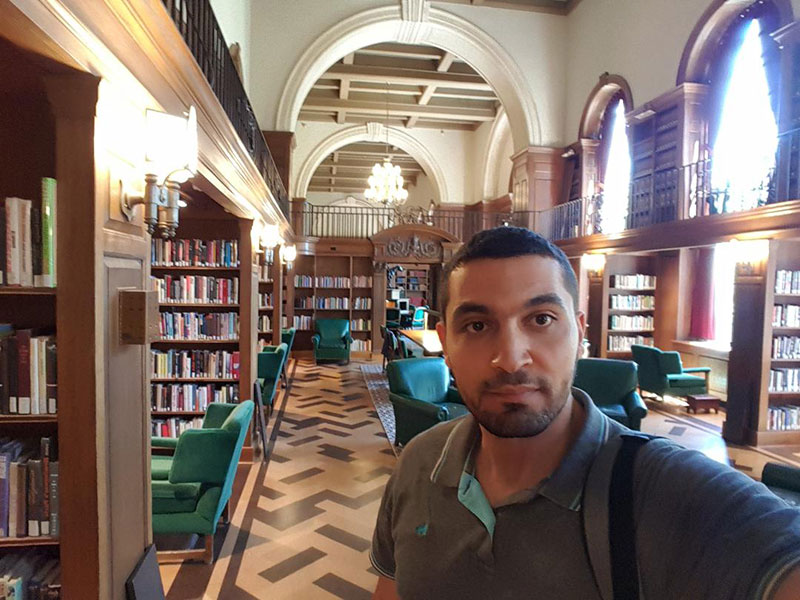
Dr. Iyad Abu Doush, Professor of Computer Science and Information Systems at the American University of Kuwait (AUK) recently returned after spending the summer completing research as a faculty fellow at Dartmouth College.
During his time at Dartmouth, Dr. Abu Doush worked closely with Dr. Eugene Santos, Jr., Professor of Engineering at Thayer School of Engineering at Dartmouth. Dr. Abu Doush’s research focuses on "the Effect of Different Properties for Harmony Search Algorithm with Multi-Parent Crossover," which allows him to optimize algorithms for real-world problems like creating timetables for universities, structural optimization, multi-buyer multi-vendor supply chain problem, and flow shop scheduling. Thanks to the support and resources available to him, Dr. Abu Doush was able to quickly complete his first goal and co-author a paper with Dr. Santos.
Since he had so much time to focus on his research at Dartmouth, Dr. Abu Doush was able to accomplish a lot more than he had originally proposed. In addition to co-authoring a paper, he introduced a new algorithm for use in optimization problems, and began testing a new job scheduling algorithm. “The resources that were available to me at Dartmouth, from research papers to computational resources to software enabled me to complete my research. Also, the collaboration with my mentor there helped me make sure my research was going in the right direction… he was very helpful. Going to Dartmouth enabled me to focus on my research more and to complete more research during my stay there. The infrastructure that is available for the researchers and also how fast they came to fix any issue that happened is very amazing… it was a very nice experience for me.”
He also had the opportunity to meet with Dr. Santos’ graduate students and give them feedback on their projects, which also gave him insight into the new types of projects and ideas that people are exploring today. He is excited to share examples of these projects with his students at AUK to inspire them about the wide variety of problems computer programming can solve.
In addition to optimizing algorithms, Dr. Abu Doush is also passionate about technology accessibility, or developing technology for people with disabilities. He gave a presentation to students and faculty on the topic, and then he and Dr. Santos discussed ideas for future collaborations, such as landmark recognition.
Although Dr. Abu Doush was hard at work for most of his time at Dartmouth, he also made time to enjoy the summer in Hanover. One of his favorite memories was meeting for coffee with the AUK students interns who were also at Dartmouth for the summer, and seeing how excited they were. He loved all of the nature and greenery that Hanover had to offer and particularly enjoyed the warm summer rain.
Dr. Abu Doush was the tenth AUK faculty member to join the Dartmouth fellowship program. The fellowship program is open to AUK faculty members conducting research that can be facilitated by access to Dartmouth's libraries and museum collections, or to senior administrators pursuing professional development projects that can be guided by Dartmouth mentors.
During his time at Dartmouth, Dr. Abu Doush worked closely with Dr. Eugene Santos, Jr., Professor of Engineering at Thayer School of Engineering at Dartmouth. Dr. Abu Doush’s research focuses on "the Effect of Different Properties for Harmony Search Algorithm with Multi-Parent Crossover," which allows him to optimize algorithms for real-world problems like creating timetables for universities, structural optimization, multi-buyer multi-vendor supply chain problem, and flow shop scheduling. Thanks to the support and resources available to him, Dr. Abu Doush was able to quickly complete his first goal and co-author a paper with Dr. Santos.
Since he had so much time to focus on his research at Dartmouth, Dr. Abu Doush was able to accomplish a lot more than he had originally proposed. In addition to co-authoring a paper, he introduced a new algorithm for use in optimization problems, and began testing a new job scheduling algorithm. “The resources that were available to me at Dartmouth, from research papers to computational resources to software enabled me to complete my research. Also, the collaboration with my mentor there helped me make sure my research was going in the right direction… he was very helpful. Going to Dartmouth enabled me to focus on my research more and to complete more research during my stay there. The infrastructure that is available for the researchers and also how fast they came to fix any issue that happened is very amazing… it was a very nice experience for me.”
He also had the opportunity to meet with Dr. Santos’ graduate students and give them feedback on their projects, which also gave him insight into the new types of projects and ideas that people are exploring today. He is excited to share examples of these projects with his students at AUK to inspire them about the wide variety of problems computer programming can solve.
In addition to optimizing algorithms, Dr. Abu Doush is also passionate about technology accessibility, or developing technology for people with disabilities. He gave a presentation to students and faculty on the topic, and then he and Dr. Santos discussed ideas for future collaborations, such as landmark recognition.
Although Dr. Abu Doush was hard at work for most of his time at Dartmouth, he also made time to enjoy the summer in Hanover. One of his favorite memories was meeting for coffee with the AUK students interns who were also at Dartmouth for the summer, and seeing how excited they were. He loved all of the nature and greenery that Hanover had to offer and particularly enjoyed the warm summer rain.
Dr. Abu Doush was the tenth AUK faculty member to join the Dartmouth fellowship program. The fellowship program is open to AUK faculty members conducting research that can be facilitated by access to Dartmouth's libraries and museum collections, or to senior administrators pursuing professional development projects that can be guided by Dartmouth mentors.
Dr. Iyad Abu Doush at the Dartmouth library
28, Jun 2018
AUK Welcomes its Tenth Group of Graduate Summer Interns
Tess Constant, Quincy Kissack, and Wyatt Waterbury are this summer's graduate students who have joined the AUK community to intern in Kuwait. Arriving from the United States, they will be working in various departments within the University until the end of July. The AUK Graduate Internship Program is celebrating its tenth year of operation, having brought interns from 20 different US universities. The program usually provides two positions each summer, but to commemorate the 10th anniversary of the program, a third position has been funded by the U.S. Embassy in Kuwait through a grant from the U.S. Department of State.
Tess Constant completed her undergraduate degree in hospitality and is currently pursuing her Master's degree in higher education with an emphasis in student affairs both at the University of Arkansas. She has four years of experience working with international students through the International Students and Scholars (ISS) office on campus, including working with the Visiting Student Program in the ISS working with many students from Korea and Brazil. Post-graduation she completed an internship abroad in Scotland and worked in the international office of Scotland's Rural College learning about the ERASMUS program and researching strategic partners within the school to create a smooth study abroad experience for new students. Commenting on her work at AUK, Tess says, "I'm interning in the Counseling Center and Academic Student Success Center. I've enjoyed coming alongside programs and projects in both centers to support student engagement. I look forward to applying what I'm learning at AUK to my graduate assistantship this fall as well as my future career as a student affairs professional."
Quincy Kissack recently completed her Master's degree in Student Affairs from the University of Maryland (UMD). At UMD, Quincy worked with co-curricular leadership programs in the Leadership & Community Service-Learning office. She has also taught several courses in leadership and disability studies, and has advised two international alternative break experiences to the Dominican Republic and the Bahamas. For her undergraduate degree, Quincy attended St. Norbert College in Green Bay, WI, where she received a Bachelor of Arts in Communication and Media Studies with minors in Spanish and Leadership Studies. Quincy intends to pursue a career working with leadership development, student activities, service-learning, or international education and eventually hopes to work in higher education administration. In August, Quincy will begin a full-time position at the University of Wisconsin-Milwaukee as the Assistant Director of the Student Association.
Quincy will be working in the Office of Student Life, and in the Office of President. Her internship on campus has provided her with further insight into collegiate life at AUK, as she explains, "I came to Kuwait for the professional internship opportunity, and I've learned so much working with colleagues in Student Life and the Office of the President in my first month here. I'm grateful that I've also gotten to connect with people and to learn more about Kuwaiti culture."
Wyatt Waterbury received his undergraduate degree from the University of Oregon, with a degree in Business Marketing and a minor in Arabic. Wyatt is currently pursuing a Master's degree in Student Affairs at Iowa State University (ISU). At ISU, he works with the International Students and Scholars Office, as well as International Admissions, while also advising the International Student Council. He is very interested in the field of International Education, and believes that international students do not receive the full amount of attention that they deserve in higher education. Wyatt's life motto is, "When was the last time you did something for the first time?" He is constantly pushing himself out of his comfort zone, looking for opportunities to create new experiences. He views the internship as a significant experience to help him in his studies to improve international students' educational journeys, "Completing projects across a variety of departments on campus is what has made this internship stand apart from my past experiences. I've built relationships with professionals who emphasize student success throughout their work and challenge me to get the most out of my time at AUK. Expanding beyond the United States has provided me a more well-rounded understanding of social justice on a global scale, and I am excited to implement what I have learned here into my future work as a student affairs professional."
Wyatt will be working in the Academic Support Services, and in the Office of Admissions.
The internship program started in 2009, and in 2011 won the NASPA Best Practice Award for International Exchange Programs. It is designed to provide graduate students and recent graduates the opportunity to gain experience within the professional areas of Student Affairs/Student Services. Several past interns have returned to work professionally in the Arabian Gulf region, and almost half have conducted presentations at either the NASPA Annual Conference or Gulf Region Conference following their experience. Through these collective experiences, interns gain a deeper understanding of higher education administration, are provided multiple placements to gain varying perspectives and experiences, and acquire specific skill sets which will help prepare them for a career in higher education.
Tess Constant completed her undergraduate degree in hospitality and is currently pursuing her Master's degree in higher education with an emphasis in student affairs both at the University of Arkansas. She has four years of experience working with international students through the International Students and Scholars (ISS) office on campus, including working with the Visiting Student Program in the ISS working with many students from Korea and Brazil. Post-graduation she completed an internship abroad in Scotland and worked in the international office of Scotland's Rural College learning about the ERASMUS program and researching strategic partners within the school to create a smooth study abroad experience for new students. Commenting on her work at AUK, Tess says, "I'm interning in the Counseling Center and Academic Student Success Center. I've enjoyed coming alongside programs and projects in both centers to support student engagement. I look forward to applying what I'm learning at AUK to my graduate assistantship this fall as well as my future career as a student affairs professional."
Quincy Kissack recently completed her Master's degree in Student Affairs from the University of Maryland (UMD). At UMD, Quincy worked with co-curricular leadership programs in the Leadership & Community Service-Learning office. She has also taught several courses in leadership and disability studies, and has advised two international alternative break experiences to the Dominican Republic and the Bahamas. For her undergraduate degree, Quincy attended St. Norbert College in Green Bay, WI, where she received a Bachelor of Arts in Communication and Media Studies with minors in Spanish and Leadership Studies. Quincy intends to pursue a career working with leadership development, student activities, service-learning, or international education and eventually hopes to work in higher education administration. In August, Quincy will begin a full-time position at the University of Wisconsin-Milwaukee as the Assistant Director of the Student Association.
Quincy will be working in the Office of Student Life, and in the Office of President. Her internship on campus has provided her with further insight into collegiate life at AUK, as she explains, "I came to Kuwait for the professional internship opportunity, and I've learned so much working with colleagues in Student Life and the Office of the President in my first month here. I'm grateful that I've also gotten to connect with people and to learn more about Kuwaiti culture."
Wyatt Waterbury received his undergraduate degree from the University of Oregon, with a degree in Business Marketing and a minor in Arabic. Wyatt is currently pursuing a Master's degree in Student Affairs at Iowa State University (ISU). At ISU, he works with the International Students and Scholars Office, as well as International Admissions, while also advising the International Student Council. He is very interested in the field of International Education, and believes that international students do not receive the full amount of attention that they deserve in higher education. Wyatt's life motto is, "When was the last time you did something for the first time?" He is constantly pushing himself out of his comfort zone, looking for opportunities to create new experiences. He views the internship as a significant experience to help him in his studies to improve international students' educational journeys, "Completing projects across a variety of departments on campus is what has made this internship stand apart from my past experiences. I've built relationships with professionals who emphasize student success throughout their work and challenge me to get the most out of my time at AUK. Expanding beyond the United States has provided me a more well-rounded understanding of social justice on a global scale, and I am excited to implement what I have learned here into my future work as a student affairs professional."
Wyatt will be working in the Academic Support Services, and in the Office of Admissions.
The internship program started in 2009, and in 2011 won the NASPA Best Practice Award for International Exchange Programs. It is designed to provide graduate students and recent graduates the opportunity to gain experience within the professional areas of Student Affairs/Student Services. Several past interns have returned to work professionally in the Arabian Gulf region, and almost half have conducted presentations at either the NASPA Annual Conference or Gulf Region Conference following their experience. Through these collective experiences, interns gain a deeper understanding of higher education administration, are provided multiple placements to gain varying perspectives and experiences, and acquire specific skill sets which will help prepare them for a career in higher education.
Quincy Kissack, graduate intern at AUK
Wyatt Waterbury, graduate intern at AUK
Tess Constant, graduate intern at AUK
Group photo of the summer graduate interns at AUK