

News
28, May 2008
Students at AUK Organize La Francophonie Exhibition
74 French language students at the American University of Kuwait organized an exhibition entitled La Francophonie.
La Francophonie in French means the French-speaking community but it also refers to the international organization of French-speaking countries and governments. The organization comprises fifty-five member states and governments and thirteen observers in all five continents.
Students created French magazines promoting culture and tourism in their selected countries. They invented a new identity reflecting the local culture and customs. They researched authors and other significant personalities, and conducted interviews with staff, faculty and students at the American University of Kuwait who are French speakers.
The students selected 12 different countries: the Seychelles, Lebanon, Belgium, Senegal, Monaco, Switzerland, France and overseas territories, Morocco, Egypt, Greece and Canada. They displayed their creativity by designing magazines, brochures, posters, t-shirts.
The interactive exhibition was an excellent opportunity to practice the French language and discover French culture in an authentic way. All this work was created by students who only had 35 hours of instruction in French.
In addition, a group of seven advanced students will be presenting to French NGOs and collecting money for their associations.
AUK students will promote diversity and bring awareness on countries that have a deep French language and culture heritage.
The American University of Kuwait is a liberal arts institution, based on the American model of higher education. It is dedicated to providing students with knowledge, self-awareness, and personal growth experiences that can enhance critical thinking, effective communication, and respect for diversity. AUK seeks to create leaders and life-long learners who aspire to the highest standards of moral and ethical responsibility in their societies.
La Francophonie in French means the French-speaking community but it also refers to the international organization of French-speaking countries and governments. The organization comprises fifty-five member states and governments and thirteen observers in all five continents.
Students created French magazines promoting culture and tourism in their selected countries. They invented a new identity reflecting the local culture and customs. They researched authors and other significant personalities, and conducted interviews with staff, faculty and students at the American University of Kuwait who are French speakers.
The students selected 12 different countries: the Seychelles, Lebanon, Belgium, Senegal, Monaco, Switzerland, France and overseas territories, Morocco, Egypt, Greece and Canada. They displayed their creativity by designing magazines, brochures, posters, t-shirts.
The interactive exhibition was an excellent opportunity to practice the French language and discover French culture in an authentic way. All this work was created by students who only had 35 hours of instruction in French.
In addition, a group of seven advanced students will be presenting to French NGOs and collecting money for their associations.
AUK students will promote diversity and bring awareness on countries that have a deep French language and culture heritage.
The American University of Kuwait is a liberal arts institution, based on the American model of higher education. It is dedicated to providing students with knowledge, self-awareness, and personal growth experiences that can enhance critical thinking, effective communication, and respect for diversity. AUK seeks to create leaders and life-long learners who aspire to the highest standards of moral and ethical responsibility in their societies.
27, May 2008
AUK Student Government Elections 2008
The annual SGA elections which took place last on Tuesday the 27th of May 2008 at AUK with the participation of 23% of the student population in the election process. Two positions were left vacant and are to be filled by supplementary elections as per the SGA constitution.
The new SGA cabinet members for the Academic Year 2008-2009 are:
The new SGA cabinet members for the Academic Year 2008-2009 are:
- President: Norah Al-Hilaly.
- Vice President: Dalal F. Al-Sharhan.
- Secretary: Farah M. Al-Shamali.
- Treasurer: Abdulsamad A. Marafie.
- Cultural Officer: Mohammed K. Al-Thwiny.
- IEP/Freshman Officer: Hadeer M. Ghanim.
- Social Officer: Sahar H. Tanweer.
The American University of Kuwait is a liberal arts institution, based on the American model of higher education. It is dedicated to providing students with knowledge, self-awareness, and personal growth experiences that can enhance critical thinking, effective communication, and respect for diversity. AUK seeks to create leaders and life-long learners who aspire to the highest standards of moral and ethical responsibility in their societies.
Showing
10 Articles
of 1531
05, May 2008
AUK Club Raises KD5000 for Handicapped Society
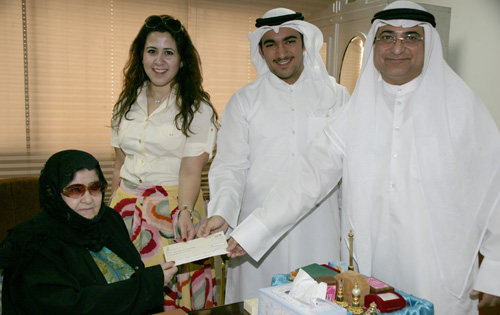
The President of the Community Service Club (CSC), Noufa Al Sabah, and Vice President, Mohammed Taqi, visited the Kuwait Society for the Handicapped (KSH) today. The CSC members met with the Director of KSH, Hashem Taqi, and the Treasurer, Moudhi Al Sultan to provide them with a donation of KD5,000 which was raised from a very successful carnival which took place at AUK in the Spring of 2007. The carnival was a great accomplishment which helped generate money to be granted to this non-profit organization that aims to house and aid the physically and mentally challenged in Kuwait.
Left to right, Moudi Al Sultan, Noufa Al Sabah, Mohammed Taqi and Hashem Taqi
29, Apr 2008
Water Policy and Associated Technological Challenges in Arid Dynamic Environments: The Special Case of Arabian Gulf Countries
The University of Texas Center for International Energy and Environmental Policy, with the American University of Kuwait and Schlumberger Water Services, organized the first annual conference entitled: "Water Policy and Associated Technological Challenges in Arid Dynamic Environments: The Special Case of Arabian Gulf Countries." The conference was hosted at the American University of Kuwait campus in Salmiya on 28 and 29 April, 2008. The conference included an emphasis on policy definition and the need shape fundamental science and engineering research programs involving many traditional topics in which scientists and engineers engage. The conference participants demonstrated cultural, religious, and societal roles and their influences on water resource policies.
Dr. Fares Howari, Middle East Regional Coordinator of the University of Texas Center for International Energy and Environmental Policy, stated that, "an additional interesting dimension to water resources in the Middle East is linked with an increasing energy demand for water desalination. Thus, there is an increased need for investments in sustainable energy options to maintain and increase water production as the region cannot depend on conventional fuels forever." He further indicated that "Government and the private and public sectors should work together to create incentives, reallocate heavy water and fossil energy subsidies, and invest these subsidies in water Public-Private-Partnership (PPP), and Build, Operate and Transfer (BOT) projects. However, the regulatory framework should be improved to foster such a change."
Recent reports presented in the conference indicated that the Arab states will need to invest $100 billion on desalination over the next decade if demand for water keeps growing at the current pace, especially in the Gulf region. The important element in this debate remains the linkages of water and energy issues and associated policy-oriented research.
Participants demonstrated that the problems of water resources in the Middle East have been also magnified by other factors stemming from policies of food self-sufficiency, declining water quality, and heavy subsidies in some countries that encourage misuse, distorting incentives, and limited cost recovery.
Dr.Howari indicated that these facts should call for the attention of regional and international organizations to take water issues and problems in the Middle East more seriously before they possibly reach a point of no return.
Dr. Marina Tolmacheva, President of AUK
Dr. Fares Howari
28, Apr 2008
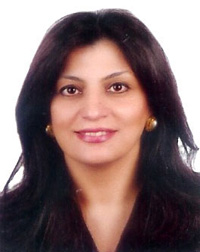
Amna Othman Al Omare Director of the AUK Library
American University of Kuwait Appoints Amna Othman Al Omare Director of the University Library
Salmiya, Kuwait, April 28, 2008: Following an extensive international search, Dr. Nizar Hamzeh, Dean of College of Arts and Sciences, has announced the appointment of Miss Amna Othman Al Omare, Interim Library Director since January 2008, to the post of Director of the University Library at the American University of Kuwait (AUK), effective immediately. Al Omare, a member of the AUK family since September 2004, has emerged as the most talented and qualified candidate. She has a distinguished career in higher education, having come to AUK after more than a decade at Kuwait University, where she taught English from 1986 to 1991, became Assistant Librarian in 1991, and then headed its non-Arabic Cataloging Division from 1997 to 2004. Widely respected in her field, she is a member of the Arabian Gulf Chapter of the Special Library Association and served on its Strategic Planning Committee in 1999.
She has traveled extensively to develop her professional skills, and has participated in library conferences here in Kuwait, in the United States, in the UAE, and Bahrain. She is a 1986 graduate of Kuwait University, where she majored in Art and English Literature.
Amna began her work at AUK at the same time our university opened, serving first as Collection Development Librarian and, since January 2008, as Interim Library Director. She has been a guiding force in the Library's development, working closely with faculty members to build resources necessary to their teaching, and with students to provide reference and research support. She is also leading a process of collections evaluation that ensures the strategic growth of Library resources in tandem with the evolution of AUK's curriculum. The Library is at the core of our academic and many of our administrative processes at AUK, and Amna has participated in building it into the dynamic learning environment that we all enjoy.
John James, Associate Librarian Emeritus of Dartmouth College, served on the search committee and was involved in interviewing all of the candidates. "I had the opportunity to work with Amna when she visited Dartmouth and to spend four days with her in Kuwait," he said. "In the Library, I observed a comfortable environment conducive to learning and filled with students busy studying individually and in groups. It was clear that the Library is a place where students want to be." James said he had also spoken with faculty members who were enthusiastic about how her work supports their teaching and research efforts.
"This is a key role at AUK," said Dale Eickelman, the Relationship Coordinator for the Dartmouth/AUK Program. "Amna has displayed exceptional leadership in building the AUK Library into a center of academic excellence. Her expertise, combined with her collaborative approach and her commitment to the university, have made the Library a vibrant center of learning at AUK."
Salmiya, Kuwait, April 28, 2008: Following an extensive international search, Dr. Nizar Hamzeh, Dean of College of Arts and Sciences, has announced the appointment of Miss Amna Othman Al Omare, Interim Library Director since January 2008, to the post of Director of the University Library at the American University of Kuwait (AUK), effective immediately. Al Omare, a member of the AUK family since September 2004, has emerged as the most talented and qualified candidate. She has a distinguished career in higher education, having come to AUK after more than a decade at Kuwait University, where she taught English from 1986 to 1991, became Assistant Librarian in 1991, and then headed its non-Arabic Cataloging Division from 1997 to 2004. Widely respected in her field, she is a member of the Arabian Gulf Chapter of the Special Library Association and served on its Strategic Planning Committee in 1999.
She has traveled extensively to develop her professional skills, and has participated in library conferences here in Kuwait, in the United States, in the UAE, and Bahrain. She is a 1986 graduate of Kuwait University, where she majored in Art and English Literature.
Amna began her work at AUK at the same time our university opened, serving first as Collection Development Librarian and, since January 2008, as Interim Library Director. She has been a guiding force in the Library's development, working closely with faculty members to build resources necessary to their teaching, and with students to provide reference and research support. She is also leading a process of collections evaluation that ensures the strategic growth of Library resources in tandem with the evolution of AUK's curriculum. The Library is at the core of our academic and many of our administrative processes at AUK, and Amna has participated in building it into the dynamic learning environment that we all enjoy.
John James, Associate Librarian Emeritus of Dartmouth College, served on the search committee and was involved in interviewing all of the candidates. "I had the opportunity to work with Amna when she visited Dartmouth and to spend four days with her in Kuwait," he said. "In the Library, I observed a comfortable environment conducive to learning and filled with students busy studying individually and in groups. It was clear that the Library is a place where students want to be." James said he had also spoken with faculty members who were enthusiastic about how her work supports their teaching and research efforts.
"This is a key role at AUK," said Dale Eickelman, the Relationship Coordinator for the Dartmouth/AUK Program. "Amna has displayed exceptional leadership in building the AUK Library into a center of academic excellence. Her expertise, combined with her collaborative approach and her commitment to the university, have made the Library a vibrant center of learning at AUK."
Amna Othman Al Omare
24, Apr 2008
Study Abroad Program at AUK: An enriching experience for students
Professor Jeremy Cripps from American University of Kuwait accompanied twenty students on a "Study Abroad" trip to Germany, where they enjoyed a series of critical thinking and professional experiences including a visit to the Trading Floor at Citigroup Frankfurt, a visit to Badische Stahlwerke Gmbh- the most productive steel plant in the world. They reviewed the gear-box assembly process at General Motors, toured John Deer's second largest plant, visited the German Stock Exchange, and the assembly plant of Daimler AG.
The trip also focused on cultural engagement, including walking tours of Frankfurt, Strasbourg and Heidelberg, attending lectures on global economy and cultural diversity, as well as visiting various museums around Germany.
The group of AUK students will put together a comprehensive presentation of their activities to present to their University.
The trip also focused on cultural engagement, including walking tours of Frankfurt, Strasbourg and Heidelberg, attending lectures on global economy and cultural diversity, as well as visiting various museums around Germany.
The group of AUK students will put together a comprehensive presentation of their activities to present to their University.
20, Apr 2008
Teaching English in the 21st Century
A Series Presented by the American University of Kuwait and the United States Embassy in Kuwait
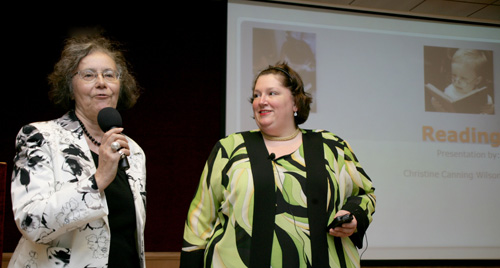
This week the American University of Kuwait hosted an American expert in teaching English as a Second Language.
Ms. Christine Canning's visit was sponsored by the US State Department, and she has been providing teachers across the GCC with new and innovative ways to teach students English. The response to her presentations has been amazing. On both Monday and Tuesday nights of this week every available space, including standing room, was occupied by an enthusiastic teacher.
Christine Canning-Wilson has sixteen years teaching experience. She is a world recognized teacher-training expert with multiple publications and presentations in the area of English as a Second Language. She has trained the Peace Corp in the areas of ESL in Bishkek, Kyrgyzstan; Ministries of Education in the Ukraine, Central Asia, Tunisia and the United Arab Emirates. In 2000, she was the conference chairperson of the TESOL Arabia Conference, the third largest affiliate conference of its kind in the world. Canning-Wilson was a five time ESL and Educational Program Specialist for the US Department of State. She was the recipient of Quality Teaching Awards and has been recognized numerous times for her volunteer work with children in the United States and in the area of ESL and English Education for her work with immigrants/refugees/and nonnative speakers of English and professional development training of Higher Education, Ministries of Education (primary/secondary) and faculties of various pedagogical institutions. Ms. Canning's presentation is practical and applicable to a wide variety of classrooms.
This week the American University of Kuwait hosted an American expert in teaching English as a Second Language.
Ms. Christine Canning's visit was sponsored by the US State Department, and she has been providing teachers across the GCC with new and innovative ways to teach students English. The response to her presentations has been amazing. On both Monday and Tuesday nights of this week every available space, including standing room, was occupied by an enthusiastic teacher.
Christine Canning-Wilson has sixteen years teaching experience. She is a world recognized teacher-training expert with multiple publications and presentations in the area of English as a Second Language. She has trained the Peace Corp in the areas of ESL in Bishkek, Kyrgyzstan; Ministries of Education in the Ukraine, Central Asia, Tunisia and the United Arab Emirates. In 2000, she was the conference chairperson of the TESOL Arabia Conference, the third largest affiliate conference of its kind in the world. Canning-Wilson was a five time ESL and Educational Program Specialist for the US Department of State. She was the recipient of Quality Teaching Awards and has been recognized numerous times for her volunteer work with children in the United States and in the area of ESL and English Education for her work with immigrants/refugees/and nonnative speakers of English and professional development training of Higher Education, Ministries of Education (primary/secondary) and faculties of various pedagogical institutions. Ms. Canning's presentation is practical and applicable to a wide variety of classrooms.
Left to right: Dr. Marina Tolmacheva, the president of AUK presents Ms. Christine Canning
Ms. Christine Canning, American expert in teaching English as a Second Language
An auditorium full of English teachers attended the workshop
19, Apr 2008
AUK Hosts its 4th Annual Career Fair
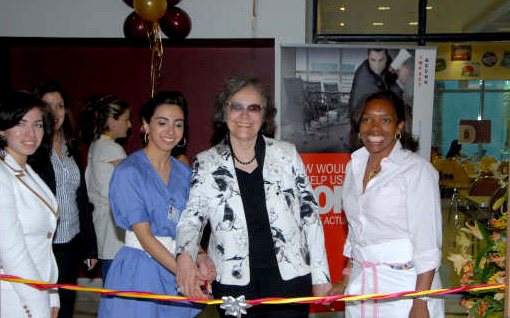
Twenty-eight Kuwait based companies packed into the auditorium at the American University of Kuwait (AUK) today, to participate in the university's 4th Annual Career Fair, an event that continues to be successful and well-attended year after year.
President of AUK, Marina Tolmacheva said AUK is very pleased to welcome, once again, so many distinguished companies at the Fair, an event she describes as very beneficial to AUK students and graduates who "have a great deal to offer to their employers. They bring professional knowledge, communication and problem solving skills."
"Education at AUK opens the door not only for employment," Tolmacheva said "but for career building, and we appreciate employers' interest in our graduates."
Lulwa Al-Fouzan, recruitment officer from the Platinum Sponsor, National Bank of Kuwait (NBK), spoke on behalf of the company, "we are pleased to be here and are looking forward to input from AUK students, many of whom are already working at NBK as part-timers, and will hopefully continue building their careers with us."
Two companies, Deloitte and KIPCO Asset Management Company (KAMCO), took part as Gold Sponsors of the event.
Mona Ead, from Deloitte Human Resources, said they were "very happy to be at AUK, one of the region's most prominent universities, and look forward to hiring excellent talent from within Kuwait."
Arab Investment Company, Ernst & Young, and Impact & Echo/BBDO all participated in this year's Career Fair as Silver Sponsors. Salam Al-Rujaib, Vice President of Arab Investment Company, said "it is important for companies to participate in career fairs, our company's goal is to invest in young minds, and we are therefore affording the opportunity to students to train in the summer in preparation for the job market."
The other participating companies were Alghanim Industries, Al-Bazie & Company, Ali Abdulwahab Sons & Co., Al-Watan Daily, Central Bank of Kuwait, Arabian Motors Group, Bayt.com, Burgan Bank, Global Investment House, Gulf Bank, Gulf Insurance Company, Hyundai, International Turnkey Systems, KPMG, Kuwait Oxygen & Acetylene, Leo Burnett, Manpower and Government Restructuring Program, M.H. AlShaya Company, The Sultan Center, Wataniya Telecom, ZAIN, as well as the hosts, American University of Kuwait.
President of AUK, Marina Tolmacheva said AUK is very pleased to welcome, once again, so many distinguished companies at the Fair, an event she describes as very beneficial to AUK students and graduates who "have a great deal to offer to their employers. They bring professional knowledge, communication and problem solving skills."
"Education at AUK opens the door not only for employment," Tolmacheva said "but for career building, and we appreciate employers' interest in our graduates."
Lulwa Al-Fouzan, recruitment officer from the Platinum Sponsor, National Bank of Kuwait (NBK), spoke on behalf of the company, "we are pleased to be here and are looking forward to input from AUK students, many of whom are already working at NBK as part-timers, and will hopefully continue building their careers with us."
Two companies, Deloitte and KIPCO Asset Management Company (KAMCO), took part as Gold Sponsors of the event.
Mona Ead, from Deloitte Human Resources, said they were "very happy to be at AUK, one of the region's most prominent universities, and look forward to hiring excellent talent from within Kuwait."
Arab Investment Company, Ernst & Young, and Impact & Echo/BBDO all participated in this year's Career Fair as Silver Sponsors. Salam Al-Rujaib, Vice President of Arab Investment Company, said "it is important for companies to participate in career fairs, our company's goal is to invest in young minds, and we are therefore affording the opportunity to students to train in the summer in preparation for the job market."
The other participating companies were Alghanim Industries, Al-Bazie & Company, Ali Abdulwahab Sons & Co., Al-Watan Daily, Central Bank of Kuwait, Arabian Motors Group, Bayt.com, Burgan Bank, Global Investment House, Gulf Bank, Gulf Insurance Company, Hyundai, International Turnkey Systems, KPMG, Kuwait Oxygen & Acetylene, Leo Burnett, Manpower and Government Restructuring Program, M.H. AlShaya Company, The Sultan Center, Wataniya Telecom, ZAIN, as well as the hosts, American University of Kuwait.
17, Apr 2008
AUK Signs Memorandum of Understanding with Washington State University
A Memorandum of Understanding (MOU) has been signed between the American University of Kuwait (AUK) and Washington State University (WSU) in Pullman, Washington, USA.
AUK and WSU will cooperate in efforts to establish mutually beneficial cooperative and collaborative projects, programs and activities. Through this MOU, each of the two universities shall benefit the other through the allocation of mutual support and resources.
The MOU approved and signed by AUK President Marina Tolmacheva and WSU President Elson S. Floyd, is intended for an initial period of five years and can be extended by mutual consent thereafter.
American University of Kuwait is a liberal arts institution, based on the American model of higher education. It is dedicated to providing students with knowledge, self awareness, and personal growth experiences that can enhance critical thinking, effective communication, and respect for diversity. AUK seeks to create leaders and life-long learners who aspire to the highest standards of moral and ethical responsibility in their societies.
Washington State University is a Carnegie Tier I Research University distinguished by its nationally-ranked programs in communication, American studies, sociology, environmental science, biomedical research, and dry-land agriculture.
AUK and WSU will cooperate in efforts to establish mutually beneficial cooperative and collaborative projects, programs and activities. Through this MOU, each of the two universities shall benefit the other through the allocation of mutual support and resources.
The MOU approved and signed by AUK President Marina Tolmacheva and WSU President Elson S. Floyd, is intended for an initial period of five years and can be extended by mutual consent thereafter.
American University of Kuwait is a liberal arts institution, based on the American model of higher education. It is dedicated to providing students with knowledge, self awareness, and personal growth experiences that can enhance critical thinking, effective communication, and respect for diversity. AUK seeks to create leaders and life-long learners who aspire to the highest standards of moral and ethical responsibility in their societies.
Washington State University is a Carnegie Tier I Research University distinguished by its nationally-ranked programs in communication, American studies, sociology, environmental science, biomedical research, and dry-land agriculture.
04, Apr 2008
Gulf Studies Program at AUK presents first Certificate
The American University of Kuwait has presented the first certificate in its Gulf Studies program to Tracy Dishongh, a second-semester junior from Boston University. Ms. Dishongh has completed 12 hours of coursework in anthropology, history, human development, and finance to earn the certificate. She is in Kuwait for the semester while her father works for the Fluor Corporation.
The certificate was presented to her by Dr. Marjorie Kelly, the Director of the Gulf Studies Center and a professor in anthropology. The coursework at AUK was the first time Ms. Dishongh took classes on the region and she has became so interested that she hopes to return to Kuwait once she is awarded her degree in Finance. She reported she found Kuwaiti culture to be very interesting and said she loves the language.
The Gulf Studies Certificate Program is designed for visiting students or non-degree-seeking students who wish to spend a semester at AUK, focusing on regional history, politics, society, culture, and the arts. Students are required to take a total of twelve hours from a growing list of courses that includes Islamic Art, the History of Kuwait, and Arab Society and Culture.
American University of Kuwait is a liberal arts institution, based on the American model of higher education. It is dedicated to providing students with knowledge, self awareness, and personal growth experiences that can enhance critical thinking, effective communication, and respect for diversity. AUK seeks to create leaders and life-long learners who aspire to the highest standards of moral and ethical responsibility in their societies.
The certificate was presented to her by Dr. Marjorie Kelly, the Director of the Gulf Studies Center and a professor in anthropology. The coursework at AUK was the first time Ms. Dishongh took classes on the region and she has became so interested that she hopes to return to Kuwait once she is awarded her degree in Finance. She reported she found Kuwaiti culture to be very interesting and said she loves the language.
The Gulf Studies Certificate Program is designed for visiting students or non-degree-seeking students who wish to spend a semester at AUK, focusing on regional history, politics, society, culture, and the arts. Students are required to take a total of twelve hours from a growing list of courses that includes Islamic Art, the History of Kuwait, and Arab Society and Culture.
American University of Kuwait is a liberal arts institution, based on the American model of higher education. It is dedicated to providing students with knowledge, self awareness, and personal growth experiences that can enhance critical thinking, effective communication, and respect for diversity. AUK seeks to create leaders and life-long learners who aspire to the highest standards of moral and ethical responsibility in their societies.