

News
- Give us a brief description about your research at Harvard.
My research at the Center for International Development at Harvard University was on sustainable economic development and models of Structural Transformation for developing countries. The primary goal of my research was to investigate how a robust R&D sector can affect the country’s knowhow and productive capability, and the critical role government can play in achieving sustained increases in total factor productivity. This centralized growth—with emphasis on knowledge-intensive services sector—when applied to Kuwait within an Economic Complexity Framework represents a Strategic Bets Approach for transforming Kuwait’s economy to knowledge-based. - Why did you choose this topic for your fellowship?
Building the knowledge infrastructure in Kuwait is critical for the country’s sustainable development objectives. In recent years, policymakers in Kuwait have concluded that reliance on oil-exports is non-sustainable for the country’s future. As a result, they have taken initial steps to diversify the country’s export-base and income. Yet, Kuwait still struggles in critical areas necessary for transforming its economy to a knowledge-led economy. - Who were your collaborators and colleagues in the research?
During my time at Harvard, I had the opportunity to meet and work with some of the world’s leading development economists. At the Growth Lab, in the Center for International Development, I met with Director Ricardo Hausmann who gave me valuable feedback into my research. Professor Hausmann is credited with the development of the Economic Complexity Framework and had previously consulted for the governments of Jordan, Saudi Arabia, and Oman among others in issues related to Fiscal Policy and Structural Transformation. I also collaborated with other economists such as Tim Cheston—Head of the Saudi Arabia project at the Growth Lab, and another team who spent two years in Jordan advising policy makers on Structural Change and Macro policies. - What was the experience like? Did you find it informative and helpful?
My overall experience was really amazing. The rich intellectual culture around Harvard campus was really impressive and very inspiring. My office was located in the Middle East Initiative (MEI) at the Belfer Center for Science and International Affairs. As a Fellow at MEI, I had the opportunity to attend all internal and external seminars held by the Center and Harvard Kennedy School. I also had the opportunity to meet and discuss my research with other MEI Fellows from other institutions such as Stanford, UCLA, Columbia, and MIT and found areas of mutual interest for future research collaboration. - Was the research goal achieved and what are the next steps?
My short-term goal for this research was definitely achieved, but this is an ongoing project that I intend to work on for the foreseeable future. Other than journal publications, seminars, and lectures resulting from my research, I plan to introduce my work to my students and incorporate the principles of sustainable economic development for Kuwait and our region into courses I teach. - How did Covid-19 affect your trip and your research?
Covid-19 definitely presented me with a challenge, at first, but I was able to adjust quickly and make the most of the current situation. Harvard University is located in Cambridge, Massachusetts, just outside of Boston. The Northeast of the United States was especially hard-hit with Covid-19 in the early months of the pandemic. However, Harvard moved all instructions and all other academic and research centers online right after Spring break – we didn’t miss a beat. All lectures, presentations, seminars, etc. were conducted remotely in April and May, and we were able to communicate and collaborate via ZOOM. - How do you think your research can benefit Kuwait and future generations?
According to recent data for high-income countries, Kuwait ranks among the lowest in Education and Training, and Innovation Systems – two pillars of the Knowledge Economy Framework. Kuwait has also taken some steps to diversify its economy away from natural resources. Kuwait’s Vision 2035, for example, calls for the establishment of the Northern Economic Zone (NEZ); a free-trade zone with the potential of becoming the region’s leading trading hub. My research calls more government involvement in the R&D sector by investing in the country’s most valuable asset—its citizens. My centralized growth approach emphasizes the need for building the knowledge infrastructure necessary for sustainable development and growth. This investment in human capital means greater public sector commitment to STEM and Economic Science education and research—at all levels. It also means new public-private partnerships in order to provide future generations with the tools needed to compete in a knowledge-intensive economy. - Anything you would like to add about the fellowship/experience?
Yes, I especially would like to thank Dr. Rawda for her support when I was awarded this Fellowship. This opportunity would not have been possible without her leadership and support. I am very excited about the future, and this Harvard Fellowship was only the beginning of what promises to be a very fruitful journey.
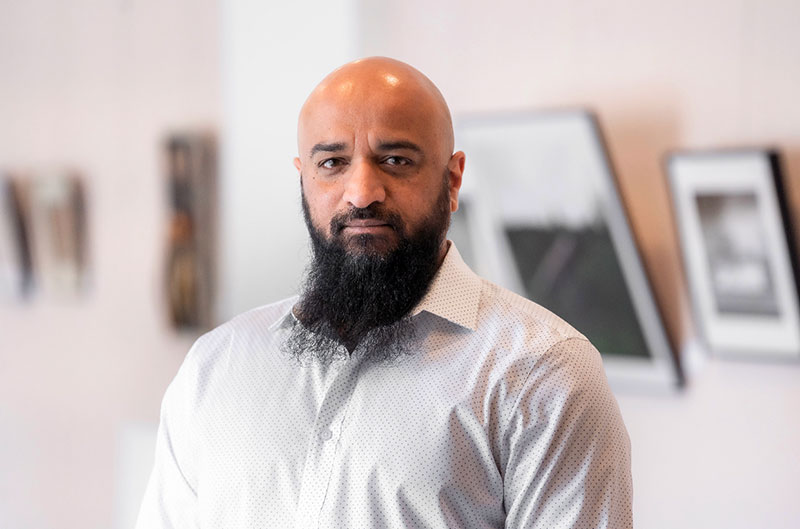
Dr. Khalid Saeed, Assistant Professor of Economics at AUK
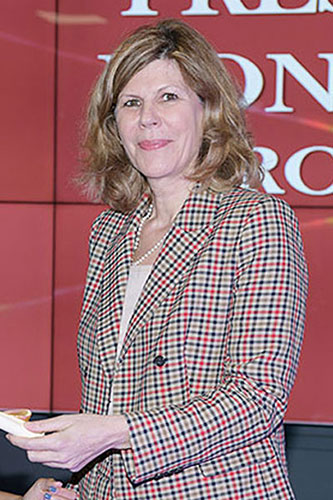
AUK President, Dr. Rawda Awwad commented on the significance of this agreement, “AUK’s commitment to its mission dictates a continuous process of development and improvement. Every facet of University operation must be reviewed and enhanced to meet or exceed the highest international standards. AUK’s agreement with Ellucian demonstrates the seriousness with which we take our obligations toward our stakeholders and constitutes a critical strategic step in the direction of digital campus transformation,” she said.
Ellucian President and CEO Laura Ipsen remarked on the shared goals of this partnership, “AUK has been a valued Ellucian partner for more than 16 years and has consistently demonstrated its commitment to providing both students and staff with the most modern, functional technology possible. Moving to the cloud will empower the University with the features and flexibility to continue living up to that mission.”
AUK and Ellucian have maintained a relationship since 2003 where the University was the first in Kuwait to deploy Banner higher education enterprise resource planning (ERP) for students, Human Resources and Finance. This agreement reflects AUK’s mission to continuously improve its digital resources to provide its campus community with the latest technology to ease operations and provide modern educational resources and services.
About Ellucian:
Ellucian is the world’s leading provider of software and services that power the essential work of colleges and universities.
More than 2,500 institutions in nearly 50 countries rely on Ellucian to enhance operations and enrich the student experience for over 18 million students.
Visit Ellucian at www.ellucian.com
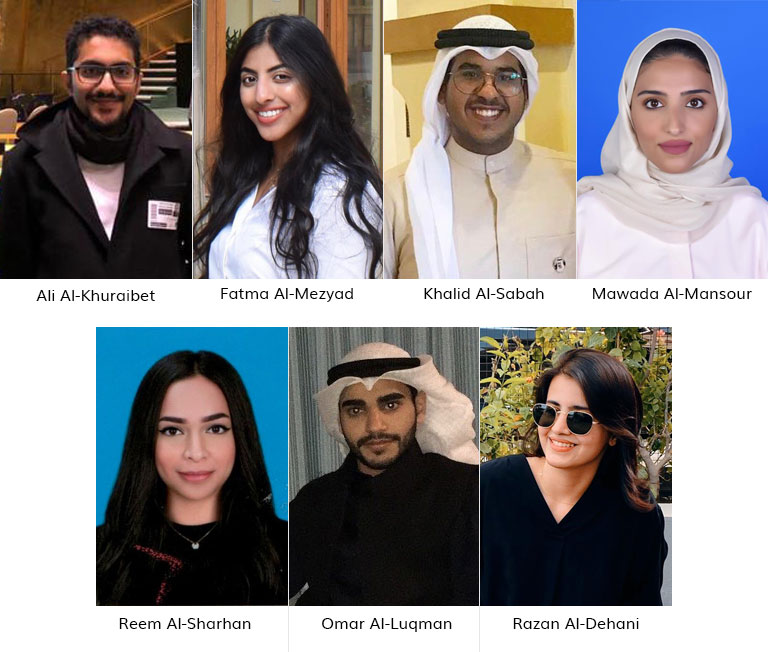
Seven AUK alumni have been accepted to enroll in a year-long training program at the Kuwait Diplomatic Institute to become diplomatic attaches. Sheikh Soud Nasser Al-Sabah Kuwait Diplomatic Institute was created to train Kuwaiti diplomats (of all levels) but specifically the new group starting as diplomatic attaches. They will be given different lectures held by different people, including professors, ambassadors, ministers, etc. The diplomatic institute also organizes different trips that will further enhance the students’ knowledge. Alumna Razan Al-Dehani (’19) credited her professors at AUK as well as her involvement in extracurricular activities on campus as a solid base for her pursuance of a career in diplomacy, “AUK has definitely provided us with professors…who truly care about trying to let their students learn and understand in a way where it would definitely stick with them. In addition, the extracurricular activities play a big role as well. For example, being part of a club will of course enhance your knowledge further. All these factors contributed to and had a big impact on how well I was prepared.” Meanwhile, alumnus Khalid Al-Sabah (’19) asserts his undergraduate degree as the foundation for his success at the training, “Graduating with a major in international relations from AUK helped me succeed in my internship as it built the basis of my understanding in what to do and how to word things accordingly.”
Becoming diplomatic attaches has been a uniform goal for the alumni who are now aiming to play a pivotal role in the world while representing Kuwait and fulfilling the diplomatic mission set by the Ministry of Foreign Affairs.
Kuwait Diplomatic Institute was established as a response to the State of Kuwait’s ongoing diplomatic needs in addition to providing the Ministry of Foreign affairs with an effective supervision and training tool for the State of Kuwait’s diplomatic personnel, to adapt and perform in an ever-changing international climate.
The following alumni have successfully completed the training:
| ALUMNI | DEGREE | GRADUATION YEAR |
| Mawada Al-Mansour | Bachelor of Arts in International Relations | Class of 2018 |
| Fatma Al Mezyad | Bachelor of Arts in International Relations | Class of 2019 |
| Ali Al-Khuraibet | Bachelor of Arts in International Relations | Class of 2019 |
| Khalid Al-Sabah | Bachelor of Arts in International Relations | Class of 2019 |
| Razan AlDehani | Bachelor of Arts in International Relations | Class of 2019 |
| Omar Al-Luqman | Bachelor of Arts in International Relations | Class of 2019 |
| Reem Al-Sharhan | Bachelor of Arts in International Relations | Class of 2018 |
AUK research affiliate Dr. Shoma Munshi has published a second edition of her book, titled Prime Time Soap Operas on Indian Television which examines the phenomenon of primetime soap operas on Indian television.
The book is an anthropological insight into social issues and practices of contemporary India through the television, this volume analyzes the production of soaps within India’s cultural fabric. It deconstructs themes and issues surrounding the "everyday" and the "middle class" through the fiction of the "popular".
In its second edition, this still remains the only book to examine primetime soap operas on Indian television. The book will be of interest to students of anthropology and sociology, media and cultural studies, visual culture studies, gender and family studies, and also Asian studies in general. It is also an important resource for media producers, both in content production and television channels, as well as for the general reader.
Click here to order a hardcopy of the book; digital versions of the book will be available soon.
Dr. Shoma Munshi is the author of Prime Time Soap Operas on Indian Television (Routledge, 2010); editor of Images of the ‘Modern Woman’ in Asia: Global Media, Local Meanings (Curzon 2001); and co-editor of Media, War and Terrorism: Responses from the Middle East and Asia (Routledge, 2004, 2006). She also has several publications in refereed journals.
Munshi earned her PhD from the Ecole des Hautes Etudes en Sciences Sociales (EHESS), in Paris, France; and her work experience encompasses the University of Delhi, University of Amsterdam, University of Pennsylvania, and the United Nations Development Programme (UNDP) in New Delhi, India.
Book cover

The Beta Gamma Sigma (BGS) international honor society has officially announced the installation of the American University of Kuwait chapter of Beta Gamma Sigma. BGS is a world-renowned honor society recognizing business excellence since 1913.
Dr Fatima Shibly, AUK Assistant Professor of Accounting has been appointed as Faculty Advisor of the newly established AUK BGS Chapter. As members of BGS, AUK graduate and undergraduate students of high academic record can enjoy the privileges of the membership among other members from 190 countries around the world. Chapter members are recognized for their academic excellence and have opportunities to network with business professionals from a wide range of career fields.
According to Christina Allrich, BGS Director of Collegiate Chapter Operations “Membership in BGS is the highest recognition a business student anywhere in the world can receive in an undergraduate or graduate program at a school accredited by AACSB.”
The Association to Advance Collegiate Schools of Business (AACSB) has awarded AUK full accreditation for its College of Business and Economics. AACSB International (AACSB), a global nonprofit association, connects educators, students, and business to achieve a common goal: to create the next generation of great leaders.

AUK President, Dr. Rawda Awwad gave an opening speech welcoming His Highness Sheikh Sabah Khaled Al-Hamad Al-Sabah, Prime Minister of the State of Kuwait, parents, and graduates on behalf of the Chair of the Board of Trustees, Sheikha Dana Nasser Al-Sabah and the members of AUK’s Board of Trustees. Dr. Awwad then proceeded to praise the graduates’ efforts in overcoming unpredictable circumstances, “Throughout the pandemic, our priority first and foremost was your security and safety, and instructional continuity to enable you all to complete your degrees...And you accomplished all of this while completing your courses online and virtually engaging with our faculty and staff. Many of you also completed your degrees in the fall and you were working and taking care of others. You all took AUK into your homes whether online, in spirit or in your actions,” she said.
The commencement keynote address was given by the Prime Minister of the State of Kuwait, His Highness Sheikh Sabah Khaled Al-Hamad Al-Sabah in which he emphasizes the importance of education, “The world is developing at an astounding rate, particularly in light of the Corona pandemic, which makes it imperative for us to keep pace with this development through the digital transformations across all country sectors, especially in the educational sector. Revising the education system in Kuwait is no longer a matter for debate, nor can it be delayed. Amending curricula and developing them in line with the labor market has become a pressing national necessity for building the future homeland,” he said.
Following the keynote address, the Vice President for Student Affairs, Dr. Hanan Muzaffar addressed the graduates, stating, “We are a community that comes together to ensure the success of every one of its members. This was evident in the last few months, when you embraced these challenges as a community, and completed your studies online. And we are indeed very proud of your resilience and perseverance in these exceptional times.” Dr. Muzaffar then moved on to introduce the class valedictorian. Earning a BA in Social & Behavioral Sciences with a GPA of 3.94 on a 4.0 scale, Aisha Adel AlSaqabi shared the most valuable lesson that she learned from her education at the University, “If I had one takeaway from AUK, it is that it has taught me to be fearless. Not to be silent or passive but to be vocal and active, to be loud about the things I deem important and how to investigate the big questions of life that often left me uncomfortable but always led me to think beyond the boundaries of the classroom.”
The event then proceeded to the part of the ceremony most anticipated by the graduates—the conferral of their earned degrees by the president. The graduates’ names were then called after a brief message from their respective college deans—Dean Ali Charara for the College of Arts and Sciences; Dean Ralph Palliam for the College of Business & Economics; and Dean Amir Zeid for the College of Engineering and Applied Sciences.
The ceremony closed with the president congratulating the graduates and wishing them well with their future endeavors. The full ceremony can be viewed on AUK’s Instagram account @AUK_Official and YouTube channel AUK Videos.
The American University of Kuwait (AUK) will be holding a virtual graduation commencement in mid-July in celebration of the class of 2020 under the patronage of His Highness Sheikh Sabah Khaled Al-Hamad Al-Sabah, Prime Minister of the State of Kuwait. The ceremony, will feature 286 graduates from the University’s College of Arts and Sciences, College of Business and Economics, and the College of Engineering and Applied Sciences.
On this occasion, which marks the 15th commencement for AUK, President of AUK, Dr. Rawda Awwad, extended congratulations to the graduating class, emphasizing that “the virtual ceremony aims to unite the campus community along with the graduates’ families and friends in celebration of a successful journey through university and commending the graduates’ efforts in overcoming unpredictable circumstances to earn their respective degrees.”
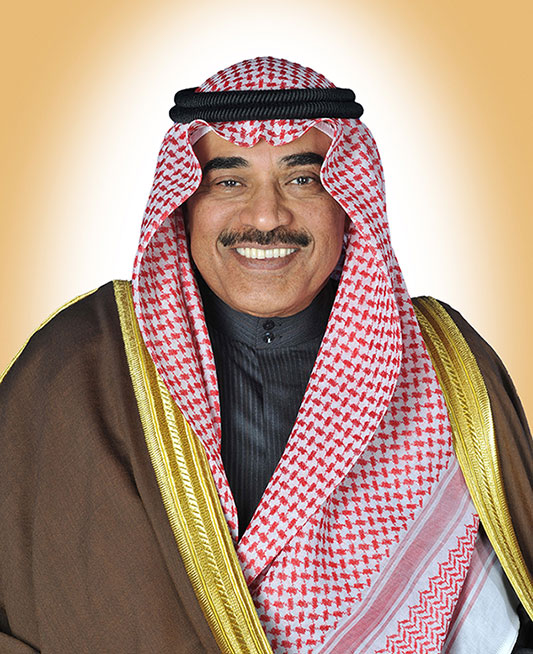
His Highness Sheikh Sabah Khaled Al-Hamad Al-Sabah, Prime Minister of the State of Kuwait
Applicants are now able to take their placement tests through AUK’s Online Proctoring Program to ensure their safety under the current circumstances.
Maher Dabbouseh, Director of Admissions, said, “We understand applying to Universities is a very grueling process, especially during this pandemic. We’ve taken all the necessary measures to ensure applicants receive all the help they need from their own homes. Our counselors are ready to answer any questions they may have.”
AUK, which is partnered with the Ivy League institution Dartmouth College, offers 16 different bachelor’s programs in business administration, humanities, social sciences, and engineering. Uniquely located in Salmiya, the urban campus is a hub for students to explore their surroundings while engaging in the modern curricula of their studies. The University offers over 50 extracurricular activities from sports and recreational hobbies, to memberships in international organizations that aim to enhance the students’ interpersonal and professional abilities.
The University also has distinguished alumni—4300 graduates as of the 2018/2019 academic year—who have pursued graduate degrees from 20 countries, are sought for competitive job opportunities, and have become skilled entrepreneurs managing the most successful businesses in the country in the food & beverage, fitness, arts and entertainment media industries.
The American University of Kuwait received its institutional accreditation from the Private Universities Council (PUC)—Ministry of Higher Education in the State of Kuwait, as of February 1, 2006. In addition, the AUK Intensive English Program is accredited by the Commission on English Language Program Accreditation (CEA); the College of Business & Economics is accredited by the Association to Advance Collegiate Schools of Business (AACSB); the College of Arts & Sciences is accredited by the American Academy for Liberal Education (AALE); the BSc degree program in Computer Science is accredited by the Computing Accreditation Commission of the Accreditation Board for Engineering & Technology (ABET); the BE degree program in Computer Engineering and the BE degree program in Electrical Engineering are both accredited by the Engineering Accreditation Commission of ABET.
Prospective students can visit the AUK website at www.auk.edu.kw to apply or request a virtual meeting with one of the University’s admissions counselors to get a better understanding of the process.
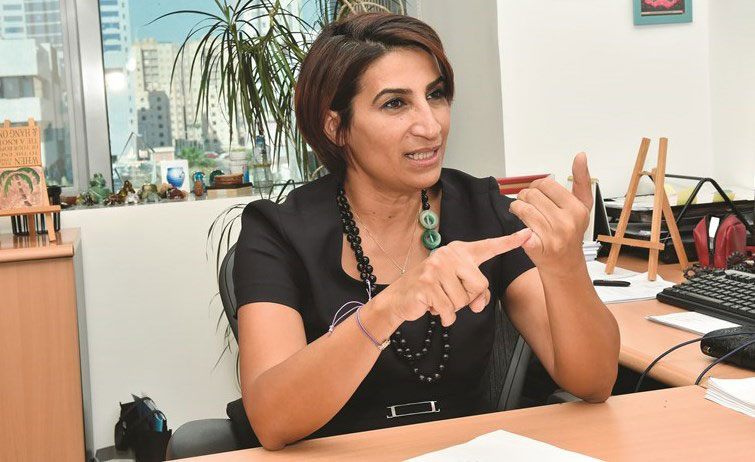
Commencing with opening remarks from Dr. Awwad, she praised the awardees and commended their academic achievements. The names of the honor students from the different categories were then called by the president and respective college deans.
45 students were awarded a place on the President's Honor Roll—a high distinction exclusively awarded to those who maintained a 4.0 GPA for the semester, while a total of 108 students were recognized for achieving the Dean's Honor List—a distinction awarded to students who maintained a minimum GPA of 3.7.
To view the eCeremony, follow AUK official social media accounts @auk_official
President’s Honor Roll
Khalid Al-Kharafi
Kaouthar Chebli
Munirah Al-Majdali
Sedra Al-Tujjar
Naya Kassis
Bashayer AlAnjari
Chloe Ramey
Dina Al-Sayed
David Muharib
Zaina AlFadalah
Nora Alaati
Habiba Anwar
Hasan Hajiyah
Fadheela Al-Sabah
Susanna Al-Mufti
Sara Zayed
Farah Issa
Nagam Abu Ghoush
Aisha Al Saqabi
Saja Brejia
Farida Mohamed
Zuhair Ali
Farah Mobayed
Nashrah Quraishi
Nour Harb
Rafia Tabaa
Amer Khosla
Urooj Mudassar
Farhanaz Padpood
Rawan Nabaa
Amal Kahwaji
Anwar As'ad
Sarah Saad
Reham Kablaoui
Reem Qasem
Amer Alazemi
Dawood Boland
Hala Abou Harb
Dallya Mulla Hwaech
David Liang
Mohammed Al-Odat
Abdolaziz Avarian
Ali Darwiche
Ahmad Al-Dulaie
Abdalla Elgohary
Dean’s Honor Roll, College of Arts and Sciences
Nada ElGamal
Ahmed Al-Zankawi
Tesneem Al-Rashed
Lara Jadayel
Sarah Behbehani
Serli Bedirian
Ayshah Al-Kandari
Al-Jawhara Al-Sabah
Dalal Al-Failakawi
Maryam Ramadhan
Dana Alasfoor
Shamlan Al-Hasawi
Basmah Al-Shami
Hana Nassar
Rawan Shalhoub
Alamira Sarah Kiki
Nouf Alenezi
Vironika Faragalla
Abdulaziz Redha
Joana Shihadeh
Durfishan Rushda
Kawthar Sadat Mousavi
Noura Bounassif
Lara Abdelhaleem
Stephen Sapp
Johar Ali
Roa'a Alawneh
Fatima alzahraa Al-Sarraf
Nourhan Nour
Malak Hussain
Zamaneh Faezi
Huseen BuOlayyan
Ayat AlSarraf
Rawan Boutaiban
Ahmad Al-Sarraf
Rawyah Al-Awadhi
Melissa AbouFarraj
Nour Al-Naqi
Kholood AlKholy
Jumanah AL-Nahham
Jana Al-Dawoud
Rawan Behbehani
Anwar AlMousawi
Ruqayah AlNaqi
Seif AlAghbar
Athraa Al-Ghadhban
Kumail Ibraheem
Zahraa Ali
Janna Al Roomi
Nagham Kheder
Bisher Al-Jundi
Basma Khedr
Nazih AlDanab
Dean’s Honor List, College of Engineering and Applied Sciences
Tahani Al-Ajmi
Fatema Leri
Yousef AlRashidi
Laila AlHaddad
Mohammad Fatehallah
Asmaa Lulu
Sawsan AlHerz
Sara ElDeken
Noha Mahmoud
Noura Allahow
Haniah Al-Tabaa
Manar Atiyeh
Sarah Al-Baqshi
Farah Hamoudah
Mariam Khalil
Bader Al-Jumaah
Jumanah Husain
Hamad Al-Hendi
Anwar AlAjmi
Ahlam Dashti
Anas El-Ghabra
Turki AlAjmi
Lubna Al-Jayyar
Ali Alsarraf
Ali Abouzeid
Amir AlAghbar
Malak Ahmed
Haya Al-Korki
Aisha Madouh
Rassim Melaab
Mustafa Karkour
Tala Al-Qassar
Fatima Matook
Ahmad Sanjar
Rawan Abosedo
Majed AlDhafeeri
Faisal Bouqrais
Ahmed AboElhiba
Shamlan AlFozan
Sohail Aluru
Husain AlBaghli
Zeinab Deris
Hassan Shahzad
Sakina Badri
Hana Ghonim
Dean’s Honor List, College of Business and Economics
Zuhair Ali
Farah Mobayed
Nashrah Quraishi
Nour Harb
Rafia Tabaa
Amer Khosla
Urooj Mudassar
Farhanaz Padpood
Rawan Nabaa
Amal Kahwaji
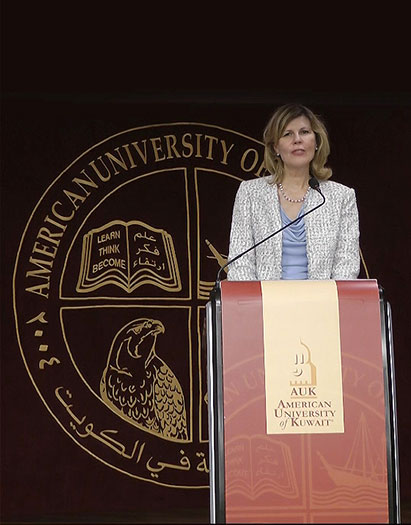
CCE-AUK offers a range of online courses, including:
- General English training for all levels of language ability
- AUK Teacher Training Certificate in Educational Training (TTC1)
International Exam Preparation courses for:
- IELTS
- GMAT
- PMP (Project Management Professional)
The courses will be offered through a virtual classroom with experienced CCE instructors who create an authentic experience in which participants enjoy the same level of engagement that they would in a real-life classroom. Sessions are dynamic and interactive, with course content delivered through training manuals, PowerPoint presentations, supplementary practice, group discussions, and a wide range of activities.
For more information about CCE-AUK training courses and programs, please contact us via message on WhatsApp 62224839.
About CCE:
CCE was established in 2004 and, in addition to offering language courses in Arabic, English, French and Spanish, offers an array of courses and workshops aimed to assist in the personal and professional development of individuals and groups within the public and private sectors. Course offerings are specifically tailored to meet the needs of their clients, whether they are independent groups or corporations.