

News
29, Jan 2020
AUK Starts Spring Semester with New Students Orientation and Welcome Week Activities
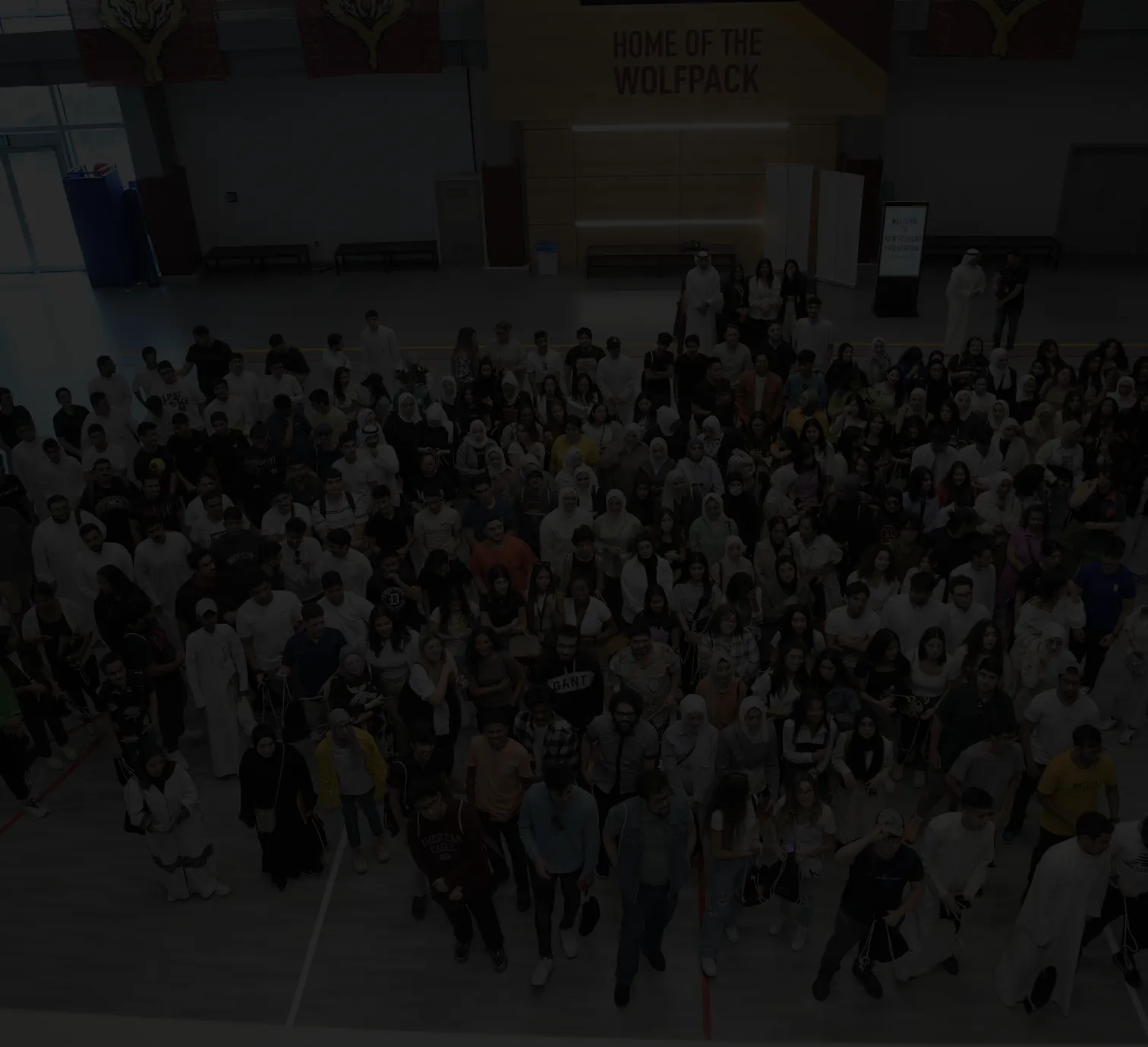
AUK welcomed the spring 2020 semester with a successful new student orientation event followed by welcome week activities for all students.
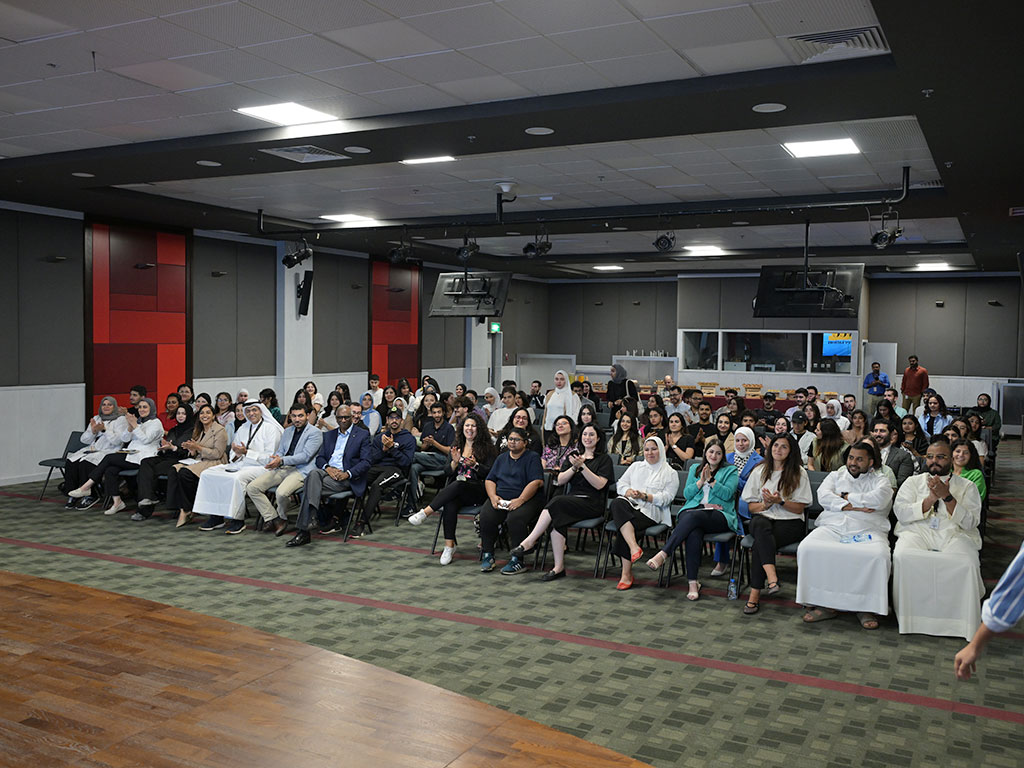
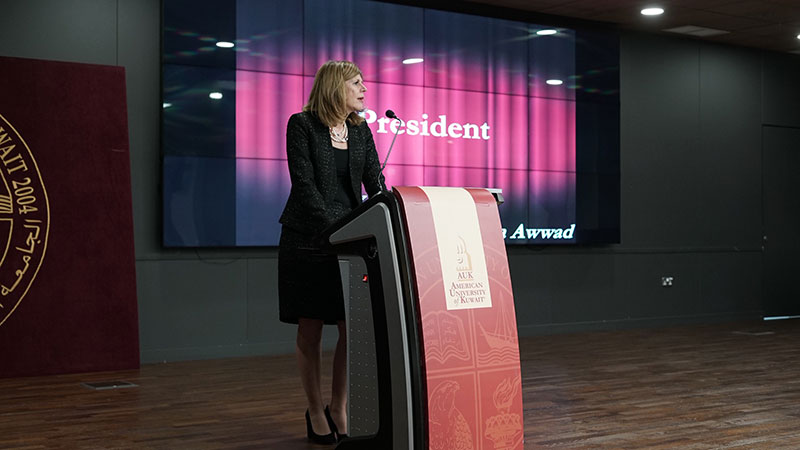
The orientation was held at the University auditorium where students were welcomed by AUK President Dr. Rawda Awwad and the Vice President for Student Affairs, Dr. Hanan Muzaffar who introduced the students to the dynamic environment on campus that involves both academic and co-curricular activities and events.
Commenting on the new student orientation and welcome week, Dr. Muzaffar said, “New student orientation is a vital step in setting a student on the path to holistic success. At AUK, we are committed to helping students prepare for this experience by ensuring that both our first-year students and transfer students feel welcomed into the AUK community and that they join AUK with ease. It is equally important to welcome our returning students to a new semester with a fresh and positive start, and our welcome week activities are chosen and carried out with that goal in mind. We wish all new and returning students the best of luck at AUK and a fruitful spring semester.”
Part of the new student orientation were informational sessions as well as ice-breaker activities that helped ease nerves and jumpstart friendships. Following the orientation, the students were broken up into smaller groups and taken on a campus tour led by AUK Peer Mentors who have been assigned to guide them through their first few weeks at university.
The start of the spring semester’s welcome week saw a series of festivities such as an outdoor barbeque, sports competitions between staff & students, a cookies decoration challenge, and movie night in the recreational area, in addition to an involvement fair where students familiarized themselves with all the clubs and organizations that they could join on campus.
View More
The orientation was held at the University auditorium where students were welcomed by AUK President Dr. Rawda Awwad and the Vice President for Student Affairs, Dr. Hanan Muzaffar who introduced the students to the dynamic environment on campus that involves both academic and co-curricular activities and events.
Commenting on the new student orientation and welcome week, Dr. Muzaffar said, “New student orientation is a vital step in setting a student on the path to holistic success. At AUK, we are committed to helping students prepare for this experience by ensuring that both our first-year students and transfer students feel welcomed into the AUK community and that they join AUK with ease. It is equally important to welcome our returning students to a new semester with a fresh and positive start, and our welcome week activities are chosen and carried out with that goal in mind. We wish all new and returning students the best of luck at AUK and a fruitful spring semester.”
Part of the new student orientation were informational sessions as well as ice-breaker activities that helped ease nerves and jumpstart friendships. Following the orientation, the students were broken up into smaller groups and taken on a campus tour led by AUK Peer Mentors who have been assigned to guide them through their first few weeks at university.
The start of the spring semester’s welcome week saw a series of festivities such as an outdoor barbeque, sports competitions between staff & students, a cookies decoration challenge, and movie night in the recreational area, in addition to an involvement fair where students familiarized themselves with all the clubs and organizations that they could join on campus.
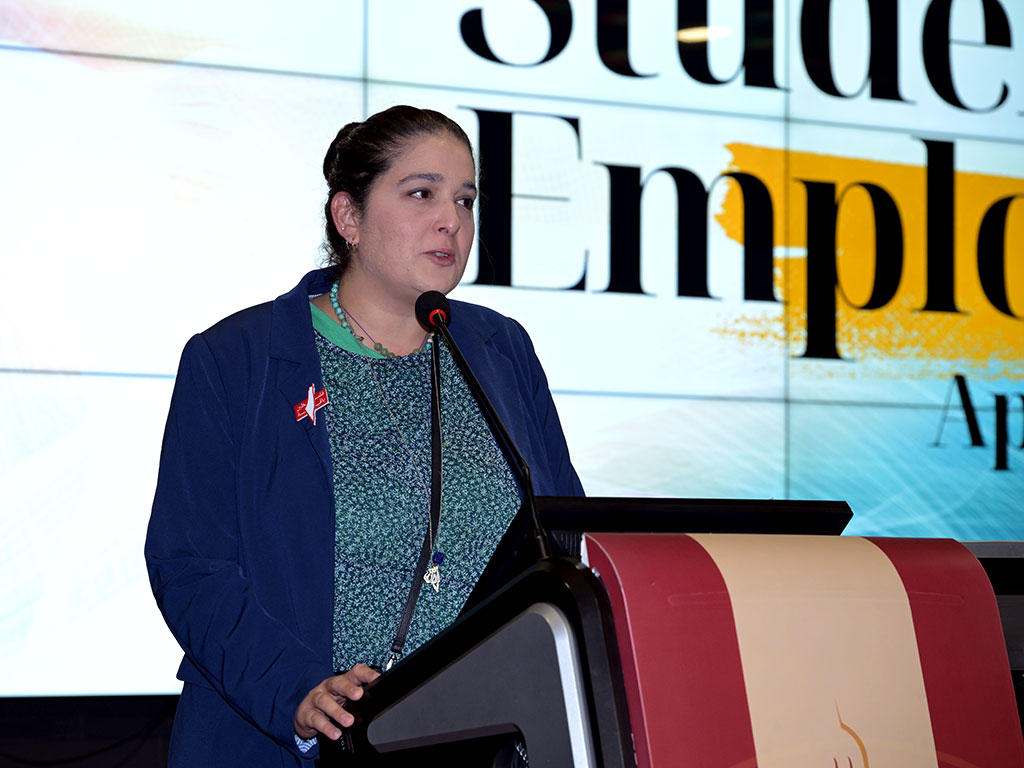
AUK President, Dr. Rawda Awwad giving her opening remarks at the orientation
Vice President for Student Affairs, Dr. Hanan Muzaffar addressing the students at the orientation
A group of new students during their tour of the campus
A group of new students during their tour of the campus
Students participating in an ice-breaker activity
19, Jan 2020
AUK Hosts Filmmaker George Azar
The Department of Communication & Media and the Department of Art & Graphic Design at the American University of Kuwait (AUK) hosted photojournalist and documentary filmmaker, Mr. George Azar for a public lecture on campus in collaboration with Nuqat.
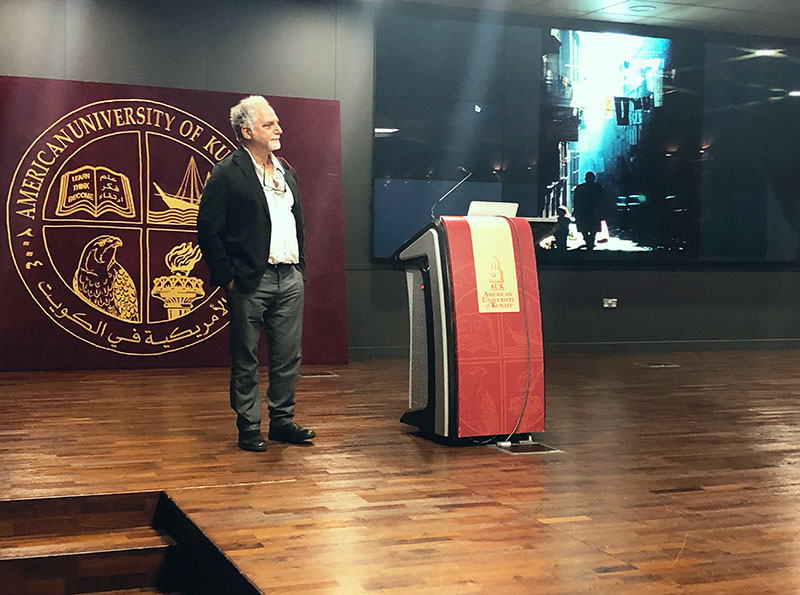
In his talk, Mr. Azar spoke about the craft of visual journalism in conflict zones, the power of narrative reporting and the representation of the Arab world in Western media. He used examples from his career in photojournalism and documentary filmmaking which took him from being a student at UC Berkeley studying Middle Eastern politics, to the Lebanese Civil War, Palestinian Intifada, and wars in Iraq, Afghanistan, and Gaza. While reflecting on his experiences, he highlighted the significant role of still photographs at a time of 4k and streaming videos. He said, “I realized that despite its limitations, the still photograph retains the unique power to crystallize a moment, an event and a time in history.”
He shared advice with the attendees for pursuing a similar career path, including being proactive, finding a subject that one is passionate about, and being patient in the process.
AUK Assistant Professor of graphic design, Clark Stoeckley stated, “George’s stories and photos were quite emotionally moving and inspiring. His advice about the field of documentary photography and filmmaking was beneficial and informative for anyone with a camera in their phone. I particularly related to his suggestion to create work about things you love or the things you hate.”
George Azar is an award-winning Arab-American photojournalist and documentary filmmaker. Born in South Philadelphia, he won honors at U.C. Berkeley before embarking on a journalism career in war-torn Lebanon, Palestine, Iraq, Iran, and Afghanistan as a contributor to the Philadelphia Inquirer, New York Times, the Independent, The Boston Globe, as well as Al-Jazeera English and Al-Jazeera Arabic. George is the author of Palestine a Photographic Journey, (University of California and Oxford University Press) and photographer of Palestine A Guide, (Interlink), and director of the acclaimed films ‘Gaza Fixer’, ‘Two Schools in Nablus’, ‘Donor Opium’, and ‘Free Running Gaza’. George’s latest film the autobiographical, ‘Beirut Photographer’, premiered on Al-Jazeera Arabic in September 2013.
In his talk, Mr. Azar spoke about the craft of visual journalism in conflict zones, the power of narrative reporting and the representation of the Arab world in Western media. He used examples from his career in photojournalism and documentary filmmaking which took him from being a student at UC Berkeley studying Middle Eastern politics, to the Lebanese Civil War, Palestinian Intifada, and wars in Iraq, Afghanistan, and Gaza. While reflecting on his experiences, he highlighted the significant role of still photographs at a time of 4k and streaming videos. He said, “I realized that despite its limitations, the still photograph retains the unique power to crystallize a moment, an event and a time in history.”
He shared advice with the attendees for pursuing a similar career path, including being proactive, finding a subject that one is passionate about, and being patient in the process.
AUK Assistant Professor of graphic design, Clark Stoeckley stated, “George’s stories and photos were quite emotionally moving and inspiring. His advice about the field of documentary photography and filmmaking was beneficial and informative for anyone with a camera in their phone. I particularly related to his suggestion to create work about things you love or the things you hate.”
George Azar is an award-winning Arab-American photojournalist and documentary filmmaker. Born in South Philadelphia, he won honors at U.C. Berkeley before embarking on a journalism career in war-torn Lebanon, Palestine, Iraq, Iran, and Afghanistan as a contributor to the Philadelphia Inquirer, New York Times, the Independent, The Boston Globe, as well as Al-Jazeera English and Al-Jazeera Arabic. George is the author of Palestine a Photographic Journey, (University of California and Oxford University Press) and photographer of Palestine A Guide, (Interlink), and director of the acclaimed films ‘Gaza Fixer’, ‘Two Schools in Nablus’, ‘Donor Opium’, and ‘Free Running Gaza’. George’s latest film the autobiographical, ‘Beirut Photographer’, premiered on Al-Jazeera Arabic in September 2013.
George Azar during his lecture
General photo of the lecture
Group photo of George Azar with the event organizers
Showing
10 Articles
of 1528
15, Jan 2020
AUK Professor Dr. Ahmad Meiloud Delivers Keynote Speech at Sofia University
On the occasion of the 45th anniversary of the introduction of Arabic Studies as a separate program at Sofia University St. Kliment Ohridski, AUK Assistant Professor of Near and Middle Eastern Studies, Dr. Ahmad Meiloud was invited to deliver the keynote academic speech on “The Role of Arabic Language and Culture in the Modern World”.
The speech was delivered on the 18th of December, 2019 which was also the World Arabic Language Day, and brought together the university’s faculty, students, as well as ambassadors of the Arab states and other diplomats, representatives of the Bulgarian Ministry of Foreign Affaris, journalists, and others.
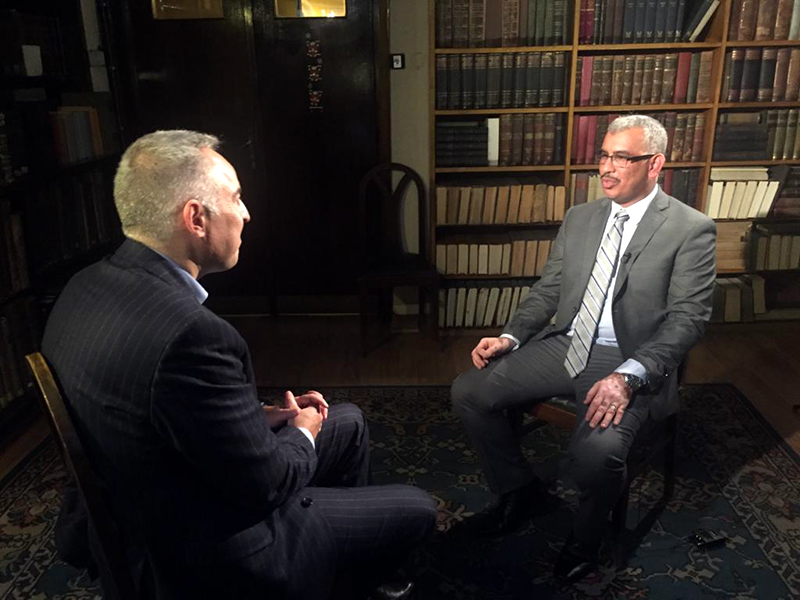
Dr. Meiloud was also interviewed and featured in the Bulgarian national television channel.
The speech was delivered on the 18th of December, 2019 which was also the World Arabic Language Day, and brought together the university’s faculty, students, as well as ambassadors of the Arab states and other diplomats, representatives of the Bulgarian Ministry of Foreign Affaris, journalists, and others.
Dr. Meiloud was also interviewed and featured in the Bulgarian national television channel.
Dr. Meiloud during his interview for the Bulgarian national television
General photo of the event where Dr. Meiloud gave his speech
15, Jan 2020
CGS Awards Gulf Studies Certificate
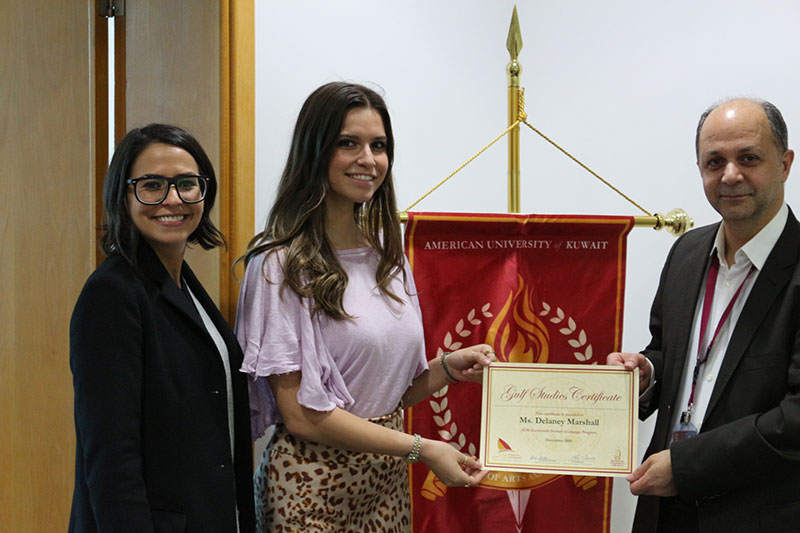
The American University of Kuwait’s Center for Gulf Studies (CGS) has awarded a Gulf Studies Certificate to Ms. Delaney Marshall, an AUK-Dartmouth exchange student. The AUK-Dartmouth program (founded in 2003) established the academic student exchange program in the summer of 2019. This is the first time a Dartmouth student has earned a Gulf Studies Certificate. Ms. Marshall, a junior at Dartmouth, is a double-major in Middle Eastern studies and government. The CGS director, Dr. Shareefa Al-Adwani affirmed, “The courses complemented her double-major and the exchange enriched the university experience for all.”
Dr. Al-Adwani continued, “Delaney’s contributions in our Kuwait Foreign Policy class have always been thoughtful, her approach to the material meticulous, and her overall class performance outstanding. We are all so proud of Delaney, and I look forward to the continued success of this program.”
Ms. Marshall successfully completed a minimum of 12 credits and earned the requisite cumulative GPA in Gulf Studies-related course this fall 2019 semester. Her courses included Arabic Basic Language Skills, Arab and Islamic Art, and History and Politics of Kuwait, and Kuwait Foreign Policy. Dr. Hesham Al-Awadi, Professor of History and International Relations and the instructor of the History and Politics of Kuwait class, reported that Ms. Marshall was “a diligent and serious student.”
Ms. Marshall commented on her experience, “I appreciate the opportunity to be able to immerse myself in the academic aspects and cultural arenas of the Gulf. My experience has been great and I hope to return to Kuwait one day.”
To learn more about the Gulf Studies Certificate program, visit: https://www.auk.edu.kw/cgs/certificate_gulf_studies.html
Dr. Al-Adwani continued, “Delaney’s contributions in our Kuwait Foreign Policy class have always been thoughtful, her approach to the material meticulous, and her overall class performance outstanding. We are all so proud of Delaney, and I look forward to the continued success of this program.”
Ms. Marshall successfully completed a minimum of 12 credits and earned the requisite cumulative GPA in Gulf Studies-related course this fall 2019 semester. Her courses included Arabic Basic Language Skills, Arab and Islamic Art, and History and Politics of Kuwait, and Kuwait Foreign Policy. Dr. Hesham Al-Awadi, Professor of History and International Relations and the instructor of the History and Politics of Kuwait class, reported that Ms. Marshall was “a diligent and serious student.”
Ms. Marshall commented on her experience, “I appreciate the opportunity to be able to immerse myself in the academic aspects and cultural arenas of the Gulf. My experience has been great and I hope to return to Kuwait one day.”
To learn more about the Gulf Studies Certificate program, visit: https://www.auk.edu.kw/cgs/certificate_gulf_studies.html
Delaney Marshall receiving her certificate from Dr. Ali Charara, Dean of the College of Arts and Sciences and Dr. Shareefa Al-Adwani, Director of the Center for Gulf Studies
14, Jan 2020
AUK Hosts Deputy Chief of the Spanish Embassy
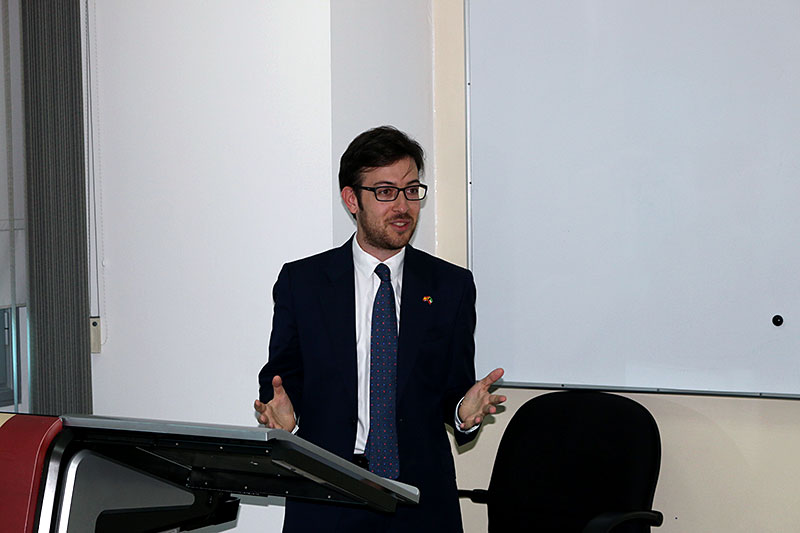
The American University of Kuwait (AUK) hosted Mr. Guillermo Rebollo Diez, the Deputy Chief of the Spanish Embassy in Kuwait for a lecture to the AUK community covering the DELE examination.
In his talk, Mr. Rebollo Diez introduced the attendees to the Spanish cultural heritage, including its widely spoken language. He introduced the students to the Diploma of Spanish as a Foreign Language (DELE), which is issued by the Spanish Instituto Cervantes on behalf of the Spanish Ministry of Education and Science, and its six levels from A1-C2 to signify proficiency level. This certification system falls within the Common European Framework of Reference for Languages (CEFR)—an international standard for describing language ability.
Mr. Rebollo Diez encouraged the students to pursue this certificate due to its international and lifetime recognition of language proficiency. During his Q&A session, he encouraged the students to be brave and put their language into practice to overcome the challenges of learning a new language.
Professor Claudia Mejia, Spanish instructor at the Department of Arabic and Foreign Languages at AUK and a certified Spanish examiner was encouraged by the attendance. She commented, “There is a growing interest in Spain and Latin America at AUK; events like this motivate students to immerse in the language and culture of Ibero-America. The next step is to organize field trips and study abroad opportunities so students can experience the real benefits of learning a language.”
In his talk, Mr. Rebollo Diez introduced the attendees to the Spanish cultural heritage, including its widely spoken language. He introduced the students to the Diploma of Spanish as a Foreign Language (DELE), which is issued by the Spanish Instituto Cervantes on behalf of the Spanish Ministry of Education and Science, and its six levels from A1-C2 to signify proficiency level. This certification system falls within the Common European Framework of Reference for Languages (CEFR)—an international standard for describing language ability.
Mr. Rebollo Diez encouraged the students to pursue this certificate due to its international and lifetime recognition of language proficiency. During his Q&A session, he encouraged the students to be brave and put their language into practice to overcome the challenges of learning a new language.
Professor Claudia Mejia, Spanish instructor at the Department of Arabic and Foreign Languages at AUK and a certified Spanish examiner was encouraged by the attendance. She commented, “There is a growing interest in Spain and Latin America at AUK; events like this motivate students to immerse in the language and culture of Ibero-America. The next step is to organize field trips and study abroad opportunities so students can experience the real benefits of learning a language.”
Mr. Guillermo Rebollo Diez during his lecture
General photo of the lecture
14, Jan 2020
Gray Area Group Hosted by AUK’s Center for Gulf Studies
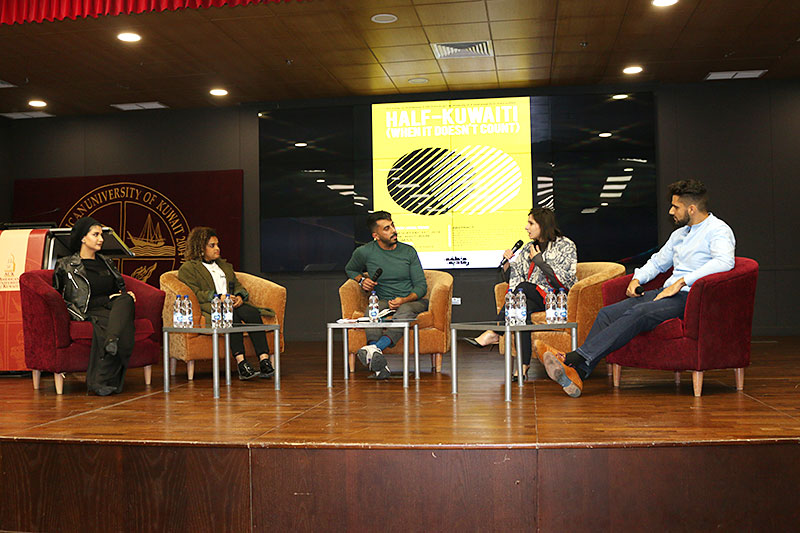
The American University of Kuwait’s Center for Gulf Studies hosted the civil activist group Gray Area for a multi-panel discussion entitled, Half-Kuwaiti (When It Doesn’t Count). The talk was open to the public and was attended by more than 150 members of the AUK community and guests.
Gray Area is a local initiative aiming to raise awareness on the state of simultaneous inclusion and exclusion experienced by people born of a Kuwaiti mother and non-Kuwaiti father who are not granted the Kuwaiti citizenship. According to Gray Area, “The sporadic implementation, contradiction, and lack of clarity of the laws and legislations concerning children of Kuwaiti mothers often leaves them in a gray area when it comes to their identities. Legally, children of Kuwaiti mothers are not considered Kuwaiti. However, their social and emotional ties often tell a more complex story.”
The evening began with a one-minute video created by Gray Area that immersed the audience into the life and daily challenges of a young man born of a Kuwaiti mother and non-Kuwaiti father. The video reminded the audience that the young man’s story represented multiple lives and realities for many people in Kuwait who are in similar circumstances.
At the end of the video, the first panel took the stage, comprised of four members of the larger Gray Area community and the event moderator, Abdullah Al-Khonaini. Throughout the first half of the event, Al-Khonaini asked the four community members about the various obstacles they face while living in Kuwait, including questions on how they identified the obstacles they face in their day-to-day lives, as well as their successes and accomplishments. The community members recalled that navigating residency presents a major issue, as children of Kuwaiti mothers are not granted permanent residency and must renew their temporary residencies every five years. The community members also touched on their lack of ability to inherit their mothers’ properties, and how this, among many other factors, has caused a general sense of insecurity about the future. They noted that current legislations are causing families to separate, leading some to resort to emigrating to other countries in order to secure a better future. Despite these issues, panelists were personally accomplished, completing higher levels of education, obtaining careers they worked hard to excel at, and have even received local, global, and regional invitations to share their skills, knowledge, and work outside of Kuwait. The panelists noted that their personal successes were a result of tenacious proactivity, and that not all members of the community were able to obtain the opportunities for higher education, employment, or travel.
The second panel was comprised of the Gray Area team, who spoke about their own experiences in establishing the group, as well as their mission to raise awareness for the rights of children of Kuwaiti mothers. The Gray Area team also presented findings from a public survey they had recently conducted on how children of Kuwaiti mothers are perceived. Among the most important findings was that over 90% of those surveyed support the idea that children of Kuwaiti mothers should be able to inherit their mothers’ properties and obtain permanent residency.
The session was then opened to the audience for questions. The Gray Area team discussed the difficulties they face in finding reliable statistics regarding their cause and reflected on the general lack of formal state-level data on this issue. Members of the audience also shared their stories with the community members and asked what the future holds for the Gray Area campaign.
CGS Director Dr. Al-Adwani stated, “It is important to the mission of the Center for Gulf Studies to ensure our local civic activist groups have a forum within which they may present their messages and engage with the community for larger discussion. The large turnout of tonight’s session indicates that our communities want to listen, want to learn more, and want to interact.”
“We believe in the power of raising awareness as the first step towards legal change. There is still so much to be done when it comes to educating ourselves and the general public about the rights of children of Kuwaiti mothers as well as understanding the implications the current laws have on our society as a whole,” said a spokesperson for Gray Area. “We want to thank our community for their support and trust over this past year. We also want to take this opportunity to remind everyone that this is a campaign for all of us—Kuwaiti, half-Kuwaiti, men, women, and everything in the gray area in between—and that social and legal change can only happen when we all come together.”
For more information on Gray Area and to learn more about their campaign, you can follow them on Instagram or Twitter @grayarea_kw
Gray Area is a local initiative aiming to raise awareness on the state of simultaneous inclusion and exclusion experienced by people born of a Kuwaiti mother and non-Kuwaiti father who are not granted the Kuwaiti citizenship. According to Gray Area, “The sporadic implementation, contradiction, and lack of clarity of the laws and legislations concerning children of Kuwaiti mothers often leaves them in a gray area when it comes to their identities. Legally, children of Kuwaiti mothers are not considered Kuwaiti. However, their social and emotional ties often tell a more complex story.”
The evening began with a one-minute video created by Gray Area that immersed the audience into the life and daily challenges of a young man born of a Kuwaiti mother and non-Kuwaiti father. The video reminded the audience that the young man’s story represented multiple lives and realities for many people in Kuwait who are in similar circumstances.
At the end of the video, the first panel took the stage, comprised of four members of the larger Gray Area community and the event moderator, Abdullah Al-Khonaini. Throughout the first half of the event, Al-Khonaini asked the four community members about the various obstacles they face while living in Kuwait, including questions on how they identified the obstacles they face in their day-to-day lives, as well as their successes and accomplishments. The community members recalled that navigating residency presents a major issue, as children of Kuwaiti mothers are not granted permanent residency and must renew their temporary residencies every five years. The community members also touched on their lack of ability to inherit their mothers’ properties, and how this, among many other factors, has caused a general sense of insecurity about the future. They noted that current legislations are causing families to separate, leading some to resort to emigrating to other countries in order to secure a better future. Despite these issues, panelists were personally accomplished, completing higher levels of education, obtaining careers they worked hard to excel at, and have even received local, global, and regional invitations to share their skills, knowledge, and work outside of Kuwait. The panelists noted that their personal successes were a result of tenacious proactivity, and that not all members of the community were able to obtain the opportunities for higher education, employment, or travel.
The second panel was comprised of the Gray Area team, who spoke about their own experiences in establishing the group, as well as their mission to raise awareness for the rights of children of Kuwaiti mothers. The Gray Area team also presented findings from a public survey they had recently conducted on how children of Kuwaiti mothers are perceived. Among the most important findings was that over 90% of those surveyed support the idea that children of Kuwaiti mothers should be able to inherit their mothers’ properties and obtain permanent residency.
The session was then opened to the audience for questions. The Gray Area team discussed the difficulties they face in finding reliable statistics regarding their cause and reflected on the general lack of formal state-level data on this issue. Members of the audience also shared their stories with the community members and asked what the future holds for the Gray Area campaign.
CGS Director Dr. Al-Adwani stated, “It is important to the mission of the Center for Gulf Studies to ensure our local civic activist groups have a forum within which they may present their messages and engage with the community for larger discussion. The large turnout of tonight’s session indicates that our communities want to listen, want to learn more, and want to interact.”
“We believe in the power of raising awareness as the first step towards legal change. There is still so much to be done when it comes to educating ourselves and the general public about the rights of children of Kuwaiti mothers as well as understanding the implications the current laws have on our society as a whole,” said a spokesperson for Gray Area. “We want to thank our community for their support and trust over this past year. We also want to take this opportunity to remind everyone that this is a campaign for all of us—Kuwaiti, half-Kuwaiti, men, women, and everything in the gray area in between—and that social and legal change can only happen when we all come together.”
For more information on Gray Area and to learn more about their campaign, you can follow them on Instagram or Twitter @grayarea_kw
Gray Area panel members
General photo of the talk
09, Jan 2020
AUK Held its 2nd Engineering Capstone Design Projects Exhibition (ECDPE'02)
AUK held its 2nd exhibition for the capstone design projects (CDPs) of the Engineering Department, in which graduating engineering students showcased their prototypes and poster designs to compete for the Best Project Award, as well as the Students’ Choice Award. The event was organized by the Engineering Department, along with student teams from the AUK Institute of Electrical and Electronics Engineers Student Branch (IEEESB) and was held in the AUK auditorium. This event was organized under the umbrella of the new College of Engineering and Applied Sciences (CEAS) after its inception in the fall of 2019.
The exhibited projects provide opportunities for students to gain experience by applying their knowledge, showcasing their skills, and paving their career path. In addition, they inspire other students with ideas that they can adopt when the time comes to decide on their own graduation projects. The assessment of the CDPs is a major requirement for ABET accreditation, as it testifies on the quality of the engineering programs and echoes the success of its students. Many of these projects will be further exhibited in Maker Faire Kuwait and the Undergraduate Research Conference (URC) in the UAE, in April 2020.
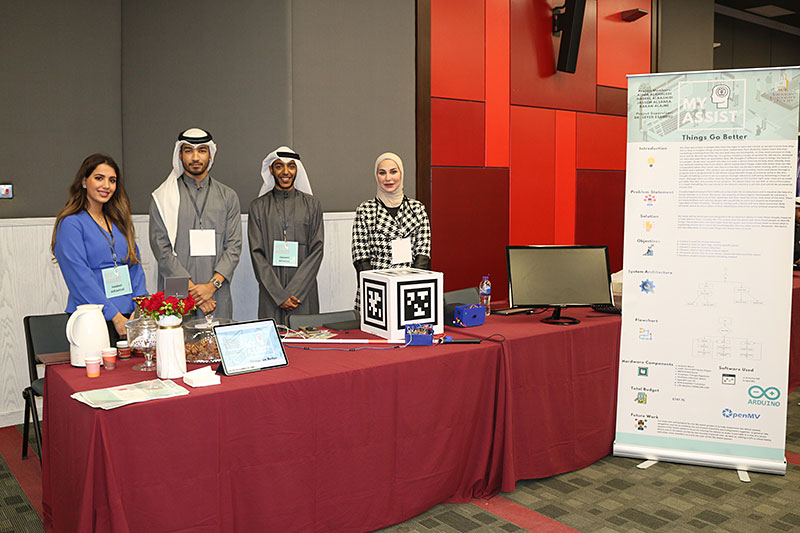
The exhibition was open to the AUK community where many students, faculty members, and staff were invited. A closed assessment session was also held, followed by an open invitation to the families, friends, and loved ones of the graduating students to share their pride and joy. Each team demonstrated its prototype, while presenting more information using a poster, IEEE-based research papers, leaflets, in addition to a summarizing video displayed at the background.
Eight teams participated in the event, each individually addressing a particular area of technical interest under the supervision of a faculty member from the Engineering Department. The project “Windows Washing Drone”, done by the following students: Amal Al-Hulaibi, Jumanah Sadeq, Salem AlSaif, and Hawraa Wahid won the best project award; while the project “Autonomous Fishing Rod” done by the following students: Mohammad Al-Yaseen, Obaid AlAjmi, Ahmad Al-Saleh, and Naser AlAttal won the Students’ Choice Award. Both projects were supervised by Dr. Seyed Esmaeili. The awards and the certificates of participation were distributed during the evening session of the event.
The exhibited projects provide opportunities for students to gain experience by applying their knowledge, showcasing their skills, and paving their career path. In addition, they inspire other students with ideas that they can adopt when the time comes to decide on their own graduation projects. The assessment of the CDPs is a major requirement for ABET accreditation, as it testifies on the quality of the engineering programs and echoes the success of its students. Many of these projects will be further exhibited in Maker Faire Kuwait and the Undergraduate Research Conference (URC) in the UAE, in April 2020.
The exhibition was open to the AUK community where many students, faculty members, and staff were invited. A closed assessment session was also held, followed by an open invitation to the families, friends, and loved ones of the graduating students to share their pride and joy. Each team demonstrated its prototype, while presenting more information using a poster, IEEE-based research papers, leaflets, in addition to a summarizing video displayed at the background.
Eight teams participated in the event, each individually addressing a particular area of technical interest under the supervision of a faculty member from the Engineering Department. The project “Windows Washing Drone”, done by the following students: Amal Al-Hulaibi, Jumanah Sadeq, Salem AlSaif, and Hawraa Wahid won the best project award; while the project “Autonomous Fishing Rod” done by the following students: Mohammad Al-Yaseen, Obaid AlAjmi, Ahmad Al-Saleh, and Naser AlAttal won the Students’ Choice Award. Both projects were supervised by Dr. Seyed Esmaeili. The awards and the certificates of participation were distributed during the evening session of the event.
General photo of one of the participating teams in the exhibition
Winning team of the Best Project Award
Winning team of the Students’ Choice Award
23, Dec 2019
AUK Sports Teams Place First and Third in UAAK Championship
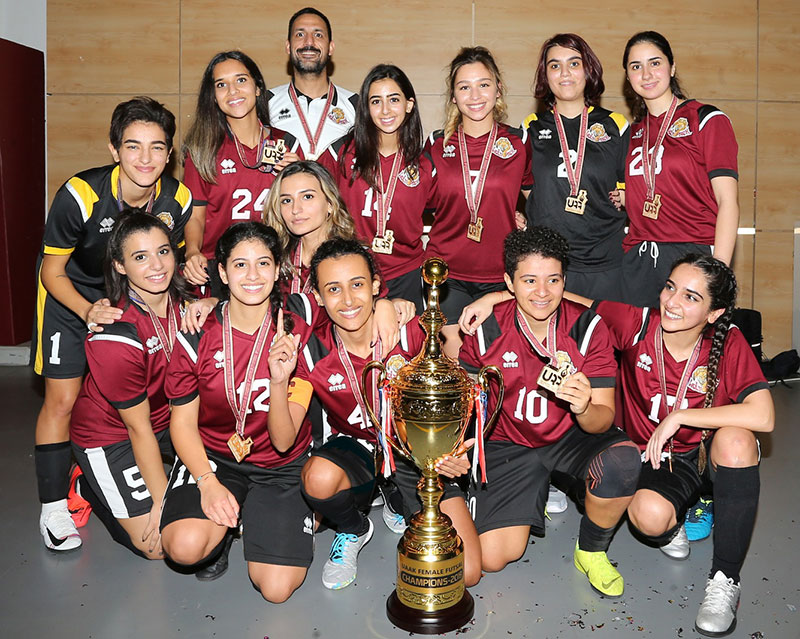
AUK Women’s Futsal team competed within the University Athletics Association of Kuwait (UAAK) where they played against numerous universities in Kuwait and have reached the finals with the American University of the Middle East (AUM). Led by Coach Mohammed Al-Saleh, the AUK team triumphed in the final game. Their efforts did not go unnoticed as their coach praised their performance throughout the competition, “I am so proud of the ladies this season; they worked so hard and truly deserve to be winners, congratulations.”
AUK’s basketball team has also placed third place in the UAAK women’s basketball league. Al-Saleh also expressed his delight with this season's result highlighting that this is a young team that has a lot of potential and is excited to see what the future holds for this team. The women's basketball team is one of AUK's most decorated teams as they have won 5 gold, 3 silver, and 2 bronze medals under the guidance of Coach Wessam Mohamed.
The teams displayed outstanding commitment and determination throughout the season, and have represented great sportsmanship and skills throughout the championship.
AUK’s basketball team has also placed third place in the UAAK women’s basketball league. Al-Saleh also expressed his delight with this season's result highlighting that this is a young team that has a lot of potential and is excited to see what the future holds for this team. The women's basketball team is one of AUK's most decorated teams as they have won 5 gold, 3 silver, and 2 bronze medals under the guidance of Coach Wessam Mohamed.
The teams displayed outstanding commitment and determination throughout the season, and have represented great sportsmanship and skills throughout the championship.
Group photo of the AUK women's futsal team with their coach
General photo of the final match
AUK women's futsal team celebrating after their win
AUK’s women basketball team
18, Dec 2019
AUK Announces President & Deans’ Honor Roll
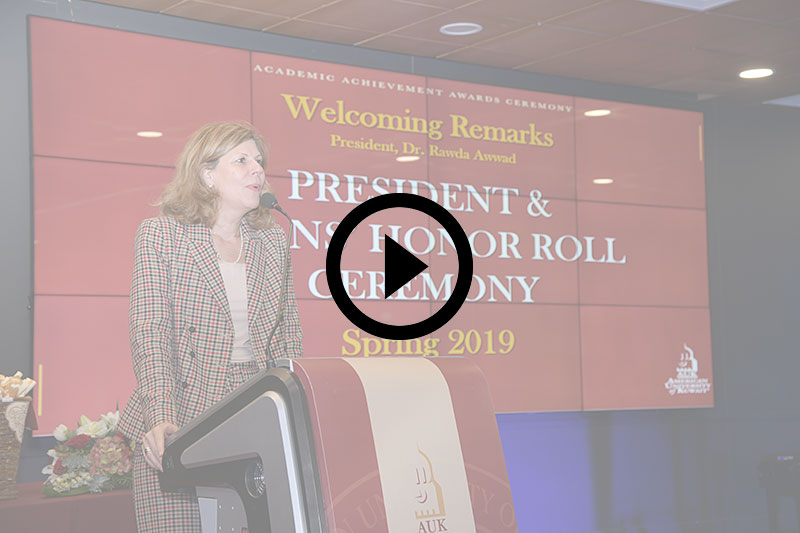
AUK held its semi-annual President & Deans’ Honor Roll ceremony to celebrate the accomplishments of top student achievers. The ceremony was held in the campus auditorium, where AUK President Dr. Rawda Awwad and the deans of the College of Arts and Sciences, the College of Engineering and Applied Sciences, and College of Business and Economics presented students with awards for their achievements in different categories. The event was attended by parents, faculty members, university staff, and students.
The ceremony commenced with opening remarks from Dr. Awwad in which she praised the awardees and congratulated them on their academic achievements. Top achieving students from the different categories were then called to accept their awards from the president and college deans.
38 students were awarded a place on the President's Honor Roll—a high distinction exclusively awarded to those who maintained a 4.0 GPA for the semester, while a total of 110 students were recognized for achieving the Dean's Honor List—a distinction awarded to students who maintained a minimum GPA of 3.7. AUK President, Rawda Awwad, along with Dr. Ali Charara, Dean of the College of Arts & Sciences; Dr. Amir Zeid, Dean of the College of Engineering and Applied Sciences; and Dr. Ralph Palliam, Dean of the College of Business & Economics presented the recipients with their awards.
President’s Honor Roll
Abdolaziz Avarian
Abdulwahab Al-Musailem
Ahmad Younis
Aisha Al Saqabi
Ali AlKhuraibet
Amal Radhwan
Amer Khosla
Anas El-Ghabra
Anwar As'ad
Bahja AlQazweeni
David Muharib
Dawoud Boland
Fadheela Al-Sabah
Farah Mobayed
Fatemah Al-Sulaiman
Habiba Anwar
Hala Abou Harb
Huseen BuOlayyan
Islam Rezk
Lavena Jacob
Lolwah AlRoshoud
Malak Hussain
Melissa AbouFarraj
Mohammed Al-Halabi
Mustafa Karkour
Nashrah Quraishi
Naya Kassis
Nazish Quraishi
Noor Abu Salah
Pearla Haider
Rawan Abdelrahim
Rawan Behbehani
Rawan Shalhoub
Reem Qasem
Sara Zayed
Shaymaa AlQallaf
Yara AlQuorashy
Yara Alwuhaib
Dean’s Honor Roll, College of Arts and Sciences
Abdulaziz Redha
Ahmad Dashti
Ali Mahdi
Badreyah Al-Gahtani
Bashayer Al-Anjeri
Chloe Ramey
Dana Alasfoor
Durfishan Rushda
Engy Ibrahim
Fahad AlSabah
Farah Abu Eid
Farah AlShaya
Farah Issa
Fatima alzahraa Al-Sarraf
Fay AlMazidi
Ghadeer Ashkanani
Hana Nassar
Jinan Taqi
Joana Shihadeh
Kaouthar Chebli
Khaled AlAnsari
Khaled AlSabah
Khalid Al-Kharafi
Kholood AlKholy
Kumail Ibraheem
Latifah AlKandari
Lelea Abdou
May Al-Qenaei
Maya Lawand
Mishary AlMesafer
Nada ElGamal
Nagam Abu Ghoush
Nataly Hamayel
Noor ElAli
Nouf Alenezi
Rafah Al-Shohaty
Rawan Boutaiban
Reve Chreif
Roa'a Alawneh
Ruba El-Amine
Saja Alobaid
Sara Al-Arbash
Sarah Raza
Sedra Al-Tujjar
Shafeqah AlTurki
Shaikha AlOraifan
Shamlan Al-Hasawi
Susanna Al-Mufti
Zaina AlFadalah
Zaynab Bakkali
Dean’s Honor List, College of Business and Economics
Aisha AlSaqabi
Bader Al-Majed
Dalal Ali
Dana AlAwawda
Dina Al-Sabeeh
Eman Abdelniaeim
Farhanaz Padpood
Ghada Al Sahhaf
Hamad AlShammari
Karan Purswani
Kumail Ibraheem
Laila Mohammad
Mariana Samir Sadek
Marwa Soliman
Mohamed Suliman
Neeshal Rafi
Nora Al-Bader
Nour Boka
Nour Nassar
Raghda Zaher
Rawan Nabaa
Reem Salameh
Sara El Bab
Shaikha Al-Hendi
Shaikhah AlMousa
Urooj Mudassar
Yasmeen Mohamed
Yousef Mustafa
Dean’s Honor List, College of Engineering and Applied Sciences
Ahlam Dashti
Alaa Al-Ajmi
Ali Abouzeid
Anwar AlAjmi
Asmaa Lulu
Aya Kandil
Dalal Al-Junaidel
Dallya Mulla Hwaech
David Liang
Esraa Theyab
Farah Hamoudah
Farah Kheder
Fatima Matook
Ghareeb Thiab
Hawraa Wahid
Hussien Hammoud
Laila Dallol
Lubna Al-Jayyar
Mahdi Al-Jadi
Majed AlDhafeeri
Mariam Khalil
Mohammed Ismail Miah
Noha Mahmoud
Noura Allahow
Omar Soliman
Palwasha Shaikh
Rassim Melaab
Reham Kablaoui
Sarah Saad
Sayed Abdullah Al Qallaf
Turki AlAjmi
Wasmeia AlRashidi
The ceremony commenced with opening remarks from Dr. Awwad in which she praised the awardees and congratulated them on their academic achievements. Top achieving students from the different categories were then called to accept their awards from the president and college deans.
38 students were awarded a place on the President's Honor Roll—a high distinction exclusively awarded to those who maintained a 4.0 GPA for the semester, while a total of 110 students were recognized for achieving the Dean's Honor List—a distinction awarded to students who maintained a minimum GPA of 3.7. AUK President, Rawda Awwad, along with Dr. Ali Charara, Dean of the College of Arts & Sciences; Dr. Amir Zeid, Dean of the College of Engineering and Applied Sciences; and Dr. Ralph Palliam, Dean of the College of Business & Economics presented the recipients with their awards.
President’s Honor Roll
Abdolaziz Avarian
Abdulwahab Al-Musailem
Ahmad Younis
Aisha Al Saqabi
Ali AlKhuraibet
Amal Radhwan
Amer Khosla
Anas El-Ghabra
Anwar As'ad
Bahja AlQazweeni
David Muharib
Dawoud Boland
Fadheela Al-Sabah
Farah Mobayed
Fatemah Al-Sulaiman
Habiba Anwar
Hala Abou Harb
Huseen BuOlayyan
Islam Rezk
Lavena Jacob
Lolwah AlRoshoud
Malak Hussain
Melissa AbouFarraj
Mohammed Al-Halabi
Mustafa Karkour
Nashrah Quraishi
Naya Kassis
Nazish Quraishi
Noor Abu Salah
Pearla Haider
Rawan Abdelrahim
Rawan Behbehani
Rawan Shalhoub
Reem Qasem
Sara Zayed
Shaymaa AlQallaf
Yara AlQuorashy
Yara Alwuhaib
Dean’s Honor Roll, College of Arts and Sciences
Abdulaziz Redha
Ahmad Dashti
Ali Mahdi
Badreyah Al-Gahtani
Bashayer Al-Anjeri
Chloe Ramey
Dana Alasfoor
Durfishan Rushda
Engy Ibrahim
Fahad AlSabah
Farah Abu Eid
Farah AlShaya
Farah Issa
Fatima alzahraa Al-Sarraf
Fay AlMazidi
Ghadeer Ashkanani
Hana Nassar
Jinan Taqi
Joana Shihadeh
Kaouthar Chebli
Khaled AlAnsari
Khaled AlSabah
Khalid Al-Kharafi
Kholood AlKholy
Kumail Ibraheem
Latifah AlKandari
Lelea Abdou
May Al-Qenaei
Maya Lawand
Mishary AlMesafer
Nada ElGamal
Nagam Abu Ghoush
Nataly Hamayel
Noor ElAli
Nouf Alenezi
Rafah Al-Shohaty
Rawan Boutaiban
Reve Chreif
Roa'a Alawneh
Ruba El-Amine
Saja Alobaid
Sara Al-Arbash
Sarah Raza
Sedra Al-Tujjar
Shafeqah AlTurki
Shaikha AlOraifan
Shamlan Al-Hasawi
Susanna Al-Mufti
Zaina AlFadalah
Zaynab Bakkali
Dean’s Honor List, College of Business and Economics
Aisha AlSaqabi
Bader Al-Majed
Dalal Ali
Dana AlAwawda
Dina Al-Sabeeh
Eman Abdelniaeim
Farhanaz Padpood
Ghada Al Sahhaf
Hamad AlShammari
Karan Purswani
Kumail Ibraheem
Laila Mohammad
Mariana Samir Sadek
Marwa Soliman
Mohamed Suliman
Neeshal Rafi
Nora Al-Bader
Nour Boka
Nour Nassar
Raghda Zaher
Rawan Nabaa
Reem Salameh
Sara El Bab
Shaikha Al-Hendi
Shaikhah AlMousa
Urooj Mudassar
Yasmeen Mohamed
Yousef Mustafa
Dean’s Honor List, College of Engineering and Applied Sciences
Ahlam Dashti
Alaa Al-Ajmi
Ali Abouzeid
Anwar AlAjmi
Asmaa Lulu
Aya Kandil
Dalal Al-Junaidel
Dallya Mulla Hwaech
David Liang
Esraa Theyab
Farah Hamoudah
Farah Kheder
Fatima Matook
Ghareeb Thiab
Hawraa Wahid
Hussien Hammoud
Laila Dallol
Lubna Al-Jayyar
Mahdi Al-Jadi
Majed AlDhafeeri
Mariam Khalil
Mohammed Ismail Miah
Noha Mahmoud
Noura Allahow
Omar Soliman
Palwasha Shaikh
Rassim Melaab
Reham Kablaoui
Sarah Saad
Sayed Abdullah Al Qallaf
Turki AlAjmi
Wasmeia AlRashidi
Click on the Image to view the Photo Gallery
15, Dec 2019
Two AUK Teams Head to the National Final of the Global Management Challenge
Following the 2018 AUK teams’ outstanding performance in the Global Management Challenge, two AUK teams have advanced into the 2019 National Championship, reaching the first position in the respective group stages. This is not the first time AUK finds two teams competing with each other in the finals after having beaten other university student teams and company management teams. The first team includes Donia O Mohammad (Leader), Laila O Mohammad, Aliaa A Al-Shahawi, Mariam N Mubarak, Yasmeen A Mohamed. The second team consists of Amer K Khosla (Leader), Amal A Radhwan, Farah A Mobayed, Rafia F Tabaa, and Ghada Al Sahhaf. The Global Management Challenge is the largest strategy and management competition in the world, based on business simulations, in which more than 650,000 university students and company managers participate.
AUK Professor of Accounting, Dr. Ahmed Kholeif and Associate Professor of Management, Dr. Aly Mansour are continuing their roles as mentors to the teams; their guidance has broadened students’ views on corporate strategy, helped to identify interactions with the different functional areas of a company, guided students in recognizing market conditions in which they compete, and assisted in creating an awareness of the impact of their decisions on the organization within an environment designed to encourage and develop teamwork for company growth.
Ms. Randa of the Adnar Group, specialization in consulting, training and recruitment praised the performance of AUK teams and extended messages of congratulations to the teams.
AUK Professor of Accounting, Dr. Ahmed Kholeif and Associate Professor of Management, Dr. Aly Mansour are continuing their roles as mentors to the teams; their guidance has broadened students’ views on corporate strategy, helped to identify interactions with the different functional areas of a company, guided students in recognizing market conditions in which they compete, and assisted in creating an awareness of the impact of their decisions on the organization within an environment designed to encourage and develop teamwork for company growth.
Ms. Randa of the Adnar Group, specialization in consulting, training and recruitment praised the performance of AUK teams and extended messages of congratulations to the teams.
Images from the event