

News
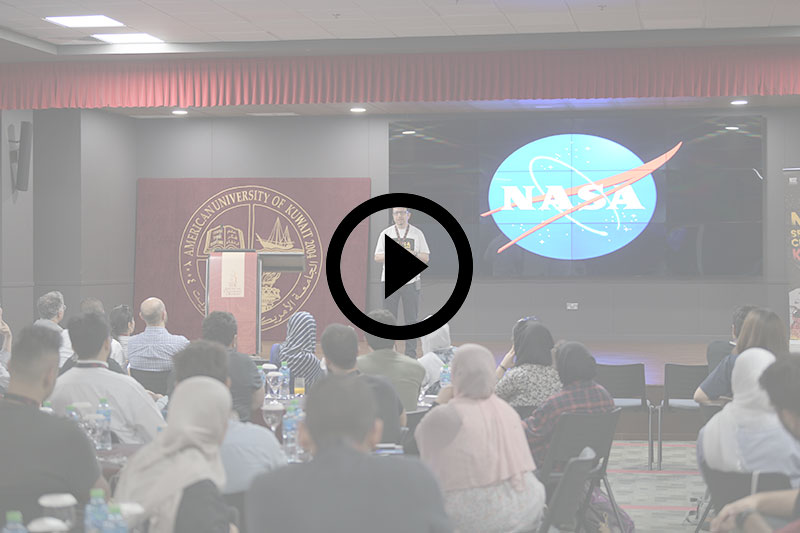
The NASA Space Apps Challenge is the world’s largest hackathon introduced by the National Aeronautics and Space Administration (NASA). The international competition occurred in more than 75 countries around the globe. The Kuwait competition took place at Marina Hotel and brought together around 80 people from around Kuwait to solve problems related to Earth and space.
As witnessed throughout the weekend, NASA Space Apps lived up to its ethos and inspired collaboration, creativity, and critical thinking. Twelve competing teams—composed of scientists, coders, space enthusiasts, graphic designers and business analysts—worked over 48 hours to create apps, games, and websites that addressed the challenges provided by NASA Space Apps. These included, Earth's Oceans, Our Moon, Planets Near and Far, To The Stars, and Living in Our World. Subject matter experts from different institutions were available throughout the event to mentor participants and help with questions related to Earth, space science, and technology.
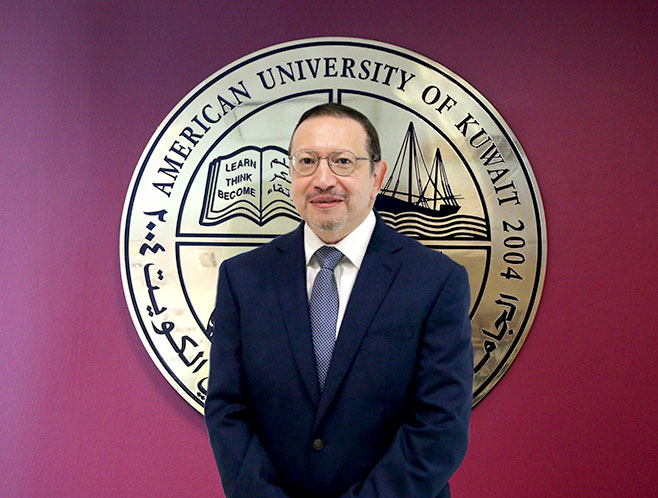
The 2-day event concluded with a closing ceremony, in which the two winner teams were announced. During his closing speech, Dr. Amir Zeid, Dean of the AUK College of Engineering and Applied Sciences, congratulated all participants on their vigilance and perseverance in working long hours to produce a marketable software solution within a short period of time. “Hackathons are increasingly becoming an effective developmental platform to generate young innovations and new business ideas of international significance. Throughout the past 48 hours, our NASA Space Apps teams have been working around the clock to produce comprehensive software solutions. I am amazed by the level of energy and enthusiasm these young people radiate, and I am even more thrilled to see this number of high school participants coming to the stage to showcase their talents and innovative ideas,” said Dr. Zeid. “We treasure KIPCO’s strategic partnership for the second year, and we hope to continue working with them on more youth empowerment initiatives in the future,” he added.
Stressing on the essence of youth empowerment in Kuwait, Ms. Abeer Al-Omar, Director of Corporate Social Responsibility (CSR) at KIPCO noted, “This is KIPCO’s second year supporting the NASA Space Apps Challenge as it aligns with KIPCO CSR strategy of youth welfare. We are very proud of the creative ideas that are coming from Kuwait’s youth, and we continue to offer our sincere support and congratulations to the winners for their devotion and commitment during the duration of this challenge.”
The atmosphere at Six Palms (Marina Hotel) radiated devotion and commitment, but the teams did not only think of creating projects that would win the competition, rather, similar to last year, they made sure to weigh in the social and ethical impacts of their ideas. Commenting on this, AUK President Dr. Rawda Awwad said in her closing remarks, “At AUK, experiential learning is not merely a concept; rather, it is our practice. However, the level of engagement at NASA Space Apps Challenge is something entirely new. It is spaces such as these, that often become the site for something that is groundbreaking. This is AUK's version of education; and to say that we are proud of you is an understatement.”
Three judges convened to select the first and second place teams who will move on to compete globally against winners from other locations. The judges, Mr. Mazen Hawwa, KIPCO Senior Vice President of Finance and Operations; Mr. Yacoub Yousef Al-Bash, Team Leader of Information Technology Services at Kuwait Oil Company (KOC); and Dr. Bassem Alfeeli, Director of Innovation and Enterprise at KFAS, represented a variety of expertise and provided a balanced perspective. Each team had 5 minutes to explain and demonstrate their projects to the judges, after which the judges made their final choice of winners.
The first winning project “Oxylus” led by AUK alumnus Ali Kelkawi, is a multi-tier application which allows communities at risk of wildfire to serve each other as well as to be better assisted by authorities. The application allows communities to offer services such as shelters to other people, carpool and volunteer with the authorities when needed, all this built on top of a previous iteration of the application which allowed users to report wildfires in the vicinity to alert their community. The mobile application developed is also able to safely navigate users away from danger zones to their required destination. A prediction model was also developed to predict fires based on a location’s given features (temperature, humidity, wind etc.) to be able to better allocate resources to areas at risk.
“It is always a pleasure to gather as a community of developers in Kuwait to tackle different issues through the use of technology. The challenges encouraged us to think outside the box to come up with innovative solutions in the theme of Earth and Space, and I am extremely proud of the level of quality that my team was able to deliver in this year’s challenge,” Said Kelkawi.
The second winning project “My Verse”, led by AUK alumnus Omar Khalil, is a mobile AR application that allows users to create, customize, and simulate interactive solar systems using accurate and real algorithms. Players can create planets that can be comprehensively customized in a wide variety of ways such as terrain textures, ocean levels, and the colors of every element. Planets then interact with each other and the star that the player has customized to create a solar system that behaves realistically. For example, a planet can harbor water if it is the right distance from the sun and contains atmospheric gases. Finally, players can contribute by creating planets and placing them into other people's solar systems in real-time.
About RISE
The AUK Center for Research in Informatics, Sciences, and Engineering (RISE) serves as AUK's primary source for multidisciplinary research and development (R&D) activities. The Center employs a holistic approach to R&D by integrating academic disciplines, and forging connections between local & international innovators, academia & industry, and technology & society.
About KIPCO
Kuwait Projects Company (KIPCO) is an investment holding company with operations that extend across the Middle East and North African region, from the Atlantic Ocean to the Arabian Sea. With holdings in sectors such as financial services, media, manufacturing and real estate, KIPCO Group comprises over 60 companies and employs over 12,000 people in 24 countries. Founded in 1975, KIPCO has since become one of the MENA region’s most successful companies.
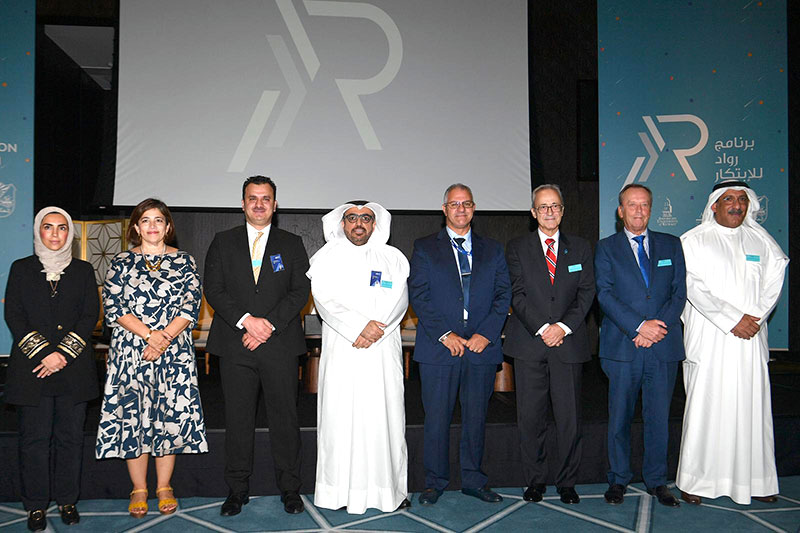
The previous editions of Al-Rowad Program were aimed at Warba Bank employees to encourage innovative banking products and satisfy customer needs. Due to the success of the program, Warba Bank expanded the scope of the program for university students to enroll this year. The 3rd edition has been dedicated to university students from both the bachelor’s and master’s levels from various universities in Kuwait.
AUK Vice President for Student Affairs, Dr. Hanan Muzaffar supported the students’ participation and abilities in performing well in this challenge, as she explains, “As a reflection of the liberal arts mission of the American University of Kuwait, our five participating students for this competition come from three different majors. It is always a pleasure to see how enhancing our students’ education in their early years at AUK enables them to see beyond the limitations of one major and seek opportunities offered in fields outside of their comfort zone; that being said, our students are no strangers to the interdisciplinary nature of this program.”
Further, Mr. Shaheen Al-Ghanem, Warba Bank’s CEO, expressed his wishes and support saying, “Warba Bank will provide a favorable environment for the students to widen their horizons and prepare them for the labor market. Participation in the program will give them the chance to join Warba Bank’s team where they will be able to achieve further development in their future career.”
Members of the teams were selected to participate based on their high academic performances and interviews with Warba Bank. AUK’s team includes the following students: Nashra Sharique Quraishi, majoring in accounting; Susan Naqvi, majoring in computer engineering; Mona Singer, majoring in computer engineering; Farah Hamoudah, majoring in computer engineering; and Hussen Alwazan, majoring in management.
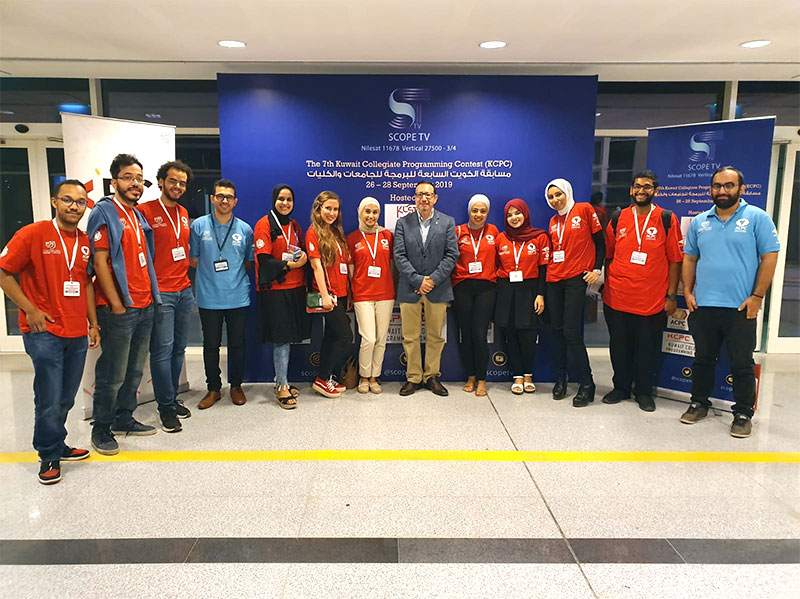
This year, four student teams represented AUK and competed against 38 other teams from nine local public and private universities. AUK’s teams, //noComment and TheEidBringers, were among the local teams that qualified to the regional round in Egypt from the local round of the competition held at Kuwait College of Science and Technology (KCST). The teams were coached by engineering lab instructors, Mr. Ahmed Hassanein and Mr. Haseeb Jabbar. AUK’s winning teams included the following students: Noureldin Khalil, Islam Rezk, Ghareeb Thiab, Abdulaziz Karam, Anas El-Ghabra, and Anwar As’ad.
During the competition, each team—comprising of three students using one computer—were given a set of programming questions to answer within a five-hour period. Winners were determined by the number of correct answers submitted in one of two programming languages, C++ or Java, during the shortest period of time.
The Dean of the College of Engineering and Applied Sciences (CEAS), Dr. Amir Zeid, praised the AUK teams for their efforts in this year’s challenge. He noted that AUK has qualified to the regional ACPC several times before, commenting that, “The competition is a great chance for our students to experience software development and efficient algorithm design. We are looking forward to the next regional round in Egypt.”
Team mentor, Mr. Hassanein, expressed that, “In the weeks leading up to the competition the teams have been training hard and practicing by solving problems from previous competitions. They utilized the knowledge acquired from the courses taught at AUK and managed to demonstrate their excellence at the competition.”
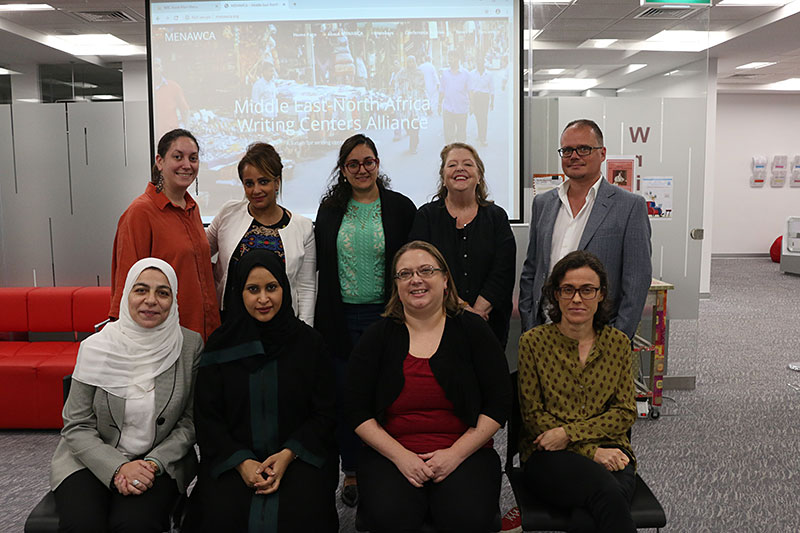
Members of the executive board of the Middle East and North Africa Writing Center Alliance (MENAWCA) were invited to join this year’s celebration on campus with the students. The members included, Dr. Amy Hodges, Assistant Professor at Texas A&M University at Qatar (Qatar); Dr. Ken Nielsen, Director of the Writing Program, Director of the Writing Center NYU Abu Dhabi (United Arab Emirates); Dr. Elizabeth Whitehouse, Director of the Speaking and Writing Center at United Arab Emirates University (United Arab Emirates); Dr. Maimoonah AlKhalil, Assistant Professor of Applied Linguistics at King Saud University (Kingdom of Saudi Arabia); Ms. Sahar Mari, Student Enhancement Specialist at Texas A&M University at Qatar (Qatar); and Sherry Ward, Instructional Assistant Professor at Texas A&M University at Qatar (Qatar).
The board members discussed with students the value of writing in their lives, the challenges that writers face, writer’s block and how to overcome all these issues. The MENAWCA executive board also explained to the students the aims of their alliance and the support they provide for their members. The event was attended by many students and tutors from the Writing Center and the Tutoring Center.
This event marks the sixth year that the English Department has celebrated the annual Writing Day.
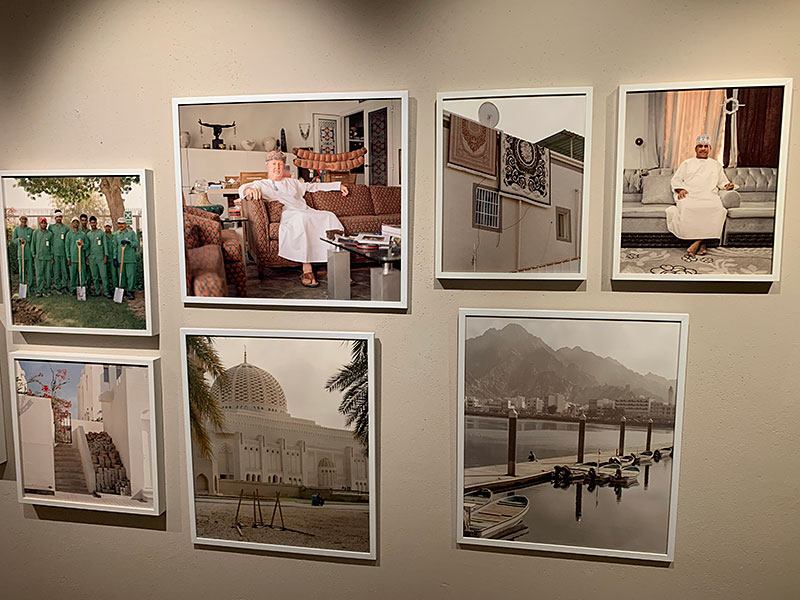
The tour was an extensive and thorough review of all the exhibited photography works. The exhibition held pieces from 15 different artists based in both the Gulf region and Great Britain. Students showed great enthusiasm in the works and quickly began analyzing and discussing the pieces. They reflected upon the title of the exhibition which gave way to a lively discussion on what home meant to them, and the images that epitomize that meaning. Mr. Drake offered his expertise during the workshop portion of the day, where he reviewed the students’ photographs and offered valuable criticism and advice to the aspiring artists.
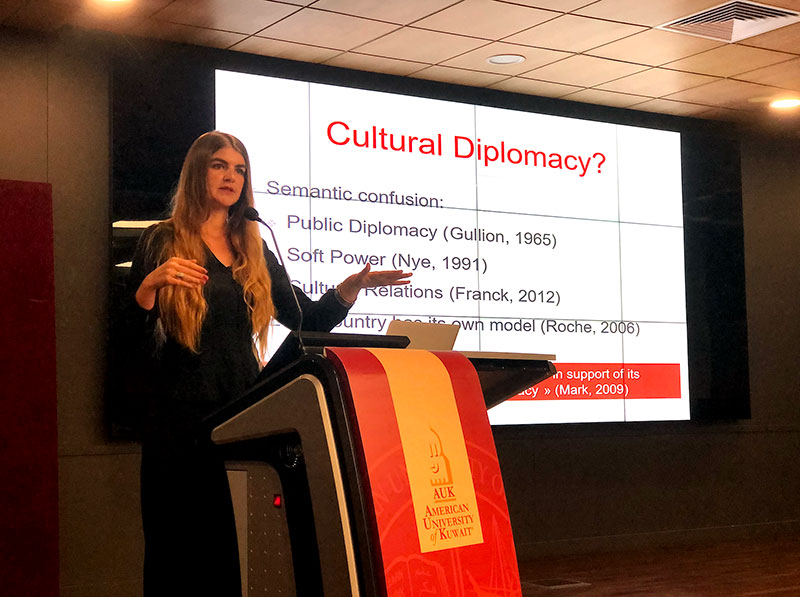
Since the 1960s, France has managed to establish itself as an alternative diplomatic partner, or even a privileged partner, of the Gulf countries – especially Saudi Arabia, the UAE, and Qatar. In her lecture, Ms. Sailly shed light on the cultural dimension of French-GCC diplomatic relations by exploring the history of French cultural diplomacy in the Gulf region, as well as investigating the increasingly essential role of culture in international relations.
This was illustrated through her discussion of the expansion and coordination of the French cultural and cooperation network, including the establishment of French Embassies, the French Institute, and French foreign research institutes such as CEFAS. Additionally, the diffusion of the Francophonie was an integral part of the process of the network. Francophonie mainly involved integrating French in public school system curriculums, vocational training, and establishing French programs in local radio and TV stations.
Ms. Sailly also explored the wide range of French-GCC partnerships in the cultural, scientific, and technical fields, which focus on socioeconomic development. This has included the provision of technical assistance for the development of flagship projects such as the Louvre Abu Dhabi and the Al-Ula archaeological site in Saudi Arabia.
Her Excellency Ambassador Marie Masdupuy recognized Ms. Sailly’s presentation and extensive research efforts, and further commented on the relevance of cultural diplomacy. She expressed that Kuwait’s unique interest and appreciation for art, culture, and history encouraged strong cultural ties with France. “I am very confident that there is mutual will and mutual aspiration to expand these ties in all the variety that Océane described.” Further, she echoed the sentiments of the First French Ambassador in Kuwait, His Excellency Pierre-Louis Falaize, who had predicted that, “It is on higher bases, those of culture, technique, and understanding in various high fields, that a lasting cooperation must be established...”
Dr. Shareefa Al-Adwani, Director of CGS, commended the speaker for discussing “new strategies of networked cultural diplomacy conducted by French diplomatic units within GCC countries,” emphasizing that “cultural diplomacy—different from public diplomacy, soft power, and cultural relations—involves systemized efforts across these units to achieve certain national goals. Her [Sailly’s] original research reveals an understudied yet important aspect of international politics that crosses multiple disciplines in the social sciences and humanities."
Océane Sailly is a PhD Candidate in Sociology at Sorbonne Nouvelle University. After graduating with a B.A. in International Relations and a M.A. in Cultural Mediation, she worked as a Cultural Officer for the “Emirati-French Cultural Program – Dialogue with the Louvre Abu Dhabi.” Currently, she is conducting her dissertation on French cultural diplomacy in GCC countries. For the years 2018-2020, she has been awarded a travel grant from the French Center for Archaeology and Social Sciences in Kuwait to pursue fieldwork in the Gulf. At the same time, she continues to explore the art history of the region, as an expansion of her former research.
About the Center for Gulf Studies:
The Center for Gulf Studies is a research center under the College of Arts and Sciences at the American University of Kuwait. The center aims to promote greater cultural understanding of and increased intellectual interest in the Gulf, by facilitating free and open academic discourse on a range of issues that both shape and challenge this critical region of the world. Their goal is to enable scholars as well as political and civil society actors both within and outside the region to contribute and add value to the burgeoning field of Gulf Studies. To this end, the center seeks to encourage, support, and cultivate interesting and original research on the Gulf, and to create an environment in which AUK students and faculty can interact and collaborate with researchers and activists from around the world in creative and engaging ways.
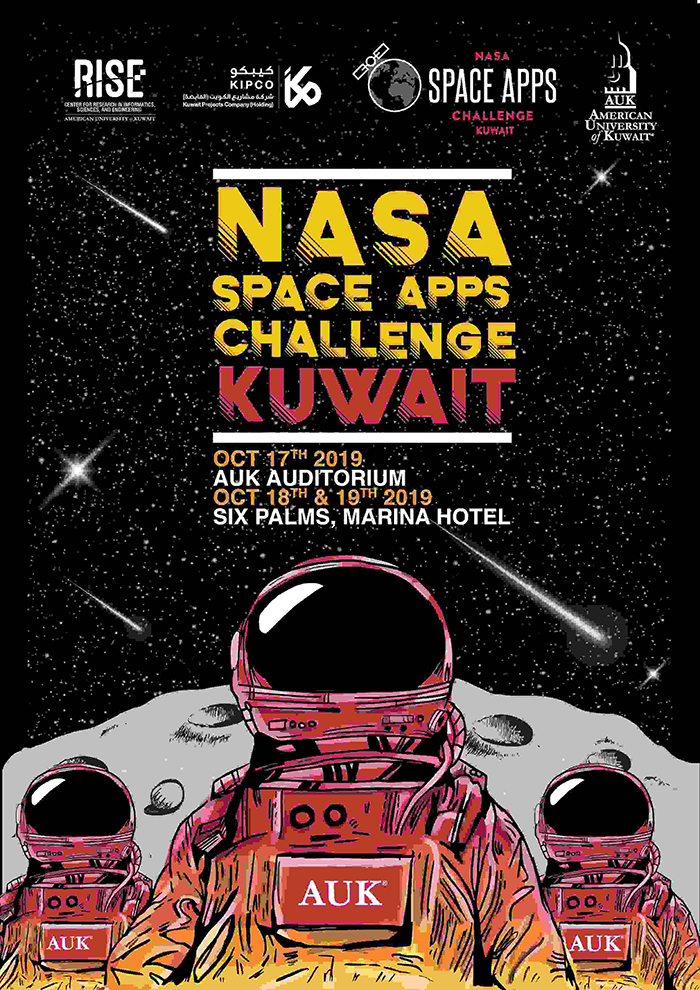
NASA Space Apps Challenge is the world's largest hackathon, which happens simultaneously in 200 cities around the world and unites diverse teams in their quest for innovation, creativity, and critical thinking. The competition—which will take place this year on October 17-19, 2019 at Marina Hotel, Salmiya—will bring together scientists, coders, space enthusiasts, graphic designers and business analysts to work in teams on developing apps, games, or websites that address one of the following challenges: Earth's Oceans, Our Moon, Planets Near and Far, To The Stars, and Living in Our World. The top two winning projects from Kuwait will qualify to compete against the rest of the world’s winners in a second round of project assessments.
Registration for the event is free of charge and is open for all ages, backgrounds and professions through the online Kuwait Location page (in-person registrations on October 17th are not allowed). In addition, RISE Center will be holding a public Information Session on October 8th at 6PM at AUK (room B205) for inquiries about the event, registration process or the secret of success of team Tempest, which made it to the global top 25 last year.
About RISE
The AUK Center for Research in Informatics, Sciences, and Engineering (RISE) serves as AUK's primary source for multidisciplinary research and development (R&D) activities. The Center employs a holistic approach to R&D by integrating academic disciplines, and forging connections between local & international innovators, academia & industry, and technology & society.
About KIPCO
The KIPCO Group is one of the biggest holding companies in the Middle East and North Africa, with consolidated assets of US$ 33 billion as at 30 June 2019. The Group has significant ownership interests in over 60 companies operating across 24 countries. The group’s main business sectors are financial services, media, real estate and manufacturing. Through its core companies, subsidiaries and affiliates, KIPCO also has interests in the education and medical sectors.
The Kuwait Program at Sciences Po and the Kuwait Foundation for the Advancement of Sciences (KFAS) hosted a student paper competition whereby students from every university in Kuwait can submit a paper that discusses issues related to the Arab world or the Gulf region.
American University of Kuwait (AUK) senior English-major Hussam Helmy submitted a paper entitled, (En)gendering Orientalism: The Representation of Women in Amin Maalouf’s Samarkand. The paper argues that the representation of women in Maalouf's ostensibly postcolonial novel actually reinforces the very same imperialism and colonialism that it sets out to condemn.
Helmy expressed his gratitude, “I am honored to receive the SciencesPo Student Paper Award for my senior thesis paper, and I am very grateful for the opportunity afforded by KFAS and the Kuwait Program at SciencesPo. I am also deeply indebted to AUK and to my supervisor, Dr. Angelica DeAngelis who provided strong guidance, endless encouragement, and indefatigable support throughout the research and writing process.”
Chosen among six winners, Helmy was awarded a cash prize along with publishing his paper in the Sciences Po Kuwait Program website.
The Kuwait Program is a partnership between the Kuwait Foundation for the Advancement of Sciences (KFAS) and Sciences Po—a social sciences university in France.
The American University of Kuwait also has a standing student exchange program with Sciences Po that allows students to study at one of the school’s seven urban campuses.
American University of Kuwait Student Hussam Helmy
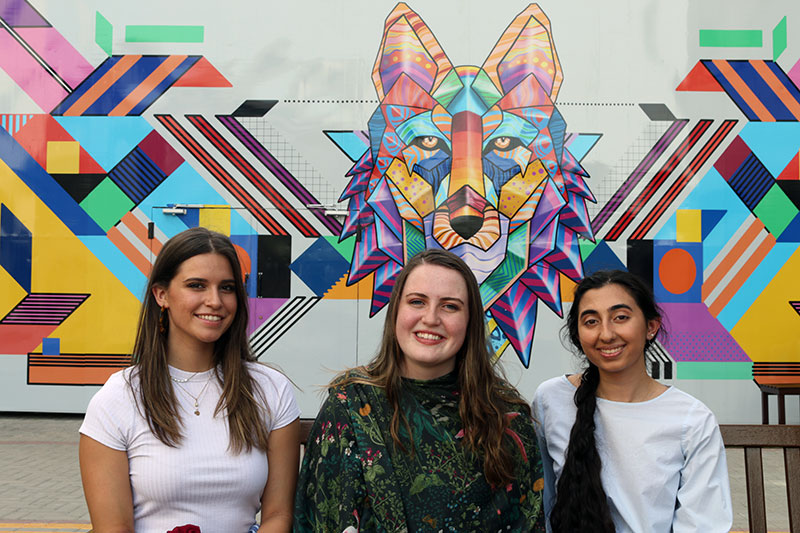
Katelyn Zeser joins the American University of Kuwait (AUK) as an intern for the International Relations Department, the Intensive English Program, and Learning Support Services. She is a second-year student at Dartmouth and is a double major in anthropology and Middle Eastern studies. At Dartmouth, she has a fellowship at the Center for Social Impact, is part of the Arabic Club, and also plays the cello.
She joins AUK after spending 10 weeks studying in Morocco as part of a study abroad program, and wrote her thesis on Moroccan rap and social reform. “When I was leaving Morocco, I cried on the plane because I was going to miss it so much, but now that I am in Kuwait I am able to take advantage of many interesting and beneficial things. I am so lucky to be part of the campus community where I have met a lot of amazing people whose friendliness has exceeded my greatest expectations,” added Zeser.
Maryam Iqbal joins AUK as an intern for the Department of Social & Behavioral Sciences, the Department of Finance, and the Department of Economics. She is a junior at Dartmouth and is majoring in neuroscience. She is a self-taught pianist and henna artists, and recently spent three months in Argentina studying Spanish as part of a study abroad program. “Everyone here is so hospitable and friendly. I absolutely love AUK and the culture in Kuwait, I love how welcoming everyone is,” commented Iqbal.
Delaney Marshal joins AUK as an exchange student and is enrolled in Arabic, History, and International Relations classes, and is taking part in the Gulf Studies Certificate Program. She is a junior at Dartmouth and is a double major in government and Middle Eastern studies. At Dartmouth, she is very involved in her sorority Sigma Delta, which works to empower women at Dartmouth.
“A lot of people back home have many misconceptions about the Middle East. I am glad that I have gotten to experience the people and the culture firsthand,” stated Marshall.
Dr. Awwad also announced the appointment of Dr. Amir Zeid as the founding dean of CEAS. Dr. Zeid joined AUK in 2007 as Assistant Professor of Computer Science and was promoted to Associate Professor in 2013. He received his Ph.D. in 2000 in Computer Science from Carleton University, Canada. He comes to this position with over 20 years of experience and distinct competencies drawn from providing strategic and technical leadership within the industrial, academic, and research domains. Since 2008, Dr. Zeid held a range of positions that contributed significantly to AUK’s liberal arts philosophy through supporting student engagement and innovation. In 2014, Dr. Zeid founded the Center for Research in Informatics Sciences and Engineering (RISE), AUK’s first scientific center for research and outreach, which brought major international innovation events, including NASA Space Apps Challenge, TEDx AUK, and Microsoft Imagine Cup Kuwait, to AUK. He is the recipient of notable international awards and grants, the latest of which was the International Visitor Leadership Program (IVLP) grant by the US Department of State. With a combination of over 75 publications, conference papers, and grants, Dr. Zeid is a renowned keynote speaker and interdisciplinary researcher. His research interests include global software engineering, cloud computing, STEM education gender gap, and adaptive learning systems.
Commenting on the opening of the new college, Dr. Zeid said, “We never slow down in our quest for innovation and advancement, and today we are again reminded that this quest is worth all our efforts and teamwork. One of the founding principles of the newly-established College of Engineering and Applied Sciences is a commitment to excellence in teaching and research. Built on a liberal arts model, the CEAS will advocate a multidisciplinary approach to education and research through its three major bodies: Department of Electrical and Computer Engineering (ECE), Department of Computer Science and Information Systems (CSIS), and Center for Research in Informatics, Sciences, and Engineering (RISE).”
The College houses two departments that were previously part of the College of Arts and Sciences—Department of Engineering that offers the following programs: Bachelor of Engineering (BE) in Computer Engineering, and BE in Electrical Engineering which are both accredited by the Engineering Accreditation Commission of ABET, the global accreditor of college and university programs in applied science, computing, engineering, and engineering technology; and the Department of Computing which offers the following programs: Bachelor of Science (BSc) in Computer Science which is accredited by the ABET Computing Accreditation Commission, the global accreditor of college and university programs in applied science, computing, engineering, and engineering technology; and a BSc degree program in Information Systems. The College also introduced the BE degree program in Systems Engineering as the newest major in the university under the Engineering Department.