

News
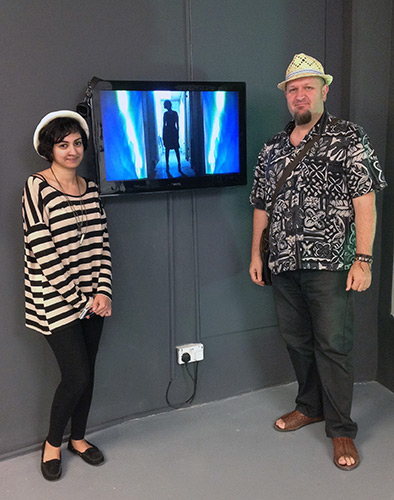
The American University of Kuwait (AUK) holds a bi-annual art competition, the President's Exhibition, which showcases artwork selected from among the best art pieces created during the previous semester. Each of the pieces was judged for creativity, originality, and technique when submitted for consideration to AUK ART and Graphic Design professors Sharon Orleans Lawrence, George Bauer, and William Andersen.
Released by the Office of Public Affairs on the 6th November 2014
Photography by the Office of Public Affairs (C) 2014
30 students won the competition, and their names are listed below in no particular order: Maha Abdullah, Zahraa Hamadi, Rola Gharib, Al-Anoud Al-Khataf, May Boodai, Yousra Marouf, Maryam Saadat, Aya Kandil, Noura Al-Shammari, Alaa Dashti, Nader Makki, Fahad Al Omar, Hawraa Al Saffar, Yousef Al Fadhli, Antony Lawrence, Amnah Al-Sarraf, Natasha Al-Houti, Maymoonah Toubeh, Rita Yamout, Esraa Al Kandari, Noor Ahmad, Sherifa Al Khulaifi, Fatima Al Shobbar, Diana N Bedrossian, Zeina Al-Rez, Manal Adra, Naser Al Qadiri, Sara Al Qahtani, Eman Khalil, and Ailiyah A. Behbehani.
The current exhibition will be displayed in the President's Office until May 2015, on view for the University, as well as dignitaries and other honored visitors to the University.
"It is a continuing pleasure to present the best work of our talented students in the AUK Art and Graphic Design Department. It's always good to honor students who excel, but the President's Exhibition is especially close to my heart, because the faculty chooses the best work from their classes to enter in the competition. Usually, the students don't know their work is being considered until they are notified that they have won. In addition, we sincerely appreciate the enthusiastic support we have received from our President, Dr. Nizar Hamzeh," expressed Assistant Professor Sharon Lawrence, Chair of the Art and Graphic Design Department.
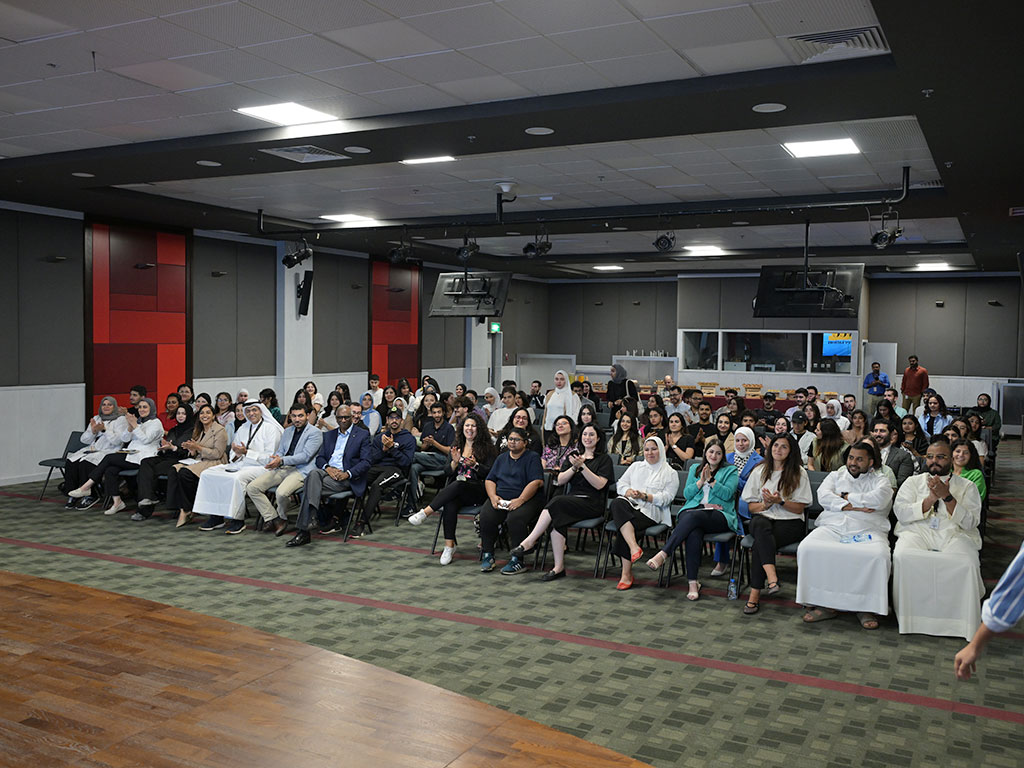
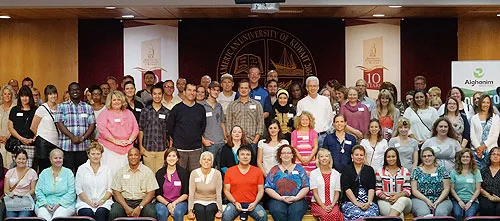
Winning Students with their Professors, Family, and Friends
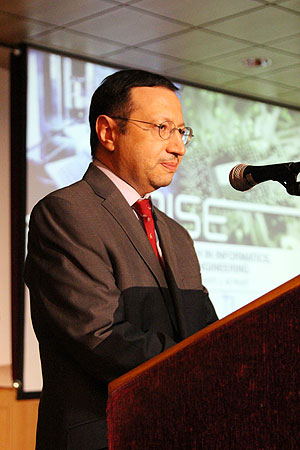
The Center for Research in Informatics, Sciences and Engineering (RISE) at the American University of Kuwait (AUK) launched its lecture series for the 2014-2015 season in October 2014. Mr. Sadeq Qasem, Head of Invention Development for the Sabah Al Ahmed Center for Giftedness & Creativity (SACGS), and winner of the Stars of Science competition, was invited as the first speaker of the season.
In his lecture, Mr. Qasem spoke of the Sabah Al Ahmed Center for Giftedness and Creativity. He explained that the Kuwait Foundation for the Advancement of Science (KFAS) is the parent and sponsor of SACGC, whose aim is to provide support and encouragement to young Kuwaitis' creativity and innovations.
He then guided the attendees through the process of bringing ideas into fruition, including steps for inventors to obtain patents for their ideas and products. "Do not underestimate any idea, no matter how simple it may seem. My advice to you is to always ink what you think," he advised.
The lecture was open to the public, and attendees were presented with the opportunity to ask the lecturer about his experience as a contestant and first-place winner in the The Stars of Science TV competition, which earned him the title of "Arab Inventor of the Year".
Professor Amir Zeid, Director of RISE, explained that Mr. Qasem was selected as the first speaker of for this season because he is a great example of the potential that is contained in young Kuwaitis. "He is an example of what young innovators can accomplish with a creative idea and following through with it," Zeid said.
The AUK Center for Research in Informatics, Sciences, and Engineering (RISE) serves as AUK's primary source for research and development activities, a bridge to industry, and an important venue for community outreach. RISE adapts an integrative model by forging connections between academic disciplines, local & international innovators, academia & industry, as well as technology & society.
RISE's second lecture of the season is scheduled to take place tomorrow (Wednesday, 5th November) - 6pm at the AUK Auditorium in Salmiya. It is entitled "State of the Art Assessment of Large Rotating Machines: How Embedded Systems Make the Energy Supply Safer" and will be conducted by Dr. Bernhard Fruth, Chief Executive Officer of Maser Quartzelec Services; a leading international electrical engineering group.
Released by the Office of Public Affairs on the 4th November 2014
Photography by the Office of Public Affairs (C) 2014
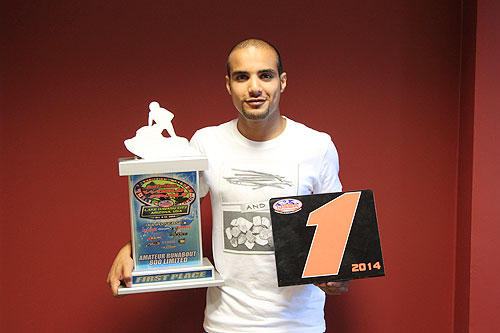
You may remember Abdulraham Al Omar. He is a student at the American University of Kuwait (AUK) who pursuing a degree in International Studies. But that is not why you might remember him. He is also one of Kuwait's champion jet-skiers and has managed to earn a number of medals and trophies over the years for his performance in competitions held across the globe. Find out more about his past achievements here.
This year, Abdulrahman was a member of a team representing Kuwait at the Jetribe IJSBA World Finals at Lake Havasu, Arizona. This was his second consecutive year to race in this competition, in which jet-skiers from 39 countries met to compete.
"Preparing for this year's competitions was much harder than last year. Between my classes this semester and finding the time to practice for the competition, I had to observe irregular practice hours. Also, this year has been an especially tough one on me because I have been recovering from a shoulder injury I sustained from a jet-ski related accident," Abdulrahman said.
Abdulrahman competed in the 4 competitions at the World Finals, winning first-place and the gold medal in the Amateur Run About 800 Limited category, "a position occupied by the team from Thailand for the past five years," he explained. He also managed to come in second place in three other categories; Novice Run About Limited, Run About Classic Stock, and Novice Run About Stock.
Next, he is looking forward to compete in the UAE Jet-Skiing Championships, Dubai, in January 2015. You can follow his progress on his Instagram account @Hamantoosh33.
Released by the Office of Public Affairs on the 28 October 2014
Photography by the Office of Public Affairs (C) 2014
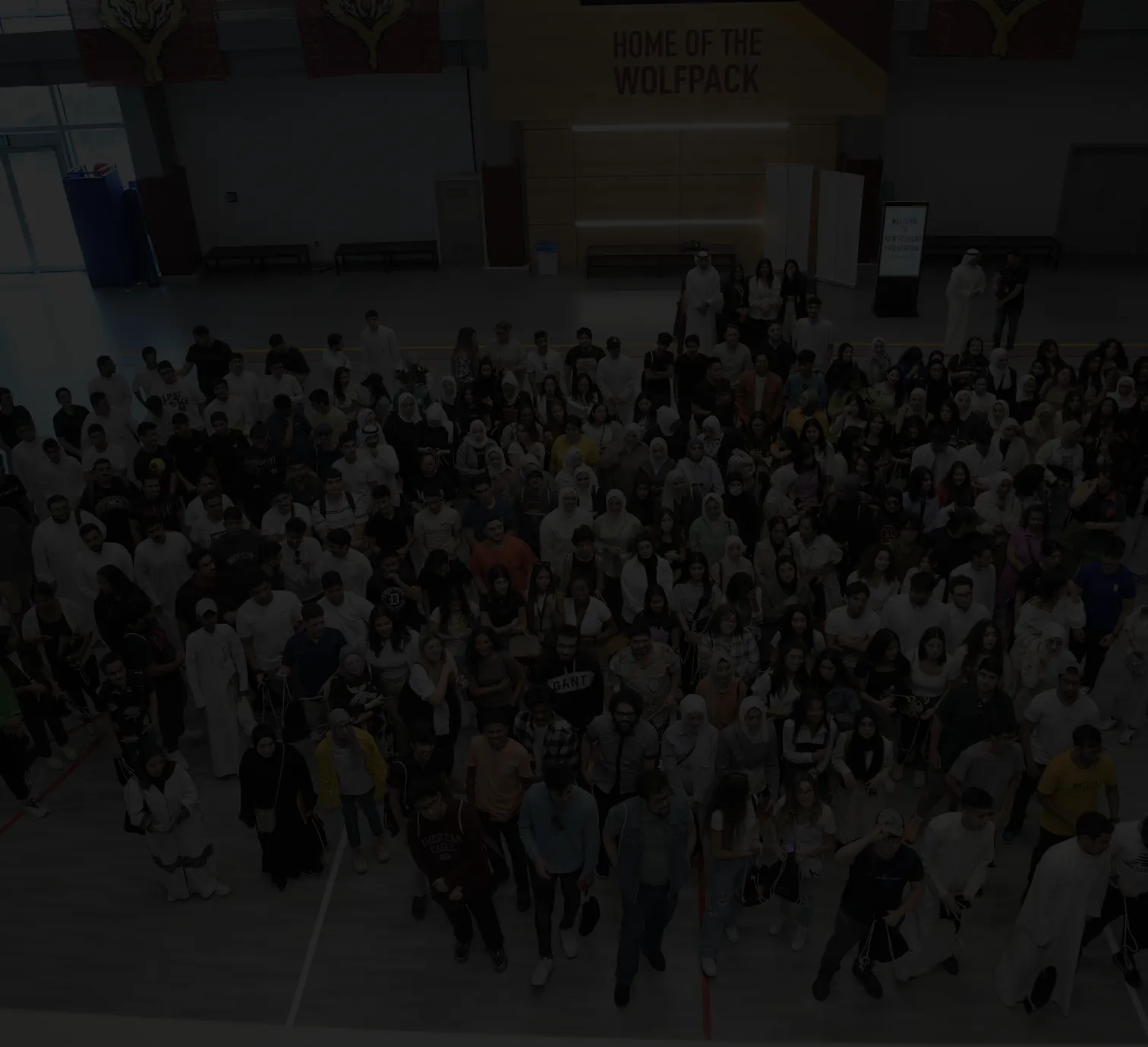
The American University of Kuwait (AUK) organized an information session for approximately 200 government high school students, from five different government schools. During the event, the different University units gave presentations highlighting the world class programs offered at AUK, the diverse student population, as well as student life and campus activities.
The visit was a good opportunity to inform prospective student about future academic and career prospects after they graduate from AUK. Faculty members from the different AUK colleges provided full information on career and graduate study options that graduates can pursue after earning a degree from AUK.
The Center for Continuing education highlighted college preparatory coursework offered to high school seniors prior to college entry exams, while the office of Admissions briefed them about the AUK admissions requirements and took them on campus tours.
Campus life was among the main topics of interest to prospective students. The AUK Office of Student Life highlighted various clubs & organizations, sports programs, and on-campus events that students can take part in during their study term at AUK.
Following the presentations, the visitors had the chance to engage in lively exchange with various members of the AUK community, discussing their inquiries about the government scholarship and Admissions requirements at AUK.
The Office of Admissions at AUK is planning a series of other events this year to raise awareness about the academic offerings, and university life at AUK "This is the first of many AUK community events; our next event will host private high schools in Kuwait in late November" says Maher Dabbouseh, Director of Admissions.
The American University of Kuwait, located in the heart of Salmiya, offers 15 distinct programs under the College of Business and Economics and the College of Arts and Sciences. AUK enjoys a diverse student population of over 44 different nationalities. Graduates of AUK pursue careers and continue on in graduate studies in different parts of the world.
Released by the Office of Public Affairs on the 27th October 2014
Photography by the Office of Public Affairs (C) 2014
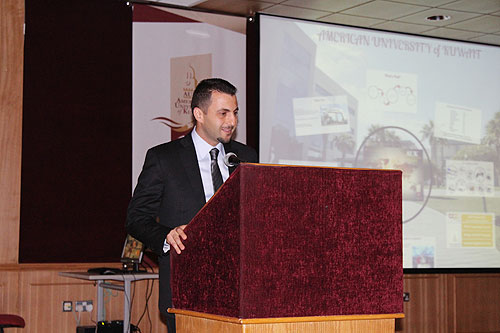
The Muslim Brothers in Pursuit of Legitimacy: Power and Political Islam in Egypt Under Mubarak is the latest book by Dr. Hesham Al-Awadi, Associate Professor of Political Science & History at the American University of Kuwait (AUK). In the book, he discusses the ways in which the Mubarak era served as a platform for the emergence of the Muslim Brotherhood as the most influential political force in Egypt.
Dr. Al-Awadi explains that the Brotherhood's steady growth occurred under Mubarak's leadership through their involvement in syndicates and unions, participation in local elections and social services. The author argues that the period preceding the Arab Spring is portrayed as one of struggle between the Brotherhood and the Mubarak regime, during which the Brotherhood's strive towards legitimacy clashed with the government's illegalization of the movement. He further explains that the Brotherhood's gain of informal social legitimacy in the Mubarak era inspired confidence amongst party leaders and supporters following the Arab Spring, provoking thought on the complex nature of coexistence between religion and the state.
Professor James Piscatori of the School of Government and International Affairs at Durham University reviewed The Muslim Brothers in Pursuit of Legitimacy: Power and Political Islam in Egypt Under Mubarak. He described it as "a work of considerable insight...[...which] contributes to knowledge both by presenting exciting new material on the Muslim Brotherhood in particular and by elucidating the choices of an Islamist movement in general."
Article courtesy of AUK student, Maria Bedrossian.
Released by the Office of Public Affairs on the 22nd October 2014
Photography by the Office of Public Affairs (C) 2014

Recent statistics have revealed that deaths resulting from breast cancer in Kuwait are higher than the global rate due to late detection of the disease. According to an article published last summer by the Arab Times daily newspaper, "3% of women between 20-29 years in Kuwait have breast cancer, and 5.9% of those between 30-39 years old suffer from the disease." The World Breast Cancer Awareness Month, marked in October of every year, is when efforts are increased to raise awareness about the disease. This month, AUK is joining efforts with Al Sidra Cancer Support Center to promote Breast Cancer Awareness to the AUK female community.
This year, along with supporting breast cancer survivors and their families, Al Sidra is focusing on raising awareness, specifically among young women, on the importance of early detection of breast cancer. On October 21st, and under the patronage of Sheikha Azza Ali Al-Jaber Al Sabah, Al Sidra will be holding a seminar at the Radisson Blu Hotel, Bida'a area, to educate the female community in Kuwait about breast cancer. The seminar will feature talks by experts in the field, as well as cancer survivors. In support of this seminar, AUK is inviting all the female members of its community to attend the seminar and join in spreading the awareness and knowledge across Kuwait.
World Breast Cancer Awareness Month offers an opportunity to remind women to take charge of their breasts' health and promote early detection of cancer. According to Karen Webster, Information Officer at Al Sidra, "The survival rates of breast cancer are relatively high if the disease is diagnosed at an early stage." According to the American Cancer Society, breast cancer survival rates reach over 90% if detected at stages I or II, over 70% if detected at stage III, and over 20% if detected at stage IV.
Karen Webster points to the importance of psychological support during cancer treatment. Al Sidra Cancer Support Center provides a warm, caring environment where patients could get informed and educated about the disease. It also offers emotional, psychological and complementary therapies to help women with the disease cope better with their illness, enhance the effects of their medical treatment and improve their quality of life.
"Al Sidra Center is open and free to access, to all people in Kuwait who have, or are related to someone who has, cancer. Access to our services can begin at any stage of the disease and our clients come to the Center through a doctor's referral or through "drop in"," Karen said.
Shebina Amlani, Clinic Coordinator at Al Sidra, says that the campaign's slogan, "Be Aware, Show You Care", aims to deliver two important messages to the public. "First, be aware and proactive in taking care of your own breast health, and second, be the ambassador of this campaign and educate people around you," she explained.
For more information, please contact Al Sidra Association at:
Telephone: 5155 0689 Weekdays 7:30am - 1:30 pm
Facebook: Al-Sidra KWT
Twitter and Instagram: AlSidra_KWT
Email: info.alsidra@gmail.com
Released by the Office of Public Affairs on the 15th October 2014
Photography by the Office of Public Affairs (C) 2014
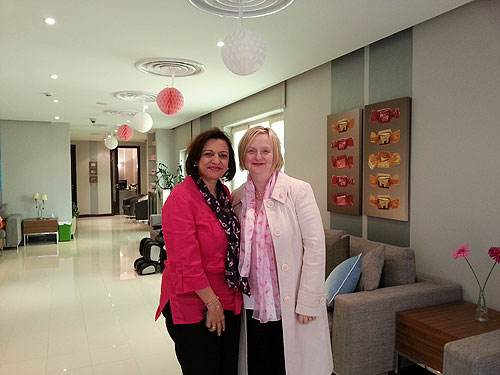
Convocation ceremonies mark the official commencements of academic years. This year, the American University of Kuwait (AUK) held its 11th Annual Undergraduate First-Year Student Convocation ceremony to welcome the Class of 2018 into the new phase of their lives. The ceremony formally introduced the new students to the University and familiarized them with its seal, traditions and symbols that represent what AUK stands for. Over 300 first-year students attended the ceremony, in which the AUK President, Professor Dr. Nizar Hamzeh, along with the Vice Presidents and Deans of the colleges, welcomed them to AUK.
The convocation commenced with Kuwait's national anthem. Ali Kelkawi, Class of 2017, welcomed the attendees on behalf of AUK's current student body, and invited President Hamzeh to deliver his address.
"This is a big time of year for everyone on campus, but most especially, of course, for our new students, their families and their friends. And it's an important time, for embarking on an education at AUK means more than simply going to classes, studying, taking tests, and perfecting technical skills," President Hamzeh told the attendees. "I realize that each student is unique and, as a university, we strive to maximize that unique potential. I'm pleased that we're embarking on this journey together. Take it from me - you're about to have the time of your life."
Following his address, President Hamzeh invited Dr. Rawda Awwad, Dean of the College of Arts and Sciences, to explain to the attendees the first component of the AUK motto; "Learn. Think. Become."
"AUK makes available for you the possibility to make your dreams of the future a reality, and learning is certainly an important ingredient," said Dr. Awwad to the attendees. "It is the place and site where opportunities for learning are made available not solely within your courses and classes, but, equally important, in extra-curricular activities and in your interactions with your peers, faculty, staff and administrators," she explained.
Dr. Awwad then introduced Dr. John Russell, Interim Dean of the College of Business and Economics, to discuss the second component of the motto; "Think."
Dr. Russell encouraged the students to think outside the box, and not confine themselves to the walls of the disciplines they are studying and try to understand others and their disciplines. "Make an effort to understand different disciplines, subjects, and people; in doing so, you will understand others and help others understand you." He explained that in practicing this, individuals will be able to communicate more effectively.
The final component of the motto, "Become", was then discussed by Dr. Carol Ross-Scott, Vice President for Student Affairs.
"Your college education is an opportunity to become someone better. It is designed to bring out characteristics in you that you never imagined," explained the VP for Student Affairs. "Take this college opportunity to become self-confident. The more you learn; the more confident you "become". Become someone who will make a difference, absolutely refuse to be ordinary," she advised.
Following Dr. Ross-Scott, alumnus from AUK's first graduating class, Nasser Al-Qallaf, who is currently working as a Marketing Executive at the United Real-Estate Company, shared his experience as a student with the attendees. He explained to them that, as students, their overall experience at AUK depends on them and what they choose to make it. He reminded them that they are surrounded by a strong support team with Student Affairs, and to not forget that they have a voice that will always be heard
Tradition was observed as AUK faculty representatives explained the connotations of the AUK icons and symbols.
The AUK Seal is the most significant symbol of the University. It was explained in detail, covering all four major components of the Circle of Life, including the Book-which represents liberal arts and dedication to knowledge; Dhow-historical Kuwait's aspiration, exploration and tradition; Falcon-representing vision, courage and leadership; and the Torch of Wisdom that represents the freedom to purse the big questions of life.
Concluding the event, the Deans and the VP of Student Affairs ignited the flames of knowledge and wisdom, as a symbol of their significant partnership and commitment to the success of students. Candles were lit along the aisles of the auditorium marking the transfer of knowledge to the next AUK generation.
The Convocation Ceremony is the pinnacle event for the Annual Orientation and Welcome Week festivities for incoming students. During this week, many events were organized to welcome all students to the AUK community, including the Welcome Back Barbeque and Get Involved Fair. In addition, specific events were organized to help First Year students become familiar with the campus. The Convocation ceremony in particular, is designed to promote community unity and help students through their transition into University life at AUK.
Released by the Office of Public Affairs on the 15th October 2014
Photography by the Office of Public Affairs (C) 2014
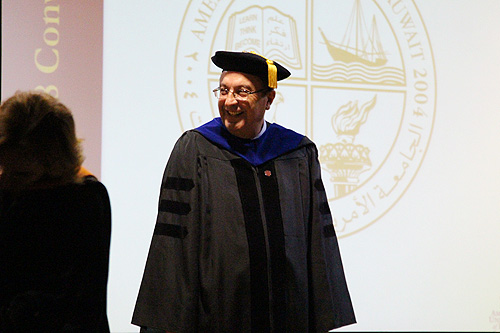
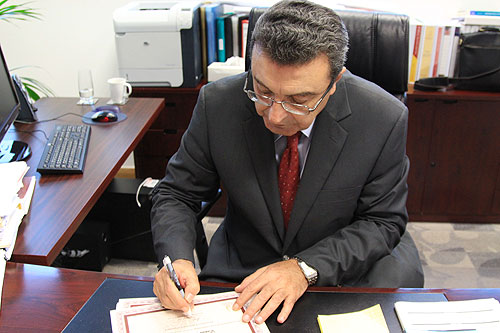
As part of their ongoing campaign Safety at Every Home (Safe) against fire hazards, the Kuwait Fire Service Directorate (KFSD) and EQUATE Petrochemical Company held a joint awareness activity at the American University of Kuwait (AUK). The 3-day activity, facilitated by the office of Student Life, included an information booth and a seminar attended by AUK students and staff members.
Speaking at the opening event, AUK President Professor Dr. Nizar Hamzeh said, "Being an institution of higher education, AUK continuously aspires to support awareness initiatives that benefit the society and its members as a whole. Although different types of awareness initiatives vary in nature, all aim at the common good of society. One of the awareness initiatives, which hold great significance in society, is educating people about safety and how to protect lives and property. To that effect, we at AUK are very pleased to host the Safe Campaign, which represents joint efforts of KFSD and EQUATE to create awareness among the University students, faculty and staff."
On his part, KFSD Director of Public Relations & Media Colonel Khalil Al-Ameer said, "In an effort to avoid different hazards and potential incidents at home and other various places, Safe Campaign has been launched to embody the strategic objectives KFSD is aiming to achieve throughout Kuwait by having such a partnership with EQUATE. For this purpose, the campaign will hold a number of awareness activities at a number of places, such as this activity at ACK, as well as other colleges, universities and malls. Certainly, the success of this campaign is the product of cooperation and coordination between individuals and organizations, including AUK and EQUATE that deserve utmost appreciation and gratitude."
The Safe booth at AUK saw significant student traffic as the KFSD team gave out brochures and giveaways, while providing information on fire hazards and precautionary measures. The interactive seminar and presentation, which also saw huge attendance, offered guidelines and precautions regarding fire extinguishers, types of fires, smoke alarms, gas cylinders, gas leaks, fire evacuation, and dealing with different emergencies and the importance of calling Emergency Number 112 when needed.
Aimed at avoiding hazards and preventing incidents at home and other places, Safety at Every Home Campaign (Safe) is launched in partnership between Kuwait Fire Service Directorate (KFSD) and EQUATE Petrochemical Company. Commenting on this partnership, EQUATE Environment, Health & Safety (EH&S) Leader Mohammad Al-Shamary said, "Due to safety having several personal and professional dimensions, such a partnership between KFSD and EQUATE holds utmost importance to ensure overall safety at home, work, when driving vehicles and other places, including AUK that has our heartfelt appreciation for holding this activity. Without any doubt, launching this campaign in partnership with KFSD and holding this activity at AUK are prime examples of EQUATE's tagline 'Partners in Success'."
To create awareness between members of the Kuwaiti society, nationals and expats, the campaign will continue to visit other locations in Kuwait to address methods of handling fires, emergencies within and outside the household, the importance of having a fire extinguisher, the role of smoke alarms, as well as safely using gas cylinders, among other critical matters. Along those lines, EQUATE has previously launched EQUATE Home Safety Campaign (Stay Safe) which focused on potential hazards at home and how to avoid unfortunate accidents. All such efforts are part of EQUATE Corporate Social Responsibility (CSR) Program that has introduced several initiatives aimed at overall sustainability throughout Kuwait.
Safe Campaign will hold its next activity at 360 Mall during October 16-18,2014.
About Kuwait Fire Service Directorate (KFSD)
With its initial founding taking place during 1947, Kuwait Fire Service Directorate (KFSD) is currently an independent government authority under the supervision of State Minister for Council of Ministers Affairs in the State of Kuwait. KFSD plays a number of critical national roles by providing required protection for lives and property from fires, crashes, incidents and natural disasters and preventing them throughout the country. www.kfsd.gov.kw.
About EQUATE Petrochemical Company
Established in 1995, EQUATE Petrochemical Company is an international joint venture between Petrochemical Industries Company (PIC), The Dow Chemical Company (Dow), Boubyan Petrochemical Company (BPC) and Qurain Petrochemical Industries Company (QPIC). Commencing production in 1997, EQUATE is the single operator of a fully integrated world-scale manufacturing facility producing over 5 million tons annually of high-quality petrochemical products which are marketed throughout the Middle East, Asia, Africa and Europe. www.equate.com.
Released by the Office of Public Affairs on the 2nd October 2014
Photography by the Office of Public Affairs (C) 2014
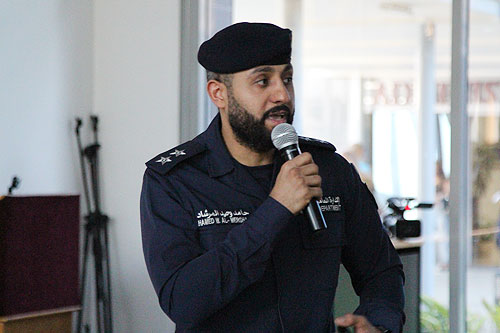
The Fawzia Sultan Educational Company (FAWSEC) and Specialized Solutions recently held a 'Welcome to Kuwait' evening seminar for newly-arrived educators from around the world to welcome them to the country and introduce them to the local customs and culture. Hosted by the American University of Kuwait's Center for Continuing Education (CCE), the event attracted approximately 250 teachers who have recently arrived in Kuwait to teach at local American, Canadian and bilingual schools.
The 'Welcome to Kuwait' seminar was sponsored by Alghanim Industries. During the opening session, Andy Finch, Alghanim Industries' Director of Organizational Development, addressed guests, reiterating the company's long-term commitment to encouraging education initiatives as an integral part of youth development in Kuwait.
The main purpose of the evening was to help recently arrived teachers feel welcome, not only at their individual schools, but also within the Kuwait community at large. "Teachers are such an important part of the daily lives of our children, it is imperative that educators get settled and know how to find everything they need and discover the many activities available to people living in Kuwait," expressed Lynda AbdulRaheem, Professional Development Coordinator from FAWSEC Educational Company.
During the seminar, the new teachers were presented with tips on how to communicate effectively with local students and how to adjust to their new lives in Kuwait. Dr. Susanna Schiulenberg, a counselor at the Soor Center for Professional Therapy & Assessment, advised teachers on ways to deal with the potential 'culture shock' that could be associated with moving to a new country.
In addition to the seminar, a number of local organizations were on-hand to provide information about the wide variety of activities available in Kuwait and the numerous volunteer groups that teachers can join. Representatives from educational companies also interacted with the new teachers and explained their product and service offerings.
FAWSEC, Specialized Solutions, AUK's Center for Continuing Education and Alghanim Industries were pleased to team up to host 'Welcome to Kuwait' for the country's new educators, and look forward to further opportunities to support Kuwait's teachers and students.
About FAWSEC
FAWSEC's mission is to facilitate the attainment of high quality education and wellness in the community through the development and promotion of superior educational and health care programs and facilities. The Professional Development office of FAWSEC is dedicated to providing educational opportunities in Kuwait for teachers, parents and specialists with the intent of enhancing the "best practices" available to children and families living in Kuwait and in the Gulf Region for their education, health and welfare.
About Specialized Solutions
Specialized Solutions is a leading provider of Continuing Professional Development (CPD) to teachers in Kuwait and educational consulting services including curriculum development and teacher evaluation. Since 2010, our expert consultants and instructors have provided ongoing support to a range of educational professionals from a number of schools and universities, both in Kuwait and other Gulf countries. Our participation in "Welcome to Kuwait" coincides with our mission to support all teachers.
About CCE
As well as assisting in organizing such seminars as 'Welcome to Kuwait', the Center for Continuing Education (CCE) at AUK aims to be a contributing member of the local professional community by offering competitive professional training and development opportunities delivered by qualified instructors and experts in various fields. Since 2006, CCE has been offering a range of internationally certified professional development programs in Leadership, Business and Management, TESOL, Languages and Personal Development, including the option to fully customize Business and Leadership programs to meet the needs of the corporate sector.
About Alghanim Industries
Alghanim Industries is one of the largest, privately-owned companies in the Gulf region and is a market leader in almost every major sector of its operations. These sectors include engineering, retail, automotive sales and service, manufacture of insulation and pre-engineered steel building structures, logistics and warehousing, fast moving consumer goods, food & beverage, oil & gas, office automation, advertising, insurance, consumer credit and travel.
The company has consistently been seen as one of the region's best employers, winning a number of major awards. Most recently these awards have included 'Best Employer in the Middle East' from Aon Hewitt for 2009/2010, 'Asia's Best Employer Brand' award for 2010/2011 from the Employer Branding Institute and the World HRD Congress, and the 'Best Corporate Governance - Kuwait' award in 2012 from World Finance magazine.
Released by the Office of Public Affairs on the 29th September 2014
Photography by the Office of Public Affairs (C) 2014
The Contemporary Art Platform (CAP), in collaboration with the Art Salon, is currently holding the 'TALK LOVE...ACT PEACE' exhibition at the CAP location in Shuwaikh, Kuwait. The exhibition supports the Peace One Day initiative, a campaign aimed to promote peace in the region, and encourages emerging and young artists to contribute artwork conveying messages that support peace and love.
Current Graphic Design students at the American University of Kuwait (AUK), Najd Al Taher and Sundos Al Bulushi, former Graphic Design students Aziz Al Mudhaf and Wafaa Al Husaini, in addition to AUK Professors George Bauer, Maryam Hosseinnia and William Andersen are taking part in the exhibit that celebrates global peace. The opening reception took place on September 21, 2014, and was attended by over 600 guests comprising of art enthusiasts, family members and friends of contributing artists, as well as supporters of the cause.
Proceeds from the sale of artwork will be collected to help fund children in Gaza, in collaboration with the Gassan Kanafani Cultural Foundation, and fund Kuwait's Child Rights Association. The exhibition is free and and open to the public Sunday through Thursday from 10am to 8pm or by appointment, and will be ongoing until October 4, 2014.
Released by the Office of Public Affairs on the 28th September 2014
Photography by the Office of Public Affairs (C) 2014