

News
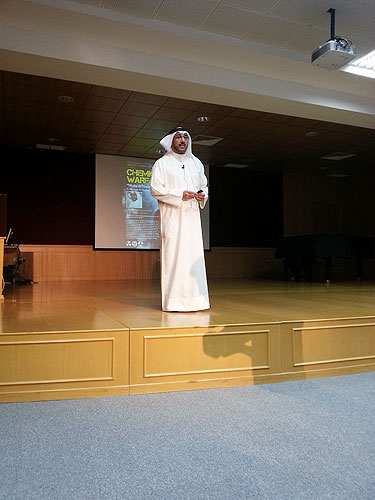
The Department of International Relations at AUK organized a lecture discussing chemical warfare (CWF) and methods of protecting oneself against it. The lecture was held by Dr. Hamad Al-Hasawi, an expert in the field of chemical & biological warfare and an ex-Chemical Warfare Defense Advisor for the Kuwait Ministry of Defense. Dr. Al-Hasawi's lecture came as part of a series of lectures designed to educate the society and bring awareness to the hazards associated with CWF and how to prepare for it.
Chemical Warfare Agents are toxic substances that can pass into the human body through inhalation. An example of those agents is Sarin, a colorless, odorless agent that attacks the nervous system resulting in lung muscle paralysis, eventually leading to death in severe instances. He added that Sarin was most recently in Syria, which caused a high death toll among civilians. Dr. Al Hasawi also listed Cyclosarin, Soman, VX, and Novichoks as examples of chemical agents.
The lecture pointed out that the key danger associated with CWF's is that some are extremely difficult to detect. "It is not like traditional weapons. It is a disguised killer that gets into your system without you noticing it," said Dr. Al Hasawi.
The mass killing nature of CWF generates a lot of fear among civilians, which can lead to panic in cases of attacks. Thus, the purpose of this lecture is to educate the public about CWF to clear the myths and misconceptions associated with it. Dr. Al-Hasawi explained that controlling and treating CWF exposed civilians can tremendously decrease fatality rates "The chances of survival in CWF attacks could be a lot higher than the chances of survival in gunshots," said Dr. Al Hasawi.
The lecture triggered many questions by the audience members who were keen to learn about the ways of protection against CWF, as well as the treatments that can limit its effect. Dr. Al Hasawi explained that special antidotes can limit the effects of CWF if administered quickly to the affected victims. He also assured the attendees that the government of Kuwait has always been taking measures to protect civilians. Shelters, treatments, and protective masks are available for distribution to the public in cases of emergencies. In addition, learning and raising awareness about CWFs can clear any exaggerated misconceptions, and limits panic during emergency situations.
Dr. Al-Hasawi is also an expert in the assessment of chemical and biological warfare protective, monitoring, and decontamination equipment. His expertise includes the design and use of chemical and biological weapons, prediction and control of downwind hazard, the environmental fate of chemical warfare agents, and individual personal protective equipment testing. He has degrees in Chemical Engineering, and Civil Engineering: Water Resources and Environmental Engineering, as well as a Ph.D. in Management and Organizations.
Released by the Office of Public Affairs on the 26th September 2013
Photography by the Office of Public Affairs (C) 2013
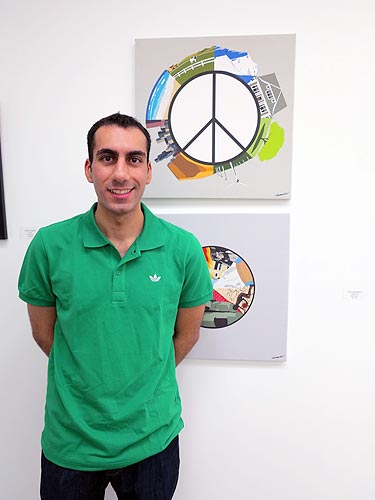
As part of Kuwait's celebration of Global Peace Day, an exhibition entitled 'In the Name of Peace' is showcasing interpretations of 'peace' by local and international artists. The exhibition is being held at the Contemporary Art Platform (CAP) and is featuring pieces by AUK Graphic Design Professors Maryam Hosseinnia and William Andersen, as well as pieces by AUK alumnus Faisal Mohammad.
'In the Name of Peace' was launched on September 15th and will run through to mid-October. Part of the proceeds collected from sold items will be donated to Khair Al-Kuwait, a non-profit foundation devoted to the concept of volunteerism, and Loyac, a non-profit organization working towards the overall development of the youth. The celebration of Global Peace Day also includes live music and activities for children, which will be held at the CAP Kuwait Warehouse on September 21st, starting at 5:30pm, as well as a 'Global Peace Ride' by the Kuwait Riders and Phoenician Riders from Costa Bedai on September 20th at 4:00pm.
The AUK Art and Graphic Department invites you to participate and contribute....in the name of peace.
Released by the Office of Public Affairs on the 19th September 2013
Photography by the Office of Public Affairs (C) 2013
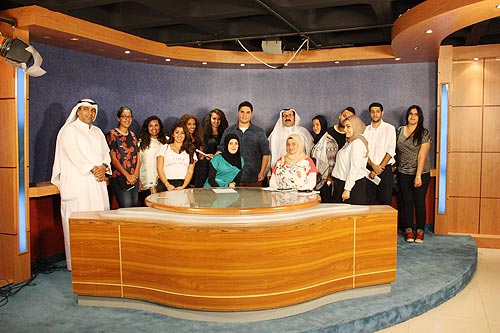
Assistant Professor of Mass Communication & Media at the American University of Kuwait, Dr. Mohammad Akbar, gave his students at the Broadcast Journalism class an opportunity to visit and tour Al-Hadath Studios - a local broadcast studio in Kuwait. During the visit, Mr. Hussein Jamal, the owner of Al-Hadath Studios and Director of the News Department and Political Programs at Kuwait TV, welcomed the students and conducted the tour of the premises while sharing his personal experiences as a journalist.
As part of an applied learning project, the students were given the chance to record a session that they had created inside an actual studio. Students were assigned specific roles to play as a TV crew, such as interviewer, floor manager, director, where they managed the equipment themselves.
Dr. Akbar explained that the students felt comfortable inside the studio. "The students acted professionally and really took the experience in. They put all their energy into creating a full-length live video as a practice for their class", he added.
Released by the Office of Public Affairs on the 28th August 2013
Professor Marcella Kulchitsky, Assistant Professor of Graphic Design at the American University of Kuwait (AUK), has been elected as board member to the inaugural board of the Middle East Design Educators Association (MEDEA).
Founded in 2008, MEDEA serves as an inspirational and information platform for design educators and practitioners in the Middle East. The purpose of MEDEA is the advancement of education by encouraging and supporting excellence in design education and research within the Middle East and being the regional authority on, and advocate for, design education and research.
AUK is very proud of Professor Kulchitsky being elected as board member, and extends its warm congratulations to her.
Released by the Office of Public Affairs on the 4th August 2013
Photography by the Office of Public Affairs (C) 2013
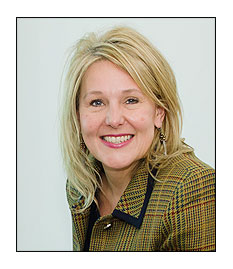
Dr. George Irani, Associate Professor of International Relations, recently published an article entitled Arab World in Throes of a Long-term Change for the Arab Times newspaper (July 19, 2013) which discusses the current state of the Arab world.
Arab World in Throes of a Long-term Change
The Middle East is in upheaval again. Two years ago the uprising that began in Tunis spread across the Arab countries including Egypt, Yemen, Libya, Bahrain, Yemen. This so-called Arab "awakening" or "spring" was interpreted as the dawn of a new era in the Middle East; a period of radical changes resembling the revolutions in Europe in the 17th and 18th centuries. But two years later the Arab world is in the throes of a long-term change that will know moments of calm and moments of bloodshed. If Tunis was a harbinger of a possible democratization of Arab politics the tragic events in Syria portend towards the region's balkanization.
The civil war in Syria could lead to the country's partition into autonomous regions: a Kurdish zone in the northeast; a Sunni-dominated center and here the jury is out as it is not known who will lead this area. The Syrian opposition is fragmented and there is a risk of an internecine fight between moderate and radical jihadi and salafi elements. Bashar al Assad, the embattled Syrian president, will seek refuge back in his Alawi-dominated region in the country's northwest. The Druze community will end up with a zone adjacent to the Golan Heights in the southeast.
The same pattern has emerged in post-US invasion Iraq. The north is under the control of the Kurds who now enjoy full autonomy in their own region and a possible emergence of a long hoped for Kurdistan.
In the center of Iraq the Sunnis are still beleaguered and trying to envision what kind of future awaits them. In Southern Iraq the Shias are predominant and are headed towards an Iranian-supported autonomous area. There is a lot of speculation that the future of the Palestinians may reside in a possible confederation with Jordan as the two-state solution has so far dismally failed.
Lebanon is a failing state. Like humpty dumpty, outside powers try to unsuccessfully patch the country's various communities together. Lebanon is facing a major upheaval in light of the constant influx of Syrian refugees almost one million by early summer. This is a heavy burden for a country of four million inhabitants. Add to that that Lebanon is being slowly sucked into the Syrian maelstrom.
In Egypt the awakening has been painful and uncertain. The Muslim Brotherhood is trying to impose its vision and will on the majority of the population. This attempt is faced by a stiff resistance from the country's intellectual and bourgeois sectors as well as the military. The military will maintain law and order as it has done throughout the country's history. Naguib, Nasser, Sadat and Mubarak emerged from the ranks of Egypt's military.
In the Arabian Gulf the awakening has been less violent with the exception of Bahrain and Yemen. This whole picture predominates the current struggle between the Kingdom of Saudi Arabia and the Islamic Republic of Iran giving to the Arab "spring" a strong sectarian flavor. Tensions between the regions Sunnis and Shias have never been so high. Christians of the Middle East are becoming more and more irrelevant and their fate lies more in decisions taken in the Vatican, Moscow, Paris and Washington.
Beyond the local and regional events major powers are dominating a dangerous game of nations. The United States, the EU, with their regional allies Turkey, Saudi Arabia and Qatar are hoping for a possible fall of the Assad regime in Damascus. Their attempts are hampered by the fragmented nature of the so-called Syrian opposition now made more dangerous by infighting between moderates and extremists. The US and its friends would like to see Assad leave the scene but their efforts are hampered by Putin's Russia, the Islamic Republic of Iran and its regional proxy Hezbollah and to a lesser extent China.
Putin, as the new Russian czar, believes that Russia ought to regain its place as a respected major power, an empire in the making. Furthermore, Russia would like to maintain its access to the Mediterranean that it currently has in the Syrian port of Tartus where more than 1,000 Russians operate with their families. Russia would like to be at the table when borders in the Middle East take a different shape. In 1916, Britain signed a secret agreement with France dividing the Ottoman-Arab territories into colonies and spheres of influence. France took control of Syria and Lebanon while Palestine, Transjordan and Iraq went to the UK. Are we assisting today to a new carving up of the Middle East into US and Russian spheres of influence complemented and assisted by the three non-Arab regional powers: Turkey, Iran and Israel?
The views and opinions expressed in this article are those of the author and do not represent those of the American University of Kuwait.
Released by the Office of Public Affairs on the 22nd July 2013
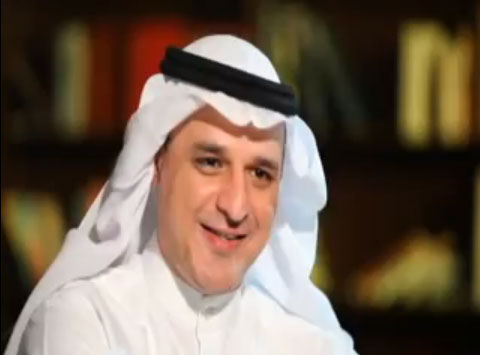
Dr. Hesham Al Awadi, Associate Professor of History and Political Science at AUK was featured a documentary film, entitled Close to the Scene, which focused on the founding of the Gulf Cooperation Council (GCC). The film displayed an overview of the history of the GCC, as well as provided an analytical review of its achievements and performance since its establishment in 1981.
In the documentary, Al Awadi explained that the fact that the majority of the citizens of the GCC countries share one language, one religion, and ethnic background, makes the GCC very strong. He compared that to the European Union, whose citizens come from a wider range of linguistic, religious, and ethnic backgrounds.
The tribal structure of the Gulf societies creates links between families that can be extended beyond geographical boarders, whereby a single tribe could have many family branches based in different countries, says Al Awadi in the documentary, describing the GCC to one body consisting of interconnected veins.
According to Al Awadi, members of the GCC are not capitalizing enough on this natural bond. They seldom come to an agreement on major developmental projects or come up with innovative approaches for improvement. He explained the reason behind this was due to the minimal participation of each country's citizens in the decision making process. "All the decisions are made by the political elites. The voices of those on the streets are not heard in the council," said Al Awadi.
With today's technological advancements, citizens have become well-informed, and highly aware "and can have access to events that the TV cameras may not". This introduces a new potential to include citizens in the decision making process within the GCC.
The European Union has discovered the significant contribution people can make to the overall regional reform. Accordingly, they established the European Parliament as a platform for the people's voice. According to Al Awadi, the GCC needs this kind of revolutionary initiatives that recognize the significant role people can play in political activism and policy change.
The documentary film was produced and aired by Kuwait National and Satellite TV Channel. For the interested reader, the full documentary can be viewed at www.youtube.com/watch?v=nztuIugC0lA
Released by the Office of Public Affairs on the 3rd July 2013
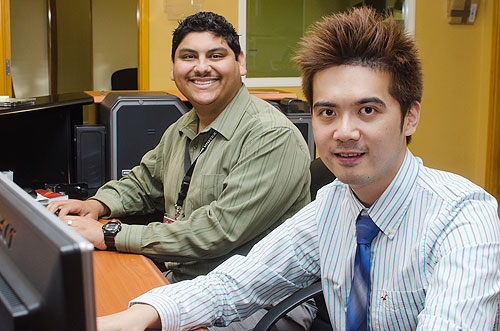
Zongguang (Will) Li and Leo Melena are graduate interns who will be completing their graduate internships at the American University of Kuwait (AUK) this summer. They will be hosted by the Division of Student Affairs, who will offer them opportunities to gain a comprehensive understanding of the skills sought and required within institutes of higher education. Will and Leo are both seeking careers in the field of Student Affairs Administration.
The internship program is designed to provide graduate students, as well as recent graduates, with opportunities to gain an insight of higher education administration, along with exposing them to the specific skill sets required in the area, and to gain relevant experience within the various areas of Student Affairs/Student Services.
Student Affairs, as a field, continues to grow in the Middle East and around the globe. AUK is keen to offer these unique experiences to those seeking careers in the field, and support their academic and professional development.
Going to the US at 18 years old to pursue a degree in Marketing at Ohio State University, Will, who was born and raised in China, explained that a passion for pursuing a career in international education was present in him long before he began attending college. At OSU, he was an active member of the Ohio State University Alumni Association, and the Global Gateway Office. His experience with them led him to opportunities to pursue a career in higher education.
Will is currently a first year master's student in Higher Education and Student Affairs Program at Indiana University Bloomington, where he is undergoing an assistantship with Indiana University's Residential Programs and Services as a Graduate Supervisor in Willkie Residence Center.
During his stay with AUK, Will will be working in the Office of Admissions, and in the Office of the Vice President of Administrative and Student Affairs.
He is positive that his internship with AUK will provide him with an outlook on the implementation of the American model of administration at universities within the region. He is looking forward to interacting with the students, the faculty, and the staff at AUK.
Leo is a graduate student in the Postsecondary Educational Leadership Master's Degree Program at San Diego State University (SDSU). His current educational endeavor in student services started early, when he was a student of Palomar Community College, where he served as Associated Student Government President as well as the Student Trustee on the Board of Governors. After transferring to the University of California, San Diego, he earned a Bachelor of Arts Degree in Political Science in 2005. He is currently serving as the College-Wide Student Services Professional in the Dean's Office for the College of Humanities, Arts, Behavioral and Social Sciences.
In this position, Leo's role is to serve students, faculty and staff of the College by providing leadership, training and analytic expertise, as well as explaining to students their roles as campus community members, as well as what is expected of them and the responsibilities they bear. He is currently the President of the Board of Directors of Los Caballeros De Aventura (Young Adventurers); a local, non-profit organization, working with low-income and disadvantaged youth in the community, and serves as Immediate Past President (distinguished) of the Kiwanis Club of San Marcos.
Leo will be working in the Office of the Registrar, and in the Academic Advising Center. He is enthusiastic about the wisdom he will gain working and living in Kuwait, and how his experiences with his colleagues at AUK will enrich and develop his work in student services.
The Graduate Student Summer Internship Program received the "2011 NASPA Best Practice Award for International Exchange Programs". The selected graduate interns will work primarily with the area director/assistant director in their professional area but will also have the opportunity to work with other professional staff. Interns are expected to work 40 hours a week between a primary placement (30hrs) and a secondary placement (10hrs) from six departments in Student Affairs/Student Services. Students may receive academic credit for the internship if agreed upon between the supervisor and the intern's college or university. The internship runs for a six to eight week period starting early June, working through late July or early August depending on agreeable terms and scheduling needs (start and end dates may be flexible). The program provides the interns with the chance to experience a colorful educational environment where they interact with people from different backgrounds to expand on their academic experiences and encourage them to become international citizens.
Released by the Office of Public Affairs on the 2nd July 2013
Photography by the Office of Public Affairs (C) 2013
The Voice of AUK, AUK's official student newspaper, held its 7th Annual Blood Drive this year. The Kuwait Central Blood Bank set up a location on campus from 10am to 5pm in the Multipurpose Room, where all members of the AUK community we presented with an opportunity to donate blood.
Prior to the event, The Voice of AUK provided a registration booth for two days, in the Liberal Arts building, to encourage members of the AUK community to pre-register to donate blood. Useful information about the donation process was distributed at the booth, such as criteria, tips for a successful donation, and answers to frequently asked. As always, the Kuwait Central Blood Bank was invited to carry out the donations and provided a specialized team of doctors and nurses to ensure a smooth process.
On the day of the Blood Drive, the Multi-purpose room was divided into several areas; a registration booth, where potential donors are required to complete a questionnaire and get registered into the system; a mini-physical test area, where blood tests were conducted by the Blood Bank staff to certify whether an individual's blood is at the right hemoglobin level and thus determining final eligibility as well as their blood pressure levels; and the actual blood donation area. A segregated area for donating blood was made available to provide those who asked for privacy feel comfortable. Additionally, refreshments were available to donors to help revitalize themselves after the donation was complete, as some may experience drowsiness afterwards. Copies of the latest issue of the Voice of AUK issue were available for the donors to read while they were donating.
The idea of holding a blood drive was originally conceived 7 years ago by the AUK alumna, Dina El Zohairy, to raise awareness among the community about the importance of donating blood to help make it readily available for cancer, trauma and post-surgical patients, wherever blood was needed.
The Voice of AUK board members found the blood donation drive an excellent opportunity to recruit students as Voice members, particularly writers, and to increase the organization's visibility on-campus and promote readership.
The Voice of AUK is the university's official student newspaper, operated exclusively by a student board in consultation with an AUK staff advisor. Issues are produced monthly and contain diverse sections such as News, Arts, Health & Science, Opinions/Editorials, and an Arabic Corner.
Released by the Office of Public Affairs on the 20th June 2013
Photography by the Office of Public Affairs (C) 2013
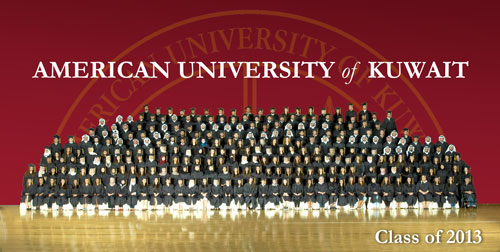
"My message to you today is a simple one. Have a plan for your life, but be alert to new opportunities as they arise and be open to altering your path. And then, most importantly, be mindful that your successes are seldom, if ever, solely your own. Be aware of the role that others play in your success, and thank them. And, be sure to call your parents," said the American University of Kuwait (AUK) Interim President and Provost, Dr. Nizar Hamzeh in the AUK 2013 Commencement Ceremony held on June 13th at the Kuwait International Fairgrounds (KIF).
Graduation 2013: Photo Gallery
The ceremony, which celebrated the graduation of 350 students, was attended by the AUK Chair of the Board of Trustees Shaikha Dana N. Al-Sabah, board members, parents and families, and numerous dignitaries and diplomats. The keynote address of the commencement was delivered by Dr. Dale F. Eickelman, Ralph & Richard Lazarus Professor of Anthropology & Human Relations, Chair of the Department of Anthropology at Dartmouth College, and Dartmouth-AUK Program Relationship Coordinator.
After the Kuwait national anthem and a recitation of the Holy Quran, the event commenced with the student processional, long awaited by the parents and families. Led by the AUK President's party, deans, and faculty members, the graduating class marched through the central aisle of the hall in a ceremonial atmosphere marking the official start of the event.
Delivering his opening speech to hundreds of students, parents, and guests, Interim President Hamzeh urged the graduating class to use their education wisely, believe in the future, and pay gratitude to those who contributed to their success. "As you walk the stage out into the world, I hope you will carry forward the spirit of AUK and the liberal arts education you have received. The future is now in your hands," Said Dr. Hamzeh "For our faculty and staff, this is a day of accomplishment, of knowing you have mentored tomorrow's leaders. And we thank you for your hard work and dedication."
The keynote speaker, Dr. Eickelman, was next invited to the podium, where he spoke to the graduating class about the value of liberal arts education, referring to the historical background of the liberal arts philosophy that contributed to America's "unprecedented growth and expansion" in the early 20th century. "In a like manner to the US, Kuwait entered a period of massive and rapid growth-including in education-since the mid-20th century. Training in the liberal arts and critical thinking, analyzing the unexpected and assessing alternative solutions, offers a critical edge in thinking and acting in both local and global environments," said Dr. Dr. Eickelman.
Vice President for Student Affairs Dr. Carol Ross-Scott then introduced the Class of 2013 Valedictorians, Huda Al-Rashid and Nada El-Badry who have earned a cumulative grade point average of 4.0 Summa Cum Laude (with the greatest honor). On behalf of the valedictorians and the Class of 2013, Al-Rashid delivered a speech calling on her fellow graduates to be "altruistically compassionate," to "treasure the gift of knowledge," and to use it "for passionate innovation and enthusiastic development."
The event proceeded with the main highlight of the ceremony, where the graduates walked on stage to receive their degrees, greeted with cheers and applause of families and friends. Interim Dean of the College of Arts and Sciences Dr. Rawda Awwad recommended the conferral of degrees for the graduates of the College of Arts & Sciences, while Dean of the College of Business and Economics, Dr. Doug Munro recommended the conferral of degrees for the graduates of the College of Business and Economy, to Interim President Hamzeh, who then conferred upon the 350 graduates their respective degrees. Graduates were then awarded their bachelor's degree diplomas by Dr. Hamzeh, Dr. Doug Munro and Dr. Rawda Awwad.
In keeping with the academic tradition, the graduates were then asked to move their tassels from right to left, thereby marking their official graduation from AUK. As the ceremony drew to a close, the graduating class celebrated the traditional cutting of the Class of 2013 cake, and took photos with their families and friends.
The AUK 2013 Commencement coincides with important milestones in the history of AUK as it overlaps with the 10th Anniversary of AUK and the renewal of the Memorandum of Understanding between AUK and Dartmouth College, the USA affiliate of AUK. Building on its academic excellence and leadership, the American University of Kuwait has introduced academic expansion plans for the year 2013-2014, including the initiation of an academic degree in Electronic Engineering.
Released by the Office of Public Affairs on the 13th June 2013
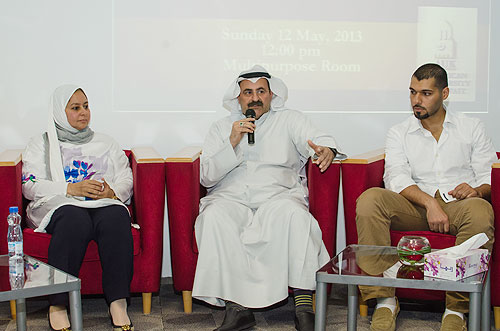
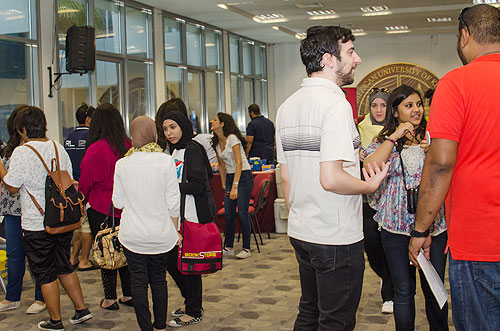
The Media and Communication department (COMM) at the American University of Kuwait held a media forum in May to showcase the achievements of AUK COMM students in advertising and production. The Media Forum hosted experts in the field of media and communication, including Marina FM Announcers, Osama Fouda and Mohammad Dughaishem, in addition to two young successful directors and AUK Alumni, Mubarak Al-Mubarak & Ali Hayati.
The forum started with a welcome note by Dr. Mohammad Akbar, Assistant Professor of Communication at AUK, acknowledging the guests and pointing out the role of media education in contributing to the professional field of TV production. Dr. Akbar gave an example of Mubarak Al-Mubarak, an AUK alumnus who pursued a career in his field of study and now became a successful TV producer. Adding to Dr. Akbar's note, Dr. Iqbal Al Hadad, Assistant Professor of Communication at AUK addressed the students, stressing that education is just the first step towards a successful career in media. "Practice is the real challenge to reach your objective," said Al Hadad "You can start from nothing and reach your goals if you manage to surpass the great challenges of life. Good examples are Mohammad Dughaishem and Osama Fouda who have been striving to reach their goals," she continued.
During the forum, Al Mubarak presented his own production of commercials and talked about how it was like to start his own advertising company and how successful it has become today competing on an international level. Hayati, on the other hand, talked about how the AUK advertising classes supported his career in the field of media communication. Hayati and Al Mubarak currently collaborate on many advertising productions.
Dughaishem, for his part, decided to engage the student audience in the discussion through asking them about their hobbies and interests. According to Dughaishem, hobbies and interests could shape one's goals in life. When he was in high school, Dughaishem remembers, his main interest was in the field of radio anchoring, which was not much appreciated by his peers back then. Nevertheless, he insisted to pursue his dream. By the time he went to college, he was a full-time student and had two jobs, one of which was a radio anchor. His busy schedule affected his social life, but at least, he achieved his goals.
Fouda's story was different as he started in Lebanon, struggling with distance, work, and family impediments until he ended up working in Dubai in the field of dubbing. Looking for a better career move, Fouda came to Kuawit, where he started as a mixerman in Marina FM radio station. He advanced in his career till he became today one of the Marina FM stars awaited by a large audience every day.
The Media Forum was concluded by voting for the best student 3D ad, video ad, and short movie. The audience was actively involved in the voting process.
According to the student audience and participants, the Media Forum has been a very successful ending for the busy semester of the COMM students. The guest speakers provided insightful success stories that gave the students support and assurance about the career prospects of the COMM majors.
Released by the Office of Public Affairs on the 10th June 2013
Photography by the Office of Public Affairs (C) 2013