


News
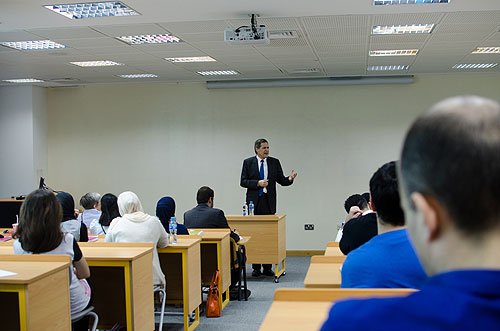
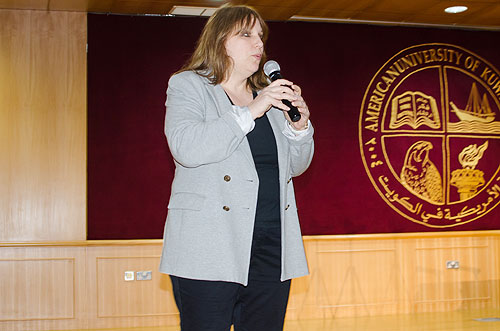
U.S. Ambassador Matthew Tueller visited the American University of Kuwait (AUK) on April 11th, 2013, to give a special lecture entitled, "Hamlet, Diplomacy, and Political Interpretations of Shakespeare" to an upper level English class at AUK. Students of the class gathered with other interested faculty, staff, and students to bring the attendance to 70 people.
The class (English 307) is taught by Assistant Professor of English James Lambert, and focuses on the works of William Shakespeare, covering multiple sonnets, comedies, and tragedies. Professor Lambert described himself and his two Shakespeare classes as feeling, "honored that the ambassador has chosen to speak to us about the importance of literature in international diplomacy."
The lecture and Q&A session was held in the Liberal Arts building on AUK's campus from 3:30 to 4:45pm. Ambassador Tueller began by discussing the choices of various central characters in the novel - Hamlet and Claudius among them - and how these choices can serve as examples of difficult decisions one must make as a leader. In the discussion of the benefits and drawbacks of the various choices made in Hamlet, Ambassador Tueller likened this weighing of pros and cons to international decision - making in today's world, and asked the audience to consider the idea that Hamlet, a book written hundreds of years ago, is still very relevant in today's complicated world.
The Q&A session was an opportunity for students, faculty, and staff in attendance to ask Ambassador Tueller a variety of questions related to literature in general, Shakespeare, Hamlet, and international diplomacy in the modern world. The students were clearly excited about this opportunity: hands shot up around the room, and questions on many topics were asked, including one about Ambassador Tueller's experience playing the role of Hamlet on the stage! One particularly inspired student asked what would be a good book to get someone (her brother) excited about reading; she wanted him to be able to take the same joy in books that she does. The Ambassador suggested Ender's Game, by American author Orson Scott Card, as a particularly compelling novel that might teach a love of reading to a young man.
Released by the Office of Public Affairs on the 24th April 2013
Photography by the Office of Public Affairs (C) 2013
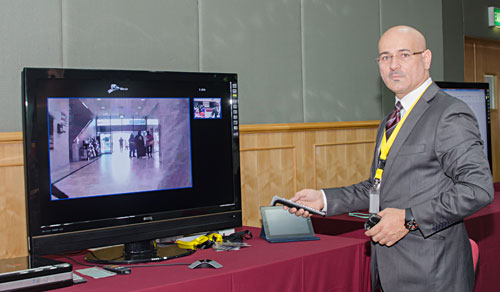
The Information Technology Department at the American University of Kuwait (AUK) presented its first technology exhibition at AUK on April 10, 2013.
The exhibition was held in the AUK Auditorium, whereby AUK's IT experts demonstrated various new technologies. It provided a great opportunity for AUK staff, faculty, and students to experience and discuss current technological developments and innovative software. IT experts provided recommendations on how to utilize the various devices available at AUK.
Several technologies were shown ranging from the Apple TV to animation software to desktop video teleconferencing. Other devices included a multifunction print device, smart note books, interactive whiteboards, and wireless capabilities. A small showcase of computer antiques, such as old floppy discs, was featured as well, reminding us that not too long ago these technologies were deemed cutting edge.
The goal of the IT exhibition was to provide a space to reveal the possibilities and implications of technology on learning. Technology has no doubt transformed and improved various aspects of our lives. Education at AUK has yet to fully embrace these rapid transformational benefits, which can reflect on the process of knowledge transfer among faculty and students. One of these is enhancing the learning environment through more vivid and interactive classroom presentations.
As the exhibition came to an end, an exciting raffle draw took place which was a great crowd attractor. The winner received an Ipad Mini and a monetary prize of 100 KD.
Released by the Office of Public Affairs on the 11th April 2013
Photography by the Office of Public Affairs (C) 2013
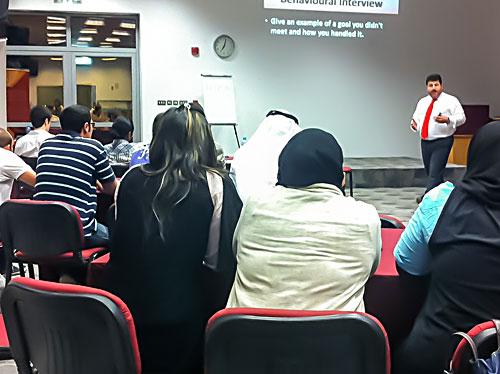
The Career Services and Wellness Center, part of Student Affairs at the American University of Kuwait (AUK), held a two day professional skills workshop for students on March 31st and April 1st. The two workshops - the first on presentation skills and the second on interview skills - were designed to help students become effective presenters and standout candidates in interviews. The two-day program was the most recent example of effective programming by the AUK Career Services and Wellness Center designed to help prepare students for professional life after university.
The first workshop, held on Sunday, March 31, was a presentation skills workshop developed and presented by Imad Mirza, Development and Training Manager, CPM (Certified Professional Manager). The workshop, held from 4-7:30pm, was popular amongst students, with 30 students engaged in learning how to become more effective presenters themselves. At the end of the workshop, they left with a certificate confirming their attendance, and a CD that included the presentation given, all the material covered, and various tools, assessments, and references needed to create their own presentations.
The second seminar, held on Monday, April 1, was also hosted by Mirza, and focused on honing students' interview skills. Turnout was high once again, with 31 students attending and completing the training. This seminar included an interactive role-playing component, where students could practice what skills they learned during the lecture, and drill each other with questions during mock interviews. These skills included learning how to impress the interviewer, and how to be a standout and memorable candidate by being honest, confident, clear and composed. Again, students were able to leave with a certificate of completion and a CD of digital resources, including all the material covered in the seminar and tips and tricks for succeeding in job interviews.
High student attendance at the two day event evidences the preparations and efforts AUK students are making in order to be successful after university, and their desire to thrive in the professional world.
The Career Services and Wellness Center (CSW) aims to promote wellness education, serve as a resource for students, staff and faculty, and provide counseling for students and alumni. Counseling follows American Counseling Association (ACA) standards which require confidentiality between client and counselor. Career services provide career counseling, professional trainings, and job readiness. Personal counseling addresses a wide range of academic, personal and social concerns. Disability services offer reasonable accommodations and assistance for students. The CSW is committed to help students learn, think and become...
Released by the Office of Public Affairs on the 11th April 2013
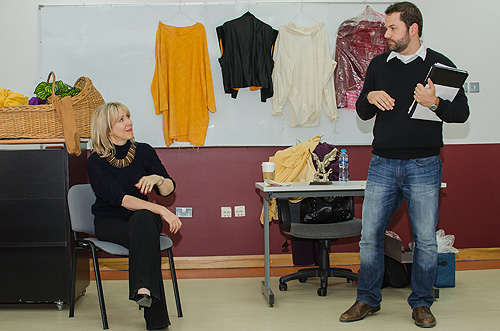
As part of his Shakespeare class, Dr. James Lambert, Assistant Professor of English at AUK, provided the students with hands-on experience in theatre techniques and acting skills by offering them an opportunity to participate in the "Julius Caesar" play performed at the British Embassy earlier in March.
Dr. Lambert's Shakespeare students took a large role in putting together the main evening of the "Julius Caesar" play. They presented their class projects to the audience, they prepared and served Shakespearean era food, and they created and distributed programs for "Julius Caesar" with information on both the play and Shakespeare. Most excitingly, the students had the opportunity to participate in the play themselves as citizens of Rome, and in doing so, greatly increased the number of these citizens on stage, which improved the play tremendously in the eyes of the audience.
"The students planned, prepared, and executed these projects totally on their own. Although I oversaw the assignment itself, all the work was from them. Because of this, some of the students found this to be one of the most rewarding experiences of their college lives." Dr. Lambert commented "I received countless comments from the attendees about the depth of knowledge, enthusiasm, professionalism, and creativity of the students. After all, just imagine walking into the British Embassy, being immediately greeted by five men in authentic Roman garb talking about Roman honor, then being welcomed by "Roman actors," then entering into a festival of food, costumes, paintings, documentaries, and architecture, all put on by AUK students for this class. And this was all before the actual performance began."
Prior to the "Julius Caesar" evening, Dr. Lambert invited Alison Shan Price, Director of One World organization, to give the students a better understanding of Shakespeare's plays and writing style. Price energized the class with a few acting exercises meant to personally involve them in the creation of theatre. Students made their own Roman costumes out of bed sheets and worked on other Shakespeare- themed activities. They also discussed their class projects that they presented at the British Embassy on the three nights of the "Julius Caesar" play.
Price explained how William Shakespeare wrote his plays, saying that Shakespeare always used history to inspire his works. According to Price, as history tends to follow patterns, the presentation of Shakespeare's "Julius Caesar" at the British Embassy was reflective not only of ancient history, but also the current "Arab Spring" conflict.
According to Dr. Lambert, the students benefitted by carrying out their own research about Roman politics, Shakespearean culture, and performance history in Kuwait, and One World benefitted by having a group of enthusiastic resident scholars to prepare the audience for the show. "It turned out to be an excellent service learning opportunity that, I think, represented well the kind of students we have at AUK.", said Dr. Lambert
"ONE WORLD" is an organization with "multi-cultural artists, performers and designers creating a work of art to present a professional performance" to their audience. They "introduce and sponsor new multi-cultural artistic talent in the entertainment industry. All nationalities are in harmony creating a work of art." Most of their actors are international youth, who teach local actors their skills in acting.
Released by the Office of Public Affairs on the 10th April 2013
Photography by the Office of Public Affairs (C) 2013
Establishing a presence in the global market place is challenging, especially with the rise of different expertise, means and technologies that facilitate competition. The Human Resources Department plays a crucial role in setting a company's strategies and facilitating a company's growth and achievements. Therefore, it is important to ensure that Human Resources textbooks reflect case studies that are relevant to all regions. Dr. Dmytro Roman Kulchitsky, Assistant Professor of International Relations at the American University of Kuwait (AUK), attempts to do just that.
In his latest contribution to the Human Resource Management textbook published by Pearson Education, 2012, Dr. Kulchitsky uses KAMCO and KIPCO as a case study representative of the GCC region.
Dr. Kulchitsky began as a peer reviewer of the Human Resource Management textbook by Gary Dessler and Akram Al Ariss, where he provided numerous ideas and feedback. He also pointed out some of the strengths and weaknesses to be noted as part of his peer review. In an attempt to readapt the textbook to fit the learning needs of students in the Arab World, Dr. Kulchitsky was asked to contribute to the textbook with case studies, examples and stories, which are unique and relevant to the region, and here is where his model, KAMCO, was introduced.
KAMCO, an asset management company, is a local Kuwaiti company, whose success along with their relevance in the region makes them an ideal candidate as a case study. As a representative of the region, KAMCO's inclusion in the Human Resource Management textbook will make it more comprehensive and more relatable to students from the Arab world, thereby enhancing the learning experience.
His contribution focused more on using KAMCO as a running case, providing different case studies, which are relevant to the different chapters in the textbook. KAMCO was mainly used as an example of a company that implements high performance human resource management practices here in Kuwait. As a result, the cases show how KAMCO's HR department is using current concepts and techniques to create a human resource management system that helps the company achieve its strategic objectives
Dr. Kulchitsky's contribution is an important addition to the field of Business and Economics, as it puts more emphasis on the techniques and methodologies adapted to achieve a high performance approach.
In order for other companies to succeed, Dr. Kulchitsky emphasizes the importance of looking at other's experience and to learn from them. However, he adds that looking at how the company operate is "not a recipe for success, but a compass that can be used to navigate" in the market and be successful. Quoting one of his favorite economists, Ludwig Lachmann, who said, "The future is unknowable, but not unimaginable," Dr. Kulchitsky added, the future can be imagined and predicted but not with 100 percent certainty.
Dr. Kulchitsky was happy to be given the opportunity to make this contribution, emphasizing the importance of the use of real life experiences in textbooks. "That real life event is supposed to trigger a thought in the student that helps them better understand the concept they are learning," continued Dr. Kulchitsky. From Pearson's point of view, it is not just about selling textbooks, but selling textbooks that enable learning.
This contribution was made possible by KAMCO's willingness to participate and share information, said Kulchitsky. More specifically, he emphasized that the participation of KIPCO's Group HR & Admin Officer, Mr. Khaled Al Sharrad, and Senior Vice President at KAMCO's HRMD & Admin Department, Mr. Farouq Al Oumi, led to the success of the study. Equally important, he added, the support of Ms. Amal Bin Ali, Vice President for Admissions and Public Affairs at AUK, throughout the entire project made the initiative possible.
Commenting on the selection of KIPCO and KAMCO as case studies, KIPCO Group Chief Operating Officer, Mr. Samer Khanachet said, "KIPCO's experience in managing its human resources has helped the Group continue to grow even during economic difficulties. We are delighted to be sharing this experience with tomorrow's business leaders and to be contributing to their learning process."
Released by the Office of Public Affairs on the 10th April 2013
Photography by the Office of Public Affairs (C) 2013
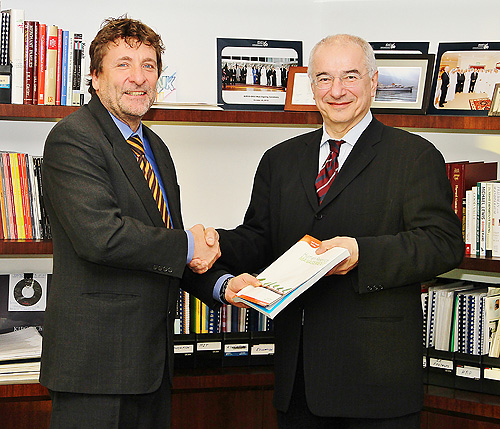
The 8th Annual International Week at the American University of Kuwait (AUK) was a great success among students, faculty and staff, with several events being held on March 24, 25, and 26, in celebration of the diversity of nationalities that are present at the university and in Kuwait.
International Week is organized each year by the Office of Student Life, which seeks to promote the social engagement and welfare of the students...and to enhance global and social awareness. Student Life strive[s] to engage students in creating a positive attitude towards self, the community, and the world. International Week, then, has become a space to bring these ideals of global and social awareness into existence through a variety of cultural activities and events that foster international understanding and multiculturalism.
The first day of International Week kicked off with the commencement of a two-day Sporcle Country Quiz, which tested students' knowledge of different countries around the world, and their food, language, custom, and culture through an exciting and fast paced computer game. The day continued with an "Amazing Race" modeled after the American television show, with students racing around "the world," or the campus, to answer questions and complete challenges about different countries and continents. The first day also included the kickoff of a three-day soccer tournament designed to get students moving and competing to be in the finals. The Indian street food booth helped energize event participants throughout the day with a sampling of tacos and other Indian "street foods."
Day two of the festivities was predominated by the global diwaniya, which was held outside and included an Arabic barbeque, a face painting stand where students could get different flags painted on their faces, and a henna booth. At night, students and faculty had the opportunity to listen to a lecture and panel discussion organized by the International Relations Club, entitled "Obstacles Facing Human Rights." Through their discussion, the panelists - Maryam Shah, a human rights activist; Bibi Al-Sabah, a representative of the Social Work Society of Kuwait; and Mariam Al Khawaja, the acting president of the Bahrain Center for Human Rights - helped attendees consider how they themselves play a role in creating a world where essential human rights are accessible to all.
Photo from the Amazing Race
The final day of multicultural celebration at AUK began with a "Global Village" set up in the main corridor of AUK's campus. There, students worked at tables and booths that represented their nations' cultures - from clothes to food to books to music, students beautifully presented mini cultural showcases of what they find to be the cultural gems of their respective countries. Pakistan won the prize for best student booth based on the students' knowledge of the country, culture, history, etc. as well as their ability to relate their depiction of their country (based on what was on their table) to how they viewed their country.
The Parade of Nations was also a highlight of this last day, as students proudly carried the flags of various countries in a celebratory parade around campus. Students could choose to carry the flag of a nation with which they personally identified, or that of any other nation. This parade culminated in the cultural showcase; as the capstone of the week, the cultural showcase presented the AUK community with performances by students, faculty, and staff meant to show off particular cultures and nationalities. Armenia, Palestine, Syria, Pakistan and Egypt were all represented in this final event.
International Week also included Iranian students' celebration of the Persian New Year "Norooz", which marks the arrival of the spring season. The name "Norooz" denotes "New Day," referring to a new start to the year. Students arranged a decorative table displaying seven specific "Haft Seen" items, a symbolic illustration of the celebration. The Haft Seen table included items starting with the letter "S," and each item corresponded to a specific meaning, such as rebirth, affluence, love, medicine, beauty and health, sunrise, old-age and patience. The ritual is generally celebrated on the day of the astronomical Northward equinox, which usually falls on March 21st. At the moment the sun crosses the celestial equator, night and day become of approximately equal length, signaling the start of spring and the New Year.
Clearly, a variety of events and activities meant to promote multicultural understanding and internationalism took place during AUK's 8th Annual International Week, and the programming was certainly considered a success by the faculty, staff, and students who took part in it. The flags representing the nations of AUK students - 46 in all - served as an excellent symbol of the level of diversity on AUK's campus, and the fun festivities of the week also reminded the community how privileged it is to have such a level of diversity and multiculturalism within it.
Released by the Office of Public Affairs on the 3rd April 2013
Photography by the Office of Public Affairs (C) 2013
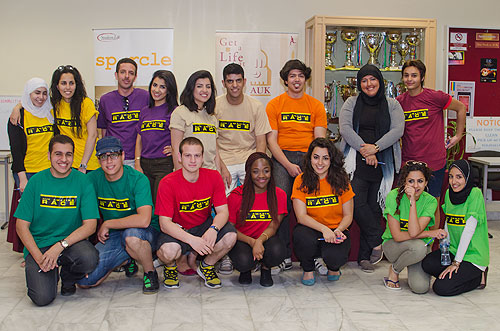
The American University of Kuwait Library showed a film screening of the documentary titled "Gates of Heaven: At the Thresholds". Directed by Mr. Farouq Abdulaziz, the film explores the compatibility of verses from the Holy Quran with modern science, by examining the similarities between them. The film was premiered in the IMAX theatre at the Scientific Center of Kuwait.
Prior to showing the film, Abdulaziz gave an introductory word highlighting the theme of the film and the idea behind creating it. According to Abdulaziz, the film intends to give an analysis of the sacred text in the light of scientific discoveries such as the Big Bang and expansion of the universe. After two years' worth of research, Abdulaziz attempted to understand the meaning of the words in the Holy Quran and its interpretations in order to explore science-related verses. Based on the documentary, the Big Bang theory goes in line with how the Holy Quran describes the origin of the universe "Do not the Unbelievers see that the heavens and the earth were joined together (as one Unit of Creation), before we clove them asunder?" 21:30.
Through his documentary, Abdulaziz aims to demystify theological beliefs and finds that certain verses allude to scientific discoveries. As humans we are driven by curiosity, and there is a great impetus to discover and question our existence and place in the universe. Farouq stressed that it is important to "believe correctly, what you choose to belief."
Released by the Office of Public Affairs on the 3rd April 2013
Photography by the Office of Public Affairs (C) 2013
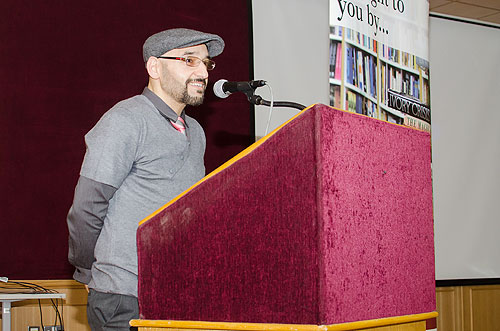
For the 9th consecutive year, the American University of Kuwait (AUK) is participating as a sponsor and exhibitor in EDUCAREER 2013. This year, AUK is the sole platinum sponsor of the education section of the exhibition, marking the event as an important one each year in the growth of AUK as an integral part of Kuwait's private education sector. The annual education and career development exhibition will be held at the Mishref Kuwait International Fair (KIF) fairgrounds from April 8-11, 2013.
The AUK booth at EDUCAREER 2013 has historically drawn a wide range of visitors including recent school graduates, parents, young professionals, and local media. AUK President, Dr. Winfred Thompson, the Vice President for Administrative and Student Affairs, Dr. Carol Ross-Scott, and Vice President for Admissions and Public Affairs, Amal Al-Binali, will be present at the event to welcome the patron Mr. Mohammed Hamad Al Roumi, Undersecretary of the Civil Service Commission, who will inaugurate the exhibition.
The AUK Admissions team will be present to meet with prospective students and visitors and respond to inquiries about the admissions process, campus life, and the different academic programs available at the University. In addition, representatives from the Center for Continuing Education (CCE) at AUK will be on hand to speak with visitors about the extensive catalog of courses and programs the university offers. Staff from the Intensive English Program (IEP), which prepares non-native English speakers for the academic tasks required of them in their first and successive years of university education, will also be available to discuss their department and its offerings.
The exhibition will be held in hall number (6) and is open to visitors at the following hours:
Morning hours: 9:30am to 1:00pm
Evening hours: 5:00pm to 9:00pm
Released by the Office of Public Affairs on the 3rd April 2013
Photography by the Office of Public Affairs (C) 2013
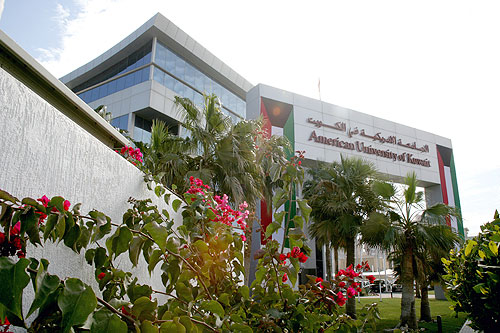
The faculty recital entitled "My Favorite Things," held at the American University of Kuwait (AUK) on March 20th featured critically acclaimed AUK Assistant Professor of Music Stephanie Shih-yu Cheng on the newly acquired Yamaha C7XPE grand piano.
The concert was Dr. Cheng's debut performance in Kuwait after she joined the AUK music faculty in the fall of 2012. Dr. Cheng commenced the recital for the faculty with Bach's Prelude in B minor, and subsequently played Mozart's Twelve Variations on "Ah, vous dirai-je, Maman," before moving to Chopin's iconic Nocturne, Op.9 No. 2, Debussy's famous Claire de Lune, Liszt's Liebestraume, No. 3, Rodgers' "My Favorite Things" from The Sound of Music, and finally Moszkowski's Caprice Espagnol, Op. 37.
This semester's recital was met with particular success; the auditorium was near capacity, the musical selection was popular with the audience, and Dr. Cheng's talent on the piano was recognized and appreciated. Previously, Dr. Cheng has performed around the world in renowned locales including but not limited to Carnegie Hall in New York City, the National Concert Hall of Taipei, and the Opera City Hall of Tokyo. Her critics have referred to her performances as "memorable and sumptuous affairs" (New York Concert Review) and "fearless, with a graceful ease" (Courier-Post).
Before arriving at AUK, Dr. Cheng was on the faculty of City University of New York, and Manhattan School of Music. Her most recent CD, a collaborative effort entitled License to Thrill, was released by Summit on March 12, 2013. More information about Dr. Cheng and her musical offerings are available at www.stephanie-cheng.com.
The Department of Music and Drama at AUK offers a wide range of opportunities for both beginning and advanced students within the context of a liberal arts education. The Music and Drama faculty of talented professionals work closely with students to prepare them for campus concerts and plays, and to academically challenge them in performing arts courses. The department fosters artistic proficiency, cultural appreciation, a sense of community, and a lifelong commitment to the arts.
Released by the Office of Public Affairs on the 1st April 2013
Photography by the Office of Public Affairs (C) 2013
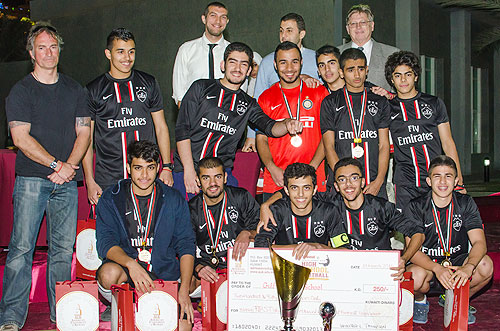
The Office of Admissions at the American University of Kuwait (AUK) held its 3rd Annual High school Football Tournament (HSFT). This year, nine schools participated with their boys and girls teams. The four finalists were The English Academy, The American School of Kuwait, Gulf English School (GES), and Lycée Français de Koweït (LFK).
For the second consecutive year, the GES boys team was crowned the champion of the 3rd Annual Football Tournament. Also winning the tournament for the second year in a row was the ASK girls team.
Sponsored by the AUK Office of Admissions, the Football Tournament is held annually to engage High school students in different activities, and to provide a venue to promote healthy competition among students. According to Maher Dabbouseh, Director of Admissions at AUK, the purpose of such activities is to encourage youngsters to compete against one another in friendly matches while touching base with the "lively, active, and diverse environment of AUK."
The final award ceremony was held on March 19th, whereby the champions of the tournament and the title winners were recognized. AUK President, Dr. Winfred Thompson, was present in the awards ceremony to hand trophies and medals to the winning teams.
This year, the boys title winners included; Rabiea Al-Jerbi, from ASK, as the "Golden Boot" awardee after scoring 10 Goals in the tournament; Sulaiman Al-Attar, from GES, as the "Most Valuable Player"; and Haydar Dashti, from GES, as the "Best Goal Keeper" by conceding 3 goals only through-out the whole tournament. From the girl teams; Emily Halal, from ASK, came as the "Golden Boot" awardee; "Racil Hammine", from LFK, as the "Most Valuable Player"; and Deemah Al-Selmi, from ASK, as the "Best Goalkeeper" by conceding only one goal throughout the whole tournament.
Released by the Office of Public Affairs on the 28th March 2013
Photography by the Office of Public Affairs (C) 2013