

News
12, May 2010
Former Indian Minister lectures at AUK
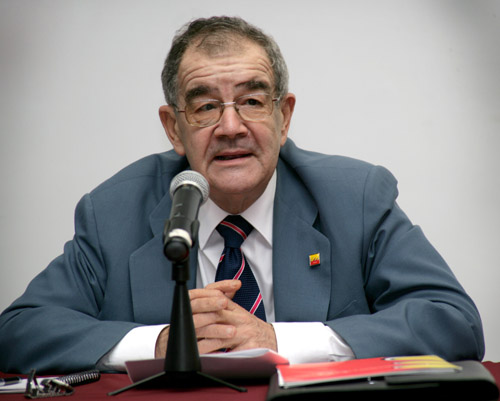
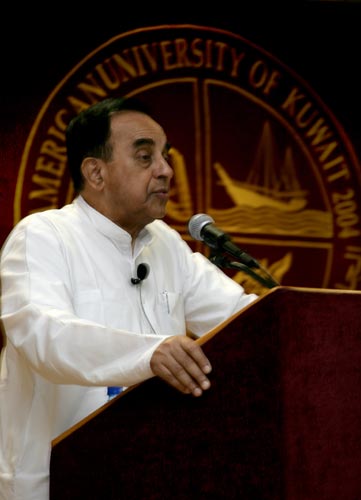
Dr. Subramanian Swamy Ph.D (Harvard), former Cabinet Minister of Commerce in India and prominent Harvard scholar delivered two lectures at the American University of Kuwait (AUK) on May 6, 2010.
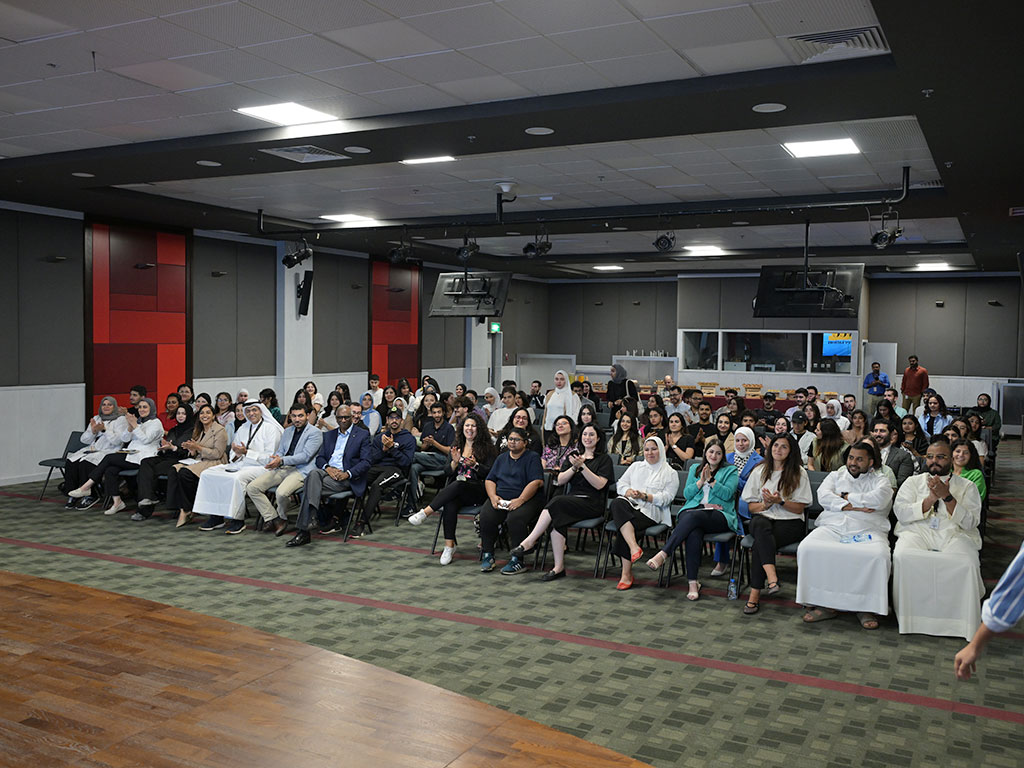
The first lecture hosted by the Division of Business and Economics and Gulf Studies Center at AUK, was titled "Globalization and Financial Disorder: Was the Global Financial Crisis Inevitable?" Dr. Swamy emphasized that globalization is both inevitable and irresistible. He suggested that the global economy needs a financial architecture consisting of prudent norms, institutions to enforce the norms, transparency, and governance rules. He made an interesting reference about the World Bank's publication titled "The East Asia Miracle" that praised the East Asian Economies for having got their "basics right" and later publishing the article, "Rethinking East Asia's Miracle" after the 1997 financial crisis. He concluded that even with healthy macroeconomic fundamentals, financial crises is inevitable if there is a policy mismatch such as the "unholy policy trinity". Many AUK professors and students attended the lecture.
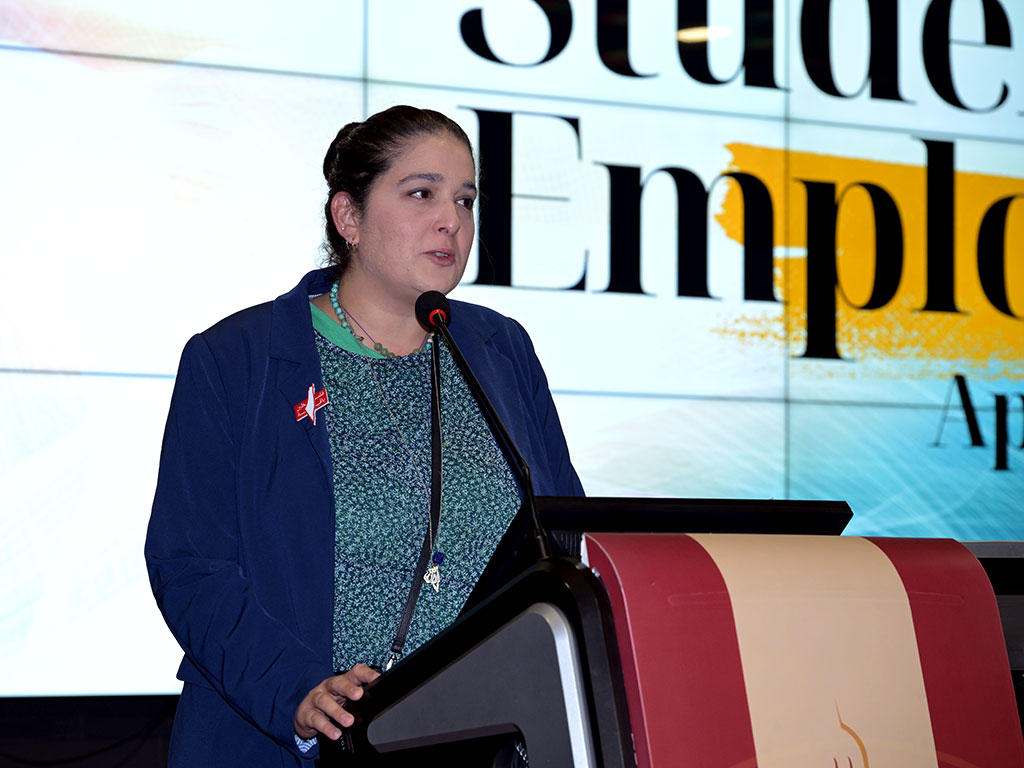
The second lecture, titled "India's Role in the Asian Framework" was organized by the Kuwait Chapter of the Institute of Chartered Accountants of India in association with AUK's Finance Department. Dr. Swamy insisted that if India has to play a leading role in the Asian economic arena, then it has to improve its relationship with China as well as other East Asian countries. Dr. Swamy explained the need for bringing major structural changes in Indian agriculture in order to benefit from its capability to cultivate all through the year as opposed to other countries where the cultivation is limited to certain seasons of the year. Mr. M S Mathew, Chairman of the Kuwait Chapter presided over the lecture. Dr. Swamy presented a memento to the secretary of the Kuwait Chapter, Mr. Sriram Goplakrishan.
The first lecture hosted by the Division of Business and Economics and Gulf Studies Center at AUK, was titled "Globalization and Financial Disorder: Was the Global Financial Crisis Inevitable?" Dr. Swamy emphasized that globalization is both inevitable and irresistible. He suggested that the global economy needs a financial architecture consisting of prudent norms, institutions to enforce the norms, transparency, and governance rules. He made an interesting reference about the World Bank's publication titled "The East Asia Miracle" that praised the East Asian Economies for having got their "basics right" and later publishing the article, "Rethinking East Asia's Miracle" after the 1997 financial crisis. He concluded that even with healthy macroeconomic fundamentals, financial crises is inevitable if there is a policy mismatch such as the "unholy policy trinity". Many AUK professors and students attended the lecture.
The second lecture, titled "India's Role in the Asian Framework" was organized by the Kuwait Chapter of the Institute of Chartered Accountants of India in association with AUK's Finance Department. Dr. Swamy insisted that if India has to play a leading role in the Asian economic arena, then it has to improve its relationship with China as well as other East Asian countries. Dr. Swamy explained the need for bringing major structural changes in Indian agriculture in order to benefit from its capability to cultivate all through the year as opposed to other countries where the cultivation is limited to certain seasons of the year. Mr. M S Mathew, Chairman of the Kuwait Chapter presided over the lecture. Dr. Swamy presented a memento to the secretary of the Kuwait Chapter, Mr. Sriram Goplakrishan.
Dr. Subramanian Swamy
A view of the audience
Dr.Swamy during the second lecture
10, May 2010
AUK Students Visit US Capital
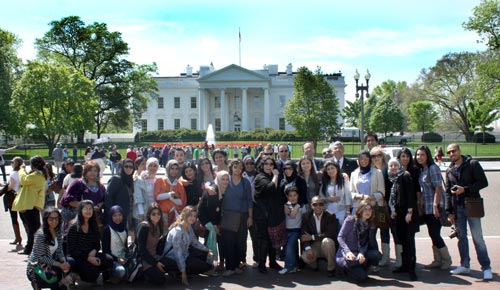
During Spring Break, Business Division Head, Dr. Mohsen Bagnied, assisted by Professor Marcia Denny and Mrs. Loubna Bagnied, led 41, mostly senior, marketing students on a study abroad trip to Washington DC. The trip had at its core a three-day MBA-level seminar in international marketing presented by Drs. Saad Laraqui and Husein Abdul-Hamid, both professors at the University of Maryland University College and executive officers of the Hancock International Institute. The seminar focused on a team case analysis and project presentation involving regional economic integration in the MENA region. The seminar culminated in visits to the International Monetary Fund and the United States Chamber of Commerce offices as well as a visit to the Albright Stonebridge Group, an international marketing-strategy consulting firm for global businesses.
While in Washington, the students toured the beautiful Library of Congress building, visited the United States Supreme Court Building, the United States Capital Building, and, with the use of passes provided by the office of Texas Senator Kay Bailey Hutchison, sat in the U.S. Senate Gallery for a first-hand view of the Senate floor. In addition, our participant students toured the huge University of Maryland Campus and visited the University's Smith School of Business where they were addressed by Sam Kang, Associate Director of MBA and MS Recruiting, as well as several other faculty members.
The students then travelled by bus to New York City where they experienced spring in Central Park on foot, a look at the Empire State Building, Wall Street and the Twin Towers Memorial, a view of the Statute of Liberty from the Staten Island Ferry, and Time Square at night.
Back in Washington DC our group was addressed by Dr. Patricia K. Kabra, Deputy Director of the Office of Press and Public Diplomacy for the Bureau of Near Eastern Affairs at the U.S. State Department. Our last day, began with a visit to the Middle East Institute and concluded with an exquisite reception graciously hosted by his Excellency Ambassador Salem Abdullah Al-Jaber Al-Sabah at his residence at the Embassy of Kuwait in Washington DC. In addition, those in attendance at the reception included Dr. Hassan Nasrallah, Embassy Cultural Director, Dr. Hamad Al-Adwani, Cultural Attache, Dr. Abeer Al-Hooli, Cultural Attache, and Ms. Sherouq Sadeqi, Bureau Chief of KUNA.
Air travel for the Washington DC Study Abroad Spring Break course was funded by MENA Holding Company of Kuwait and our sincere thanks goes out to MENA. In addition, MENA kindly provided writing supplies, jackets, T-shirts, bags and umbrellas which were put to good use on a particularly rainy, spring day on the Capitol Mall. ZAIN has offered to cover the seminar expensive and we greatly appreciate that commitment as well.
While in Washington, the students toured the beautiful Library of Congress building, visited the United States Supreme Court Building, the United States Capital Building, and, with the use of passes provided by the office of Texas Senator Kay Bailey Hutchison, sat in the U.S. Senate Gallery for a first-hand view of the Senate floor. In addition, our participant students toured the huge University of Maryland Campus and visited the University's Smith School of Business where they were addressed by Sam Kang, Associate Director of MBA and MS Recruiting, as well as several other faculty members.
The students then travelled by bus to New York City where they experienced spring in Central Park on foot, a look at the Empire State Building, Wall Street and the Twin Towers Memorial, a view of the Statute of Liberty from the Staten Island Ferry, and Time Square at night.
Back in Washington DC our group was addressed by Dr. Patricia K. Kabra, Deputy Director of the Office of Press and Public Diplomacy for the Bureau of Near Eastern Affairs at the U.S. State Department. Our last day, began with a visit to the Middle East Institute and concluded with an exquisite reception graciously hosted by his Excellency Ambassador Salem Abdullah Al-Jaber Al-Sabah at his residence at the Embassy of Kuwait in Washington DC. In addition, those in attendance at the reception included Dr. Hassan Nasrallah, Embassy Cultural Director, Dr. Hamad Al-Adwani, Cultural Attache, Dr. Abeer Al-Hooli, Cultural Attache, and Ms. Sherouq Sadeqi, Bureau Chief of KUNA.
Air travel for the Washington DC Study Abroad Spring Break course was funded by MENA Holding Company of Kuwait and our sincere thanks goes out to MENA. In addition, MENA kindly provided writing supplies, jackets, T-shirts, bags and umbrellas which were put to good use on a particularly rainy, spring day on the Capitol Mall. ZAIN has offered to cover the seminar expensive and we greatly appreciate that commitment as well.
A collective image of the AUK students
Showing
10 Articles
of 1528
06, May 2010
AUK Women, Champions of the Gulf Microsoft Imagine Cup Competition For Software Design
"THEY WANT THEY DO" was the final statement of the AUK team as they concluded their presentation before they were announced as the Gulf Microsoft Imagine Cup Champions in Dubai on May 3.
Imagine Cup is the world's premier competition for technology students. It is different in nature from other technology competitions as it focuses on creative solutions that tackle current world issues like poverty, healthcare, education and environment.
The Imagine Cup is one way Microsoft is encouraging young people to apply their imagination, their passion, and their creativity to technology innovations that can help make a difference in the world.
In an intense competition atmosphere between 10 teams from Bahrain, Oman, Kuwait, and the UAE, the AUK - all-women team - brought victory to Kuwait and made it through to the world finals to take place in Warsaw, Poland from July 3-8.
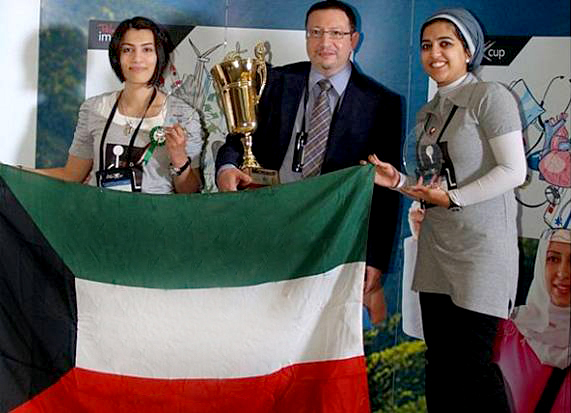
AUK's Mariam Al-Najdi, Aisha Al-Rouwaished and Abrar Amin are the first Kuwaiti team to win the Imagine Cup regional competition of software design. Under the mentorship of Dr. Amir Zeid, Program Lead of Computer Science at AUK, they created a software solution (They Want They Do - TWTD) that allows physically handicapped students to use computers for educational purposes. Their project was a winning idea for the value it adds to supporting the disabled and eliminating barriers to their education.
One of the other key factors that made TWTD stand out was its relatively low cost and ease of use in comparison to expensive software and hardware that currently exists for the physically challenged.
AUK has also won the "Mobile Application Development" category of the Gulf Imagine Cup competition last year, with a different team participating under the mentorship of Dr. Zeid.
"We are very proud of our students and excited to represent the university and the Gulf at the world finals in July," said the team's mentor, advisor and coach Dr. Amir Zeid. "We believe Imagine Cup is an excellent platform to provide an outlet for students to explore technological and artistic interests outside the classroom. We commend Microsoft for giving them an opportunity to demonstrate their talents and help them to realize their potential."
Imagine Cup is the world's premier competition for technology students. It is different in nature from other technology competitions as it focuses on creative solutions that tackle current world issues like poverty, healthcare, education and environment.
The Imagine Cup is one way Microsoft is encouraging young people to apply their imagination, their passion, and their creativity to technology innovations that can help make a difference in the world.
In an intense competition atmosphere between 10 teams from Bahrain, Oman, Kuwait, and the UAE, the AUK - all-women team - brought victory to Kuwait and made it through to the world finals to take place in Warsaw, Poland from July 3-8.
AUK's Mariam Al-Najdi, Aisha Al-Rouwaished and Abrar Amin are the first Kuwaiti team to win the Imagine Cup regional competition of software design. Under the mentorship of Dr. Amir Zeid, Program Lead of Computer Science at AUK, they created a software solution (They Want They Do - TWTD) that allows physically handicapped students to use computers for educational purposes. Their project was a winning idea for the value it adds to supporting the disabled and eliminating barriers to their education.
One of the other key factors that made TWTD stand out was its relatively low cost and ease of use in comparison to expensive software and hardware that currently exists for the physically challenged.
AUK has also won the "Mobile Application Development" category of the Gulf Imagine Cup competition last year, with a different team participating under the mentorship of Dr. Zeid.
"We are very proud of our students and excited to represent the university and the Gulf at the world finals in July," said the team's mentor, advisor and coach Dr. Amir Zeid. "We believe Imagine Cup is an excellent platform to provide an outlet for students to explore technological and artistic interests outside the classroom. We commend Microsoft for giving them an opportunity to demonstrate their talents and help them to realize their potential."
The AUK winning team with Dr. Amir Zeid
06, May 2010
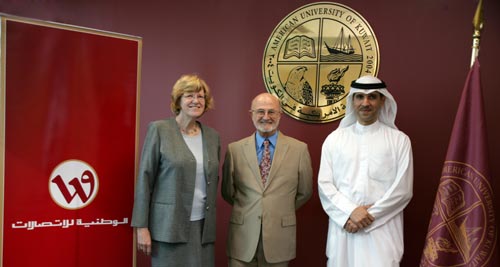
Wataniya Sponsors AUK's project: "Kuwait at 50"
Wataniya is proud to announce the sponsorship of a remarkable project inspired by Kuwaiti people, culture and history. The project, titled "Kuwait at 50", was initiated by Marjorie Kelly, Assistant Professor of Anthropology and the Coordinator of the Gulf Studies program at the American University of Kuwait (AUK). The project aims at documenting Kuwaiti society and culture as it is today. The final product will be available for distribution both in Kuwait and in the United States. For the latter, the goal is to redress stereotypes and present a more accurate image of Gulf society in general and Kuwait in particular "Kuwait at 50" will be organized in four parts: clothing, food and health, architecture and urban development, and recreation and leisure.
"Being given the opportunity to sponsor the "Kuwait at 50" initiative is a very valuable and important asset to us. Our corporate social responsibility strategy is devoted towards supporting such projects and empowering youth in being part of their society's traditions as well as realizing the importance of belonging to a prosperous and giving community," said Wataniya PR Manager Abdol Aziz Al Balool.
A ceremony was held on April 22nd to celebrate the agreement signed by Wataniya and AUK. Mr. Al Balool was present as well as AUK Interim President Dr. Tim Sullivan, Dr. Marjorie Kelly, and Ms. Amal Al Binali. Director Public Relations, Marketing and University Government Relations Officer.
Dr. Kelly has been documenting Kuwaiti culture and traditions for the past year using interviews and photographs to produce a time capsule of Kuwait as it is about to celebrate fifty years of independence. President Sullivan said, "It is an honor for this University to commemorate the 50th anniversary of Kuwait's independence through this special project. AUK also appreciates Wataniya Telecom's contributions in supporting and aiding this project."
About Wataniya Telecom
Wataniya Telecom was commercially launched in 1999 as the first privately owned operator in Kuwait. In March 2007, Qatar Telecom (Qtel) acquired 51% of Wataniya Telecom shares.
Wataniya is a customer driven company that aims to provide product and service excellence that is leading to a real customer value. The company has been a driving force in increasing the mobile market penetration in Kuwait (over 80%) Wataniya Telecom has grown rapidly through acquisitions and enjoys a remarkable expansion in MENA & ASIA. Driving operations in Kuwait, Maldives, Saudi Arabia, Tunisia, Algeria and in Palestine.
"Being given the opportunity to sponsor the "Kuwait at 50" initiative is a very valuable and important asset to us. Our corporate social responsibility strategy is devoted towards supporting such projects and empowering youth in being part of their society's traditions as well as realizing the importance of belonging to a prosperous and giving community," said Wataniya PR Manager Abdol Aziz Al Balool.
A ceremony was held on April 22nd to celebrate the agreement signed by Wataniya and AUK. Mr. Al Balool was present as well as AUK Interim President Dr. Tim Sullivan, Dr. Marjorie Kelly, and Ms. Amal Al Binali. Director Public Relations, Marketing and University Government Relations Officer.
Dr. Kelly has been documenting Kuwaiti culture and traditions for the past year using interviews and photographs to produce a time capsule of Kuwait as it is about to celebrate fifty years of independence. President Sullivan said, "It is an honor for this University to commemorate the 50th anniversary of Kuwait's independence through this special project. AUK also appreciates Wataniya Telecom's contributions in supporting and aiding this project."
About Wataniya Telecom
Wataniya Telecom was commercially launched in 1999 as the first privately owned operator in Kuwait. In March 2007, Qatar Telecom (Qtel) acquired 51% of Wataniya Telecom shares.
Wataniya is a customer driven company that aims to provide product and service excellence that is leading to a real customer value. The company has been a driving force in increasing the mobile market penetration in Kuwait (over 80%) Wataniya Telecom has grown rapidly through acquisitions and enjoys a remarkable expansion in MENA & ASIA. Driving operations in Kuwait, Maldives, Saudi Arabia, Tunisia, Algeria and in Palestine.
Left to right: Dr. Marjorie Kelly, Dr. Tim Sullivan and Mr. Abdol Aziz Al Balool
26, Apr 2010
AUK students return from Japan where they studied the media and were 'Cultural Ambassadors' for Kuwait
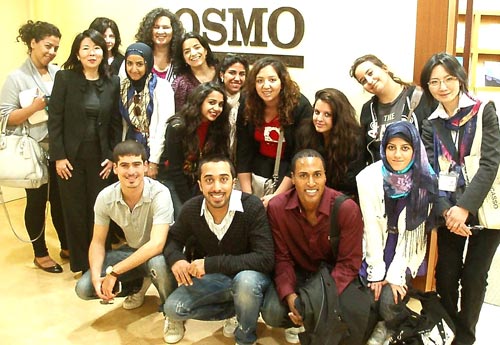
Thirteen students and two instructors from the American University of Kuwait (AUK) came back this week from a special study abroad course that took them to Tokyo, Japan to study Japanese Media and introduced the Japanese to Kuwaiti culture.
The class titled, Comm 389: Special Topics, Study Abroad in Tokyo, Japan was the first such trip for the communication and media program, the second largest major at AUK, and allowed the students the opportunity to learn from the Japanese model of conducting and running media enterprises and campaigns in the areas of public relations, advertising and journalism.
"We wanted to give the students something completely foreign to anything they encountered in the field of mass communications. Many had travelled to Europe and North America and we felt Japan's reputation for being pioneers and for innovation was the perfect case study for our first such course," said Charles Mitchell, instructor of journalism at AUK.
Mitchell further added that the students were also ambassadors for Kuwait and AUK. The scenario of Middle East meets Far East was something the University, the instructors and the students were acutely aware of. Not only did the students learn about the Japanese media, they were acting as representatives for education and for Kuwaiti culture. Many of the major media enterprises in Tokyo had never encountered anyone from Kuwait or the Gulf region before and many companies expressed their delight at the fact that they too learned great things about Kuwait, education in the country and about the media through the eyes and opinions of the students.
"I thought they were a curious, intelligent, promising group. They asked a lot of good, honest questions and seemed pretty open-minded and eager to learn. I do perceive that journalism is still young in the Gulf, and it would be great to see the students being part of establishing a vibrant press
presence there," said one local journalist from Tokyo.
Many major Japan-based advertising, public relations firms and news outlets echoed this sentiment. All going on to say how thoroughly impressed they were with the graciousness and expertise the Kuwait students showed while in Japan.
"The trip was very academic and productive. To say we learned a lot is an understatement. However, the fact that many of the Japanese learned so much from us was a pleasant surprise. We really took our roles as ambassadors for Kuwait and our University quite seriously. And we represented both country and University professionally and proudly," said Fatima Al-Sabah, a second-year communication and media student at AUK.
The class titled, Comm 389: Special Topics, Study Abroad in Tokyo, Japan was the first such trip for the communication and media program, the second largest major at AUK, and allowed the students the opportunity to learn from the Japanese model of conducting and running media enterprises and campaigns in the areas of public relations, advertising and journalism.
"We wanted to give the students something completely foreign to anything they encountered in the field of mass communications. Many had travelled to Europe and North America and we felt Japan's reputation for being pioneers and for innovation was the perfect case study for our first such course," said Charles Mitchell, instructor of journalism at AUK.
Mitchell further added that the students were also ambassadors for Kuwait and AUK. The scenario of Middle East meets Far East was something the University, the instructors and the students were acutely aware of. Not only did the students learn about the Japanese media, they were acting as representatives for education and for Kuwaiti culture. Many of the major media enterprises in Tokyo had never encountered anyone from Kuwait or the Gulf region before and many companies expressed their delight at the fact that they too learned great things about Kuwait, education in the country and about the media through the eyes and opinions of the students.
"I thought they were a curious, intelligent, promising group. They asked a lot of good, honest questions and seemed pretty open-minded and eager to learn. I do perceive that journalism is still young in the Gulf, and it would be great to see the students being part of establishing a vibrant press
presence there," said one local journalist from Tokyo.
Many major Japan-based advertising, public relations firms and news outlets echoed this sentiment. All going on to say how thoroughly impressed they were with the graciousness and expertise the Kuwait students showed while in Japan.
"The trip was very academic and productive. To say we learned a lot is an understatement. However, the fact that many of the Japanese learned so much from us was a pleasant surprise. We really took our roles as ambassadors for Kuwait and our University quite seriously. And we represented both country and University professionally and proudly," said Fatima Al-Sabah, a second-year communication and media student at AUK.
AUK students with Charles Mitchell, instructor of Journalism at AUK & Kumi Sato (lady on the far left), President and CEO of Cosmo PR
25, Apr 2010
AUK Host 2nd Al-Kout Festival
The American University of Kuwait campus was converted into an elaborate fair introducing the students and community to the wonders of Kuwaiti heritage for two full days, April 21-22. Under the patronage of H.E. Sheikh Ahmad Al-Fahad Al-Ahmad Al Sabah Deputy Prime Minister for Economic Affairs and State Minister for Housing Affairs and Development Affairs, the AUK Arabian Heritage Project (AHP) 2010 Al Kout Festival opened with a great start. Among the attendees were Chair of the Board of AUK Shaikha Dana Nasser Al-Sabah, Vice Chair Mr. Meshal Ali, President of AUK Dr. Tim Sullivan, Board Member Wael Abdulghafour as well as several Ambassadors and dignitaries. The Arabian Heritage Project, under the directorship of Dr. Lisa Urkevich, is a center devoted to promoting and fostering culture in the Peninsula, and the annual Al Kout Festival is a way to bring that heritage alive. "Although the academic lectures, research and scholarship that the Arabian Heritage Project engages in are at the forefront," says Dr. Urkevich, "it is important to invigorate the community and especially students and the youth of Kuwait with events like our Al Kout Festival. As our Al Kout motto states, this is: 'Where Kuwaiti past meets Kuwaiti future." In a speech given by Sheikh Ahmad on Wednesday evening, he noted how delighted he was to see the students engaged in the Al Kout Festival, "This brings back warm memories of my own college days and the activities I was involved in. I am pleased to see our youth so involved in this important heritage project. And I am happy for your happiness."
This was the second Al Kout Festival held at AUK, and the campus was replete with exhibits, events, and a grand bazaar. There were over 14 traditional craftspeople, including boom ship makers, Sadu weavers, and bisht embroiderers. The National Museum provided an elaborate display. Camel rides were offered all day, and Bedouin artisans were available to introduce their craft in a traditional tent surrounded by tools of Bedouin life. A bazaar with dozens of booths and tables lined the central campus, and a car show with antique vehicles was also enjoyed by all. Nearby, one could sit in a traditional tent as AUK students taught the guests how to play old Kuwaiti games and offered traditional food. One hall of the campus was prepared with a fashion runway, and each day, creative young designers of Kuwait presented a fashion show of Arabian dara'a (gowns), which was a new event introduced this year for female participants.
The stage built in the central campus was the focal point where seven hours of performance took place each day. AUK students were featured performing both classical western and Kuwaiti traditional pieces that they themselves often arranged musically. Kuwaiti "sawt" musicians had a special place during the performance hours, and on day one, the great Salman Al Ammari sawt master and his large backup choir was featured. Famous Bedouin poets presented their art to fascinated students and guests. This year Al Kout has a more comprehensive flavor, as classical South Indian Karnatic music was added to the program. Moreover, a special guest women's band was brought to the campus from Bahrain. This group performed a reenactment of a Gulf wedding ceremony "jelwa" and a Bahraini genre known as Mrada, along with other Gulf pieces. A highlight was that each evening, the festival closed with a great sea band of Kuwait, night one: Bin Hussein Band and night two Mayouf Band. The festival was generously sponsored by Kipco with much support from Burgan Bank, Kuwait Hotels, Gulf Net, and Gulf Insurance, who all manifested their great pride in Kuwaiti heritage. "The festival provides an opportunity for the community and students to witness those special people who keep the culture alive," added Dr. Urkevich.
For more information please contact Dr. Lisa Urkevich, Director ArabianHeritage Program M 6611 8298 Ms Rehab El Bahey, Coordinator, Arabian Heritage Project M 99535660
This was the second Al Kout Festival held at AUK, and the campus was replete with exhibits, events, and a grand bazaar. There were over 14 traditional craftspeople, including boom ship makers, Sadu weavers, and bisht embroiderers. The National Museum provided an elaborate display. Camel rides were offered all day, and Bedouin artisans were available to introduce their craft in a traditional tent surrounded by tools of Bedouin life. A bazaar with dozens of booths and tables lined the central campus, and a car show with antique vehicles was also enjoyed by all. Nearby, one could sit in a traditional tent as AUK students taught the guests how to play old Kuwaiti games and offered traditional food. One hall of the campus was prepared with a fashion runway, and each day, creative young designers of Kuwait presented a fashion show of Arabian dara'a (gowns), which was a new event introduced this year for female participants.
The stage built in the central campus was the focal point where seven hours of performance took place each day. AUK students were featured performing both classical western and Kuwaiti traditional pieces that they themselves often arranged musically. Kuwaiti "sawt" musicians had a special place during the performance hours, and on day one, the great Salman Al Ammari sawt master and his large backup choir was featured. Famous Bedouin poets presented their art to fascinated students and guests. This year Al Kout has a more comprehensive flavor, as classical South Indian Karnatic music was added to the program. Moreover, a special guest women's band was brought to the campus from Bahrain. This group performed a reenactment of a Gulf wedding ceremony "jelwa" and a Bahraini genre known as Mrada, along with other Gulf pieces. A highlight was that each evening, the festival closed with a great sea band of Kuwait, night one: Bin Hussein Band and night two Mayouf Band. The festival was generously sponsored by Kipco with much support from Burgan Bank, Kuwait Hotels, Gulf Net, and Gulf Insurance, who all manifested their great pride in Kuwaiti heritage. "The festival provides an opportunity for the community and students to witness those special people who keep the culture alive," added Dr. Urkevich.
For more information please contact Dr. Lisa Urkevich, Director ArabianHeritage Program M 6611 8298 Ms Rehab El Bahey, Coordinator, Arabian Heritage Project M 99535660
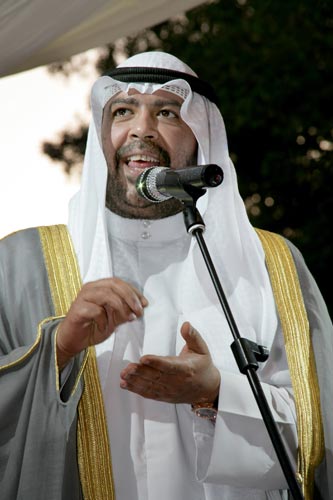
H.E. Sheikh Ahmad Al-Fahad Al-Ahmad Al Sabah Deputy Prime Minister for Economic Affairs and State Minister for Housing Affairs and Development Affairs
left to right: Chair of the Board of AUK Shaikha Dana Nasser Al-Sabah, H.E. Sheikh Ahmad Al-Fahad Al-Ahmad Al Sabah, the Director of the Arabian Heritage Project Dr. Lisa Urkevich
Dr. Lisa Urkevich
President of AUK Dr. Tim Sullivan
left to right: Vice Chair of the Board of AUK Mr. Meshal Ali, Board Member Wael Abdulghafour, Shaikha Dana Nasser Al-Sabah, H.E. Sheikh Ahmad Al-Fahad Al-Ahmad Al Sabah & the USA Ambassador Deborah K. Jones
Various events took place at AUK campus during the 2nd Al-Kout Festival
Poets presented their art to audience
Poets presented their art to audience
The great Salman Al Ammari sawt master and his large backup choir
The great Salman Al Ammari sawt master and his large backup choir
AUK students were featured performing both classical western and Kuwaiti traditional pieces that they themselves often arranged musically
AUK students were featured performing both classical western and Kuwaiti traditional pieces that they themselves often arranged musically
Nick Knezek, Dartmouth College intern at AUK performs during the festival
Classical South Indian Karnatic music was presented during the festival
Bin Hussein Sea Band performs on the stage
Traditional Women's band from Bahrain performed during the festival
Traditional Women's band from Bahrain performed during the festival
AUK students took part in organizing Al-Kout festival
22, Apr 2010
IEP Director says goodbye to AUK
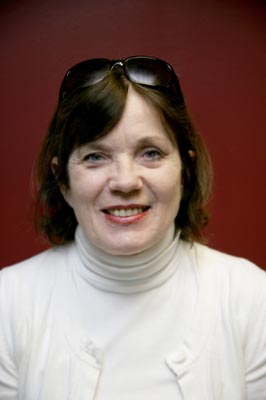
Margaret Combs, founding Director of the Intensive English Program (IEP) at the American University of Kuwait (AUK), is leaving the institution for another opportunity. Ms. Combs has been at AUK since the beginning and has served the institution tirelessly, and with integrity. She laid the foundation of a solid program in Intensive English, recruited qualified and talented faculty, established and put into place policies and procedures. Her leadership of the IEP secured for the institution US accreditation from the Commission on Intensive English Program Accreditation, making AUK's IEP the only accredited Intensive English Program in Kuwait, and second in the region. Her commitment, hard work, and dedication will always remain an intrinsic and fundamental part of AUK's history.
"There won't be a day in my life that I'm not thinking about the American University of Kuwait and the contribution this institution has made in the region. It has been a great honor and an enormous pleasure to serve AUK for the past six years. I realize that I may never again face challenges of the same intensity, nor enjoy the exhilaration of working with such outstanding people," she said.
"There won't be a day in my life that I'm not thinking about the American University of Kuwait and the contribution this institution has made in the region. It has been a great honor and an enormous pleasure to serve AUK for the past six years. I realize that I may never again face challenges of the same intensity, nor enjoy the exhilaration of working with such outstanding people," she said.
Margaret Combs, founding Director of the Intensive English Program (IEP)
14, Apr 2010
AUK's Presidential Search
Sheikha Dana Nasser Al-Sabah, Chair of the Board of Trustees and Chair of the Presidential Search Committee, announced today that the Committee is continuing its search for a new AUK president. The Search Committee met on March 7, 2010 and did not reach a consensus at that time and directed the search consultants "Isaacson, Miller" to continue to seek and recruit qualified candidates that will provide the best leadership possible for AUK.
The AUK Search Committee was pleased with the quality of the candidates and especially pleased with the thoughtful recommendations received from AUK students, faculty and administrative leaders who met with these candidates.
The University together with its search consultants are working diligently to move this process forward as expeditiously as possible. During the interim period, Interim President Dr. Tim Sullivan has agreed to continue in that role, and Sheikha Dana, on behalf of the Board of Trustees, has expressed her appreciation to President Sullivan for his continuing leadership and service to AUK.
All nominations, suggestions and inquiries should be addressed to the search consultants at TMcFeeley@imsearch.com.
The AUK Search Committee was pleased with the quality of the candidates and especially pleased with the thoughtful recommendations received from AUK students, faculty and administrative leaders who met with these candidates.
The University together with its search consultants are working diligently to move this process forward as expeditiously as possible. During the interim period, Interim President Dr. Tim Sullivan has agreed to continue in that role, and Sheikha Dana, on behalf of the Board of Trustees, has expressed her appreciation to President Sullivan for his continuing leadership and service to AUK.
All nominations, suggestions and inquiries should be addressed to the search consultants at TMcFeeley@imsearch.com.
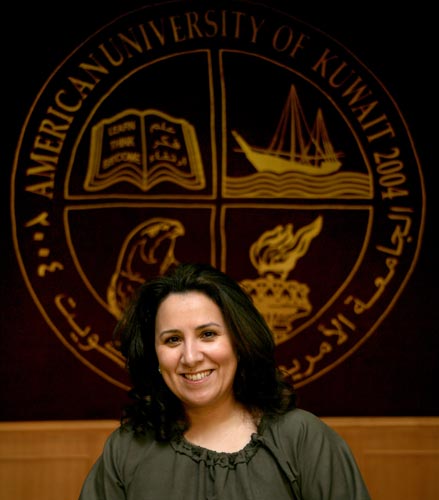
Sheikha Dana Nasser Al-Sabah, Chair of the Board of Trustees and Chair of the Presidential Search Committee
14, Apr 2010
Under the Patronage of H.E. Sheikh Ahmad Al-Fahad Al Sabah Arabian Heritage Project at AUK to hold its Second Annual Al-Kout Festival
The American University of Kuwait's Arabian Heritage Project (AHP) will hold its Second Annual 'Al-Kout Festival' under the Patronage of Deputy Prime Minister for Economic Affairs, State Minister for Housing Affairs and State Minister of Development Affairs, H.E. Sheikh Ahmad Al-Fahad Al-Ahmad Al-Sabah on April 21-22, 2010, from 12 pm to 7 pm. The Festival is open to the public and will host many prestigious organizations throughout Kuwait, including the National Museum, Youm Al Bahar, Sadu House, Dar al-Athar al-Isalmiya, and leading artisans in the community.
Different units on campus will also have displays or present presentations, including the student clubs and the academic programs. Also, several noted craftspeople will be giving demonstrations and there will be repeated performances by at least two sea bands as well as musicians and bands from Bahrain and India.
Under the motto of "Where Kuwaiti Past Meets Kuwaiti Future" the festival will present a microcosm of old Kuwait where the community visitors and students can see up close what life was like in the past. One can ride a camel, taste Kuwaiti bread cooked on an open fire, watch a carpenter make part of a boom, hear traditional poetry and listen to old sea songs. But also, we will present the Kuwait of the future, with examples of future dara'a clothing, poems by young poets, and the union of Modern and traditional music.
The 'Al-Kout Festival' is sponsored by KIPCO Holding Co., Gulf Insurance Company, Burgan Bank, GulfNet and Kuwait Hotels.
The Arabian Heritage Project (AHP) is a center at AUK dedicated to fostering, documenting, and celebrating the traditional cultures of the Arabian Peninsula. The project is involved with a variety of traditions, including those of Kuwait, Saudi Arabia, Bahrain, Qatar, the Yemen, and related Middle Eastern countries and parts of Africa and India. The Project serves the needs of Kuwait and the region through education and outreach pertaining to a myriad of customs including music, crafts, folklore, literature, poetry, ritual, and community traditions.
The American University of Kuwait (AUK) is a liberal arts institution, based on the American model of higher education. It is dedicated to providing students with knowledge, self-awareness, and personal growth experiences that can enhance critical thinking, effective communication, and respect for diversity. AUK seeks to create leaders and life-long learners who aspire to the highest standards of moral and ethical responsibility in their societies.
For more information about Al-Kout Festival, please contact:
Dr. Lisa Urkevich
Director, Arabian Heritage Project
Associate Professor
American University of Kuwait
Tel; +965-2224-8399 Ext. 410
M: + 965 6611 8298
Email:ArabaianHeritage@auk.edu.kw
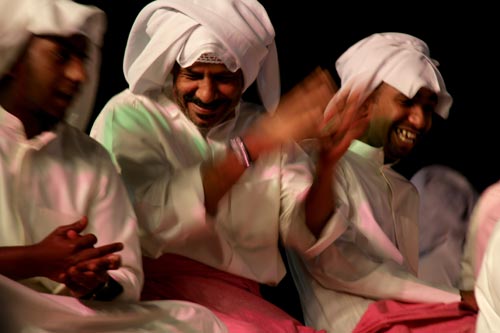
Images from last year's Al-Kout Festival
Different units on campus will also have displays or present presentations, including the student clubs and the academic programs. Also, several noted craftspeople will be giving demonstrations and there will be repeated performances by at least two sea bands as well as musicians and bands from Bahrain and India.
Under the motto of "Where Kuwaiti Past Meets Kuwaiti Future" the festival will present a microcosm of old Kuwait where the community visitors and students can see up close what life was like in the past. One can ride a camel, taste Kuwaiti bread cooked on an open fire, watch a carpenter make part of a boom, hear traditional poetry and listen to old sea songs. But also, we will present the Kuwait of the future, with examples of future dara'a clothing, poems by young poets, and the union of Modern and traditional music.
The 'Al-Kout Festival' is sponsored by KIPCO Holding Co., Gulf Insurance Company, Burgan Bank, GulfNet and Kuwait Hotels.
The Arabian Heritage Project (AHP) is a center at AUK dedicated to fostering, documenting, and celebrating the traditional cultures of the Arabian Peninsula. The project is involved with a variety of traditions, including those of Kuwait, Saudi Arabia, Bahrain, Qatar, the Yemen, and related Middle Eastern countries and parts of Africa and India. The Project serves the needs of Kuwait and the region through education and outreach pertaining to a myriad of customs including music, crafts, folklore, literature, poetry, ritual, and community traditions.
The American University of Kuwait (AUK) is a liberal arts institution, based on the American model of higher education. It is dedicated to providing students with knowledge, self-awareness, and personal growth experiences that can enhance critical thinking, effective communication, and respect for diversity. AUK seeks to create leaders and life-long learners who aspire to the highest standards of moral and ethical responsibility in their societies.
For more information about Al-Kout Festival, please contact:
Dr. Lisa Urkevich
Director, Arabian Heritage Project
Associate Professor
American University of Kuwait
Tel; +965-2224-8399 Ext. 410
M: + 965 6611 8298
Email:ArabaianHeritage@auk.edu.kw
Images from last year's Al-Kout Festival
13, Apr 2010
Spanish Ambassador at AUK
On the 6th of April, the Spanish Ambassador, His Excellency Don Manuel Gomez de Valenzuela, gave a lecture in English at AUK about "The Importance of Spanish Language in the World". A large number of students, faculty members and guests were present. The Ambassador, an experienced linguist, explained the hierarchy of languages in the world where Spanish occupies a preponderant rank. Spanish is the official language in 21 countries. This is the second most used language in international communication, and an official language of the UN and its organizations. The Ambassador spoke about how the Spanish language is a powerful communication tool across America, Europe, Asia and Africa, increasingly important in business as well as career matters and that over time the need to learn Spanish will continue to be on the rise.
After the lecture, His Excellency, in conjunction with the Spanish Ministry of Foreign Affairs, kindly donated, for the second time, a good collection of Spanish books to the AUK library to encourage the growing interest in the language and culture of Spain and the Spanish-speaking world.
This is an auspicious start for AUK's Foreign Languages program.
After the lecture, His Excellency, in conjunction with the Spanish Ministry of Foreign Affairs, kindly donated, for the second time, a good collection of Spanish books to the AUK library to encourage the growing interest in the language and culture of Spain and the Spanish-speaking world.
This is an auspicious start for AUK's Foreign Languages program.
The Spanish Ambassador, His Excellency Don Manuel Gomez de Valenzuela
Director of the AUK library Miss Amna Al-Omare receives the second collection of Spanish books from His Excellency, in conjunction with the Spanish Ministry of Foreign Affairs